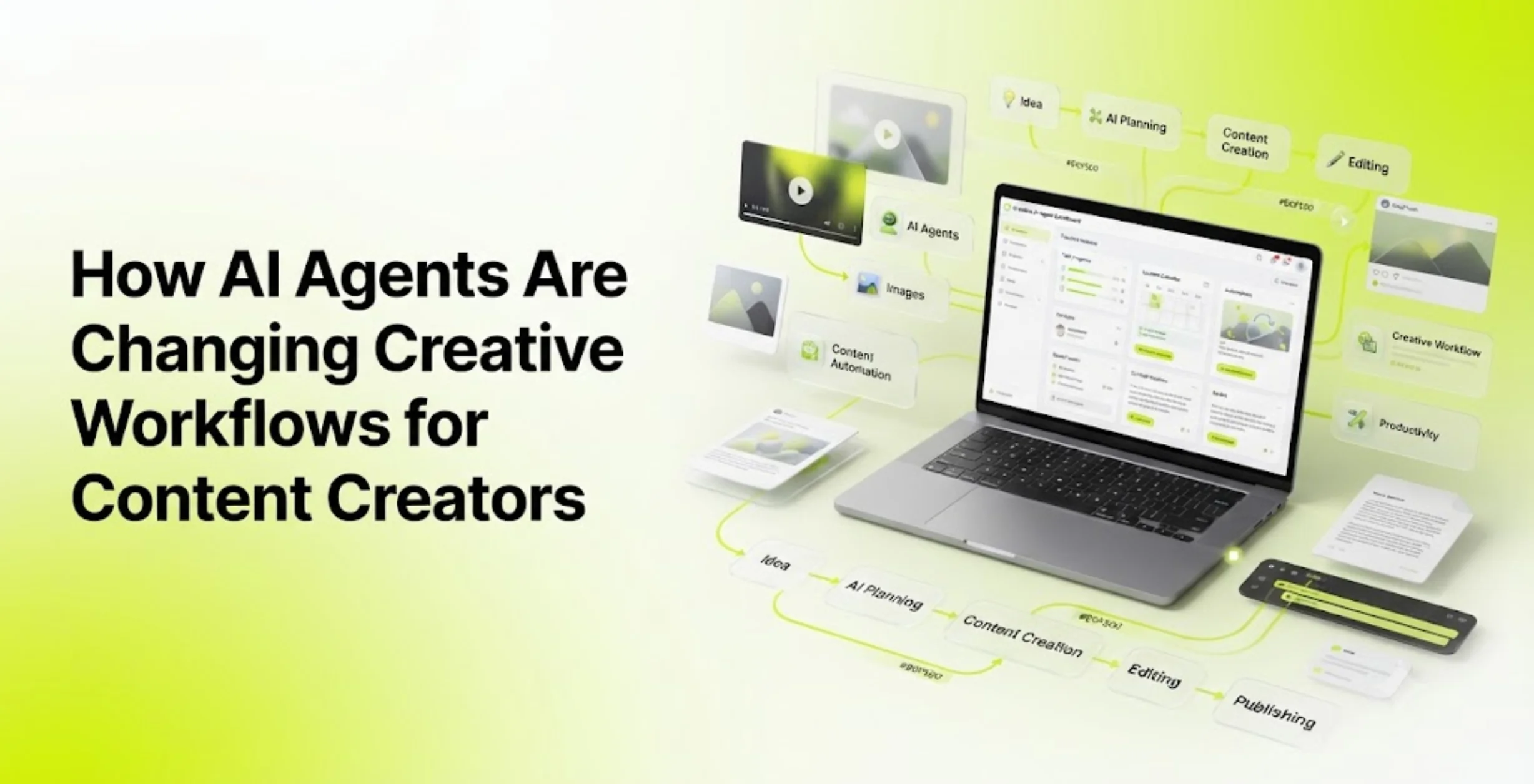
Creative work has always involved a combination of ideas, skills, and execution. Whether creating videos, writing articles, designing graphics, or building marketing content, creators spend time not only on creative decisions but also on repetitive tasks that support the final output.
In recent years, AI tools have changed how creators approach their work. Early AI assistants mainly focused on generating responses, creating drafts, or providing suggestions. However, the next stage of AI development is moving beyond simple assistance.
In 2026, AI agents are becoming more capable of completing multi-step tasks, managing workflows, and working alongside creators inside different applications. Instead of only answering questions, AI agents can understand goals, perform actions, and support creators throughout the production process.
From content planning and design support to video editing solutions and workflow automation, AI agents are helping creators reduce repetitive work and focus more on strategy, storytelling, and creative decisions.
What Makes AI Agents Different From Traditional AI Tools?
Traditional AI tools usually perform individual tasks based on specific instructions. A creator might ask an AI tool to generate a caption, suggest ideas, summarize information, or create an image.
AI agents work differently. They are designed to support broader goals by completing multiple connected actions.
For example, instead of only generating a video script, an AI agent may help organize ideas, structure scenes, prepare assets, and support the editing process.
Some key differences between traditional AI tools and AI agents include:
Goal-based workflows
AI agents focus on completing objectives rather than responding only to individual prompts. Creators can provide a goal, and the agent can help manage multiple steps required to achieve it.
Multi-step task execution
Creative projects often involve several connected activities. AI agents can assist with planning, organization, execution, and refinement.
Understanding context
AI agents can work with project information and understand the purpose behind tasks, making their assistance more relevant.
Workflow integration
Instead of existing separately, AI agents are increasingly becoming part of creative applications where users already work.
This shift is changing how creators think about AI. The focus is moving from using AI as a simple assistant to working with AI as a creative partner.
How Are AI Agents Supporting Content Creation Workflows?
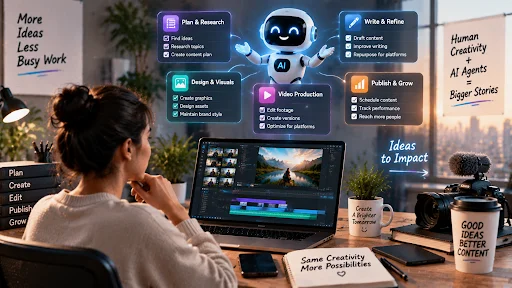
Content creation involves many stages before a final piece is published. Creators need to research topics, plan ideas, create assets, edit content, and prepare different versions for different platforms.
AI agents are helping streamline these workflows by supporting repetitive and time-consuming activities.
Common examples include:
Content planning
AI agents can help creators:
- Generate content ideas
- Organize topic research
- Create content calendars
- Identify audience interests
- Structure campaigns
For creators managing multiple platforms, AI workflow automation can make planning more efficient and reduce manual organization.
Content production
During production, AI agents can help prepare drafts, organize assets, and support creative execution.
Examples include:
- Creating first drafts
- Suggesting improvements
- Preparing design elements
- Structuring video scenes
Content optimization
AI agents can also help creators improve existing content by suggesting changes, adapting formats, and preparing versions for different audiences.
This is especially useful for creators who need to publish consistently across multiple channels.
How Are AI Agents Transforming Video Production?
Video production is one area where AI agents are creating significant workflow changes. Creating a video often requires multiple steps, including planning, recording, reviewing footage, editing clips, improving audio, and creating platform-specific versions.
Traditionally, many of these tasks required manual effort. Editors often spend hours reviewing recordings, selecting usable footage, removing mistakes, and organizing timelines before the creative editing process begins.
AI agents are changing this by helping handle repetitive editing tasks.
For example, AI editing agents can assist with:
- Reviewing large amounts of footage
- Identifying useful moments
- Selecting cleaner takes
- Removing unnecessary sections
- Organizing clips
- Preparing initial timelines
An AI agent-powered video editing workflow allows creators to provide direction and let AI support the operational parts of editing while they focus on storytelling and creative decisions.
Tools like invideo editor demonstrate how AI agents are becoming part of creative applications. Instead of only suggesting edits, AI editing agents can work within an editing environment to help creators review footage, organize clips, prepare first cuts, and refine recordings while keeping the final decisions with the creator.
This approach is particularly useful for creators working with interviews, podcasts, tutorials, documentaries, and long-form recordings where managing raw footage can take significant time.
How Are AI Agents Helping Writers and Designers?
AI agents are not limited to video production. They are also changing workflows in writing and design.
Writing workflows
For writers and marketers, AI agents can assist with:
- Research organization
- Content outlines
- Draft preparation
- Editing suggestions
- Content repurposing
Instead of starting every task from scratch, creators can use AI support to speed up early stages and spend more time improving quality.
Design workflows
Designers can use AI agents to support:
- Concept development
- Visual exploration
- Asset organization
- Design variations
- Creative experimentation
AI does not replace the creative vision behind a design. Instead, it helps designers explore more possibilities and reduce time spent on repetitive production work.
How Can Creators Automate Repetitive Tasks With AI?
One of the biggest benefits of AI agents is reducing the amount of manual work involved in creative workflows.
Creators often spend time on tasks such as:
- Organizing files
- Formatting content
- Creating multiple versions
- Managing project information
- Reviewing large amounts of material
AI workflow automation helps handle these repetitive activities so creators can focus on higher-value work.
For example, a content creator producing weekly videos may use AI agents to help organize recordings, prepare edits, create social media versions, and manage publishing tasks.
This allows individuals and small teams to produce more content without increasing the amount of manual effort required.
What Are the Benefits of AI Tools for Content Creation?
AI tools for content creation are becoming valuable because they help creators improve speed, consistency, and efficiency.
Some major benefits include:
- Faster production: AI assistance reduces the time required for repetitive tasks, helping creators move from ideas to finished content faster.
- More creative experimentation: When routine work becomes easier, creators can test more ideas and explore different formats.
- Better content consistency: AI workflows can help maintain structure, style, and quality across multiple pieces of content.
- Improved productivity: Creators can manage larger projects and produce more content without spending all their time on operational tasks.
These benefits make AI creative assistants increasingly useful for individuals, businesses, and creative teams.
How Will Human Creativity and AI Agents Work Together?
The growth of AI agents does not mean creativity will become automated. Human input remains essential for creating meaningful content.
Creators still provide:
- Original ideas
- Creative direction
- Brand identity
- Storytelling choices
- Emotional understanding
AI agents are most valuable when they support these creative decisions rather than replace them.
The future of creative work will likely involve collaboration between humans and AI. Creators will guide ideas and strategy, while AI agents handle repetitive execution and workflow management.
This partnership allows creators to focus on the parts of their work that require imagination, judgment, and experience.
What Is the Future of AI Agents in Creative Work?
AI agents are becoming an important part of the next generation of creative workflows. As these systems improve, they will become better at understanding projects, managing tasks, and supporting creators across different applications.
Future creative workflows may involve creators describing their goals, reviewing AI-assisted outputs, and refining projects through collaboration with intelligent systems.
For content creators, this means fewer hours spent managing repetitive tasks and more time available for creative thinking.
The most successful creators will likely be those who learn how to combine their own creative skills with AI capabilities.
Conclusion
AI agents are changing creative workflows by moving beyond simple assistance and becoming active participants in the production process. From writing and design to video creation, AI agents are helping creators automate repetitive tasks, improve productivity, and manage complex projects more efficiently.
AI workflow automation allows creators to spend less time on manual execution and more time focusing on ideas, storytelling, and creative strategy.
In 2026, AI creative assistants will not replace human creativity. Instead, they will help creators work faster, experiment more, and build better content through a stronger collaboration between human imagination and AI capabilities.