

Starting a business comes down to finding a large customer base and keeping your daily operating costs under control. West Bengal is India’s sixth-largest state economy, with a Gross State Domestic Product (GSDP) crossing ₹21 lakh crore and a population of over 10 crore people. Because it acts as the primary trading hub for Eastern India, the Northeast, and neighboring countries like Bangladesh and Nepal, businesses here enjoy constant access to high-volume trade and everyday buyers.
What makes West Bengal especially practical for new founders is its cost advantage. Renting commercial office or retail space in emerging hubs like Salt Lake Sector V, New Town, or Howrah costs significantly less than in cities like Mumbai or Bengaluru. At the same time, finding skilled graduates, operational staff, and technical labor is easy and budget-friendly, allowing new ventures to stay profitable much faster.
Whether you want to launch a local food brand, explore manufacturing business ideas, start an online service agency, or enter retail, the state offers massive local footfall and strong transport links. Below is a practical guide to the best business ideas in West Bengal today, detailing the initial investment, realistic profit potential, and simple steps to help you get started.
Why Start A Business In West Bengal?
West Bengal combines a massive regional consumer market with lower business expenses, making it an attractive destination for small and expanding enterprises.
- Strategic Gateway to Eastern India & Neighboring Markets: Operating from the state gives you direct trade access to over 30 crore consumers across Eastern India, the Northeast, and bordering nations like Bangladesh, Bhutan, and Nepal.
- Lower Operating and Rental Overheads: Commercial space in IT corridors like Salt Lake Sector V and New Town, as well as industrial spaces in Howrah and Dankuni, rent for significantly less than comparable hubs in Mumbai, Delhi-NCR, or Bengaluru.
- Large Pool of Affordable, Educated Talent: The state produces thousands of engineers, management graduates, and skilled technicians every year, allowing businesses to hire dependable operational and technical staff at manageable salary levels.
- Robust Multi-Modal Transport Infrastructure: A dense rail network, the Eastern Dedicated Freight Corridor (EDFC) connecting through Dankuni, two operational sea ports (Kolkata and Haldia), and international air cargo terminals make moving goods simple and cost-efficient.
- Simplified Online Clearances via Silpa Sathi: The state government’s dedicated single-window platform, Silpa Sathi, streamlines business registrations, trade licenses, and industrial approvals online without unnecessary administrative delays.
List Of Top 25 Business Ideas In West Bengal
A. Food Processing, Agro-Allied & Specialty Culinary

1. Packaged Traditional Bengali Sweets (Mishthi) with Extended Shelf Life
- Estimated Investment: ₹8 Lakhs – ₹16 Lakhs
- Potential Profit: ₹1.2 Lakhs – ₹2.5 Lakhs per month (25% – 35% net margin)
- Who Should Start This Business: Food technologists, confectioners, or culinary entrepreneurs looking to modernize Bengal’s dairy confectionery market.
Bengal’s iconic sweets like Rosogolla, Sandesh, and Baked Mihidana have massive emotional appeal and year-round festive demand. However, traditional cottage chhena sweets spoil within 24 to 48 hours, restricting their reach.
By adopting modified atmosphere packaging (MAP), retort sterilization, and vacuum sealing, you can extend the shelf life of these delicacies to 30–90 days without adding artificial preservatives. This allows you to sell through modern retail shelves, airport duty-free counters, and e-commerce solutions, supplying both domestic metro shoppers and the global Bengali diaspora.
Skills Required:
- Dairy processing hygiene, thermal sterilization processes, shelf-life testing, inventory management system, and retail distribution.
How to Start:
- Set up a 500–800 sq. ft. cleanroom packaging and cooking unit in an accessible peri-urban hub like Barasat, Hooghly, or Howrah.
- Procure commercial chhena kneaders, automated syrup kettles, nitrogen-flushing tray sealers, and continuous band sealers.
- Obtain essential statutory approvals, including an FSSAI state manufacturing license, GST registration, and local trade clearance.
- Partner directly with dairy cooperative clusters in Nadia or Bardhaman for consistent, daily deliveries of pure cow-milk chhena.
- List products on quick-commerce platforms (Blinkit, Zepto) across Kolkata and distribute through gift stores along airport departure routes.
Tips to Make It Profitable:
- Introduce premium export-ready tin and box assortments during major festive spikes like Durga Puja, Bhai Dooj, and Poila Boishakh.
- Produce low-glycemic, date palm jaggery (Nolen Gur) variants during the winter season to command a 30% price premium.
- Pitch curated corporate gifting boxes directly to IT firms in Salt Lake Sector V and New Town for annual employee rewards.
2. IQF (Individually Quick Frozen) Fish & Seafood Processing Unit
- Estimated Investment: ₹15 Lakhs – ₹30 Lakhs
- Potential Profit: ₹2.2 Lakhs – ₹4.8 Lakhs per month (20% – 30% net margin)
- Who Should Start This Business: Seafood traders, aquaculture professionals, or cold-chain logistics operators.
Fish is a daily culinary staple across West Bengal, but urban working professionals increasingly dislike visiting congested, wet morning markets to buy uncleaned, whole fish. Setting up a localized processing and blast-freezing facility catering to prized regional varieties—such as Hilsa (Ilish), Katla, Bhetki, and Tiger Prawns (Bagda Chingri)—solves this convenience gap.
By sourcing directly from coastal landing centers like Digha, Kakdwip, and Diamond Harbour, you can scale clean, pre-cut, vacuum-packed, and quick-frozen steaks straight to supermarket chains and residential doorsteps, making it one of the practical business ideas in West Bengal for entrepreneurs targeting the growing demand for convenient seafood.
Skills Required:
- Cold-chain HACCP standards, seafood grading, blast freezing techniques, supply chain coordination.
How to Start:
- Lease a 1,000–1,500 sq. ft. insulated industrial unit in South 24 Parganas, Howrah, or near Uluberia Industrial Growth Centre.
- Install commercial blast freezers (-40°C), stainless steel cutting lines, ozonated water washing stations, and vacuum pouch packers.
- Secure FSSAI manufacturing licenses, state pollution board consent, and local municipal health clearances.
- Build direct procurement ties with local fishermen boat unions and landing centers to bypass intermediate wholesale middlemen.
- Distribute your branded frozen cuts through regional supermarket chains like Spencer’s, local standalone gourmet grocers, and your own website.
Tips to Make It Profitable:
- Procure and blast-freeze seasonal Hilsa in bulk during peak monsoon supply gluts to sell at premium festival rates during Durga Puja.
- Supply boneless, precisely portioned Bhetki fillets directly to high-end catering agencies and heritage restaurants for Kolkata-style fish fry preparation.
- Minimize waste by selling fish heads, offal, and trimmings in bulk to regional aquaculture feed manufacturers.
3. Modern Mustard Oil (Kachi Ghani) Cold-Press Micro-Mill
- Estimated Investment: ₹6 Lakhs – ₹12 Lakhs
- Potential Profit: ₹90,000 – ₹1.9 Lakhs per month (22% – 32% net margin)
- Who Should Start This Business: Agri-entrepreneurs, grain traders, or retail business owners passionate about pure, unadulterated edible oils.
Raw, pungent cold-pressed mustard oil (Kachi Ghani) is an essential ingredient in Bengali kitchens. However, urban consumers are wary of the solvent-extracted, blended, or adulterated oils commonly found on commercial supermarket shelves.
Operating a visible, hygienic cold-pressing extraction unit that produces pure, unrefined, single-origin mustard oil addresses this demand directly. Customers willingly pay a substantial premium for cold-pressed oil that retains its natural pungency, dark golden hue, and traditional aroma without chemical intervention.
Skills Required:
- Seed procurement grading, mechanical expeller operation, oil settling and filtration, packaging standards.
How to Start:
- Rent a 300–500 sq. ft. commercial space in a busy residential neighborhood such as Garia, Behala, or Uttarpara.
- Procure high-recovery stainless steel cold-press oil expellers (wooden/stone press Ghani) and micron plate filters.
- Source high-pungency black and yellow mustard seeds directly from wholesale mandis in Bardhaman, Murshidabad, or Nadia.
- Acquire FSSAI manufacturing registration, AGMARK certification, and local trade licenses.
- Package the extracted oil in amber glass bottles and tin containers to protect freshness and highlight artisanal quality.
Tips to Make It Profitable:
- Sell the byproduct mustard oil cake (khol) in bulk to local organic farming groups and nursery businesses as high-grade fertilizer.
- Allow customers to watch the seed-pressing process live in your retail shopfront to build deep consumer trust and brand loyalty.
- Offer complementary cold-pressed seed oils, such as sesame and black seed (kalonji) oil, which deliver high gross profit margins.
4. Specialty Darjeeling Single-Estate Tea Packaging & D2C Brand
- Estimated Investment: ₹5 Lakhs – ₹10 Lakhs
- Potential Profit: ₹80,000 – ₹1.8 Lakhs per month (35% – 50% net margin)
- Who Should Start This Business: Tea blenders, branding professionals, or retail marketers keen on monetizing North Bengal’s GI-tagged heritage tea estates.
Darjeeling and Dooars produce some of the most celebrated teas in the world, yet mass-market FMCG brands often dilute high-grade single-estate leaves with generic CTC blends. A curated boutique tea label that sources authentic, GI-certified single-estate orthodox teas including First Flush, Second Flush, and Muscatel autumn harvests directly from tea gardens in Darjeeling and Kurseong commands strong retail margins. Selling directly through an online storefront and boutique lifestyle gift stores bypasses broker chains, helping you capture both high domestic gifting spend and international orders.
Skills Required:
- Tea leaf cupping and grading, bespoke sensory blending, sustainable packaging design, direct-to-consumer digital marketing.
How to Start:
- Establish sourcing arrangements with small grower cooperatives or registered single estates in the Darjeeling district.
- Set up a hygienic blending, grading, and packaging table space in Siliguri or Kolkata.
- Secure FSSAI registration, Tea Board of India distributor licenses, and an Import Export Code (IEC) for international orders.
- Procure airtight, light-blocking zipper pouches, aluminum tea tins, and biodegradable pyramid teabag packing materials.
- Build a clean, storytelling-focused e-commerce storefront showcasing tasting notes, harvest elevations, and estate origins.
Tips to Make It Profitable:
- Introduce curated seasonal discovery sample boxes that encourage buyers to test different flushes before committing to larger tin purchases.
- Partner with boutique heritage hotels and homestays across Darjeeling, Kalimpong, and Kolkata to place your branded tea sets in guest rooms.
- Run targeted digital ad campaigns aimed at tea enthusiasts and corporate gifting planners in Tier-1 cities ahead of winter.
5. Commercial Dehydration & Pulping of Mangoes and Pineapples
- Estimated Investment: ₹10 Lakhs – ₹22 Lakhs
- Potential Profit: ₹1.6 Lakhs – ₹3.5 Lakhs per month (25% – 38% net margin)
- Who Should Start This Business: Agro-processing managers, cold-storage operators, or export suppliers targeting horticultural surplus.
West Bengal is a leading producer of fruits, led by the GI-tagged Himsagar, Fazli, and Laxmanbhog mangoes of Malda and Murshidabad, alongside the year-round pineapple harvests of the Siliguri-Jalpaiguri belt. Unfortunately, seasonal production gluts cause massive crop wastage and distress selling among local farmers.
Establishing a fruit pulping and hot-air dehydration facility turns seasonal surpluses into shelf-stable mango pulp, dried fruit rolls (Aamsotto), and pineapple rings for commercial bakeries, beverage companies, and retail snack brands, making it one of the promising business ideas in West Bengal for entrepreneurs targeting food processing opportunities.
Skills Required:
- Industrial food thermal processing, refractometer brix monitoring, aseptic pouch filling, factory sanitation protocols.
How to Start:
- Acquire or lease an industrial shed (800–1,500 sq. ft.) in Malda, Siliguri, or North 24 Parganas close to fruit-growing belts.
- Install fruit washing tables, mechanical pulpers, steam-jacketed boiling kettles, tray dryers, and aseptic filling systems.
- Secure necessary clearances: FSSAI state manufacturing license, DIC micro-enterprise registration, and pollution board NOC.
- Sign seasonal supply contracts with regional fruit grower producer organizations (FPOs) and agricultural mandis.
- Market bulk drums of fruit pulp to regional beverage, dairy, and ice-cream manufacturers across Eastern India.
Tips to Make It Profitable:
- Apply for capital investment grants under the PM Formalisation of Micro food processing Enterprises (PMFME) scheme to offset up to 35% of machinery costs.
- Package premium sun-dried or machine-dehydrated artisanal Aamsotto into vacuum packs for Kolkata retail markets, where it commands high margins.
- Utilize discarded fruit peels and pulp fibers by supplying them to local vermicompost and cattle-feed units.
B. Textiles, Handicrafts & Sustainable Manufacturing
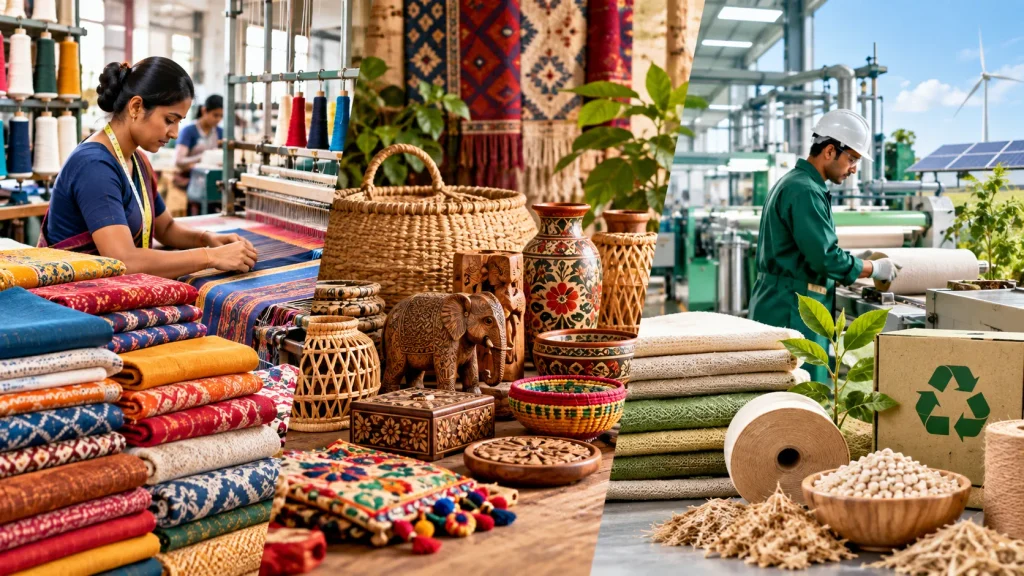
6. Diversified Eco-Friendly Jute Products & Lifestyle Bags
- Estimated Investment: ₹6 Lakhs – ₹14 Lakhs
- Potential Profit: ₹90,000 – ₹2.1 Lakhs per month (22% – 32% net margin)
- Who Should Start This Business: Textile designers, eco-product exporters, or entrepreneurs exploring small-scale manufacturing business ideas and looking to leverage Bengal’s raw jute monopoly.
West Bengal produces the vast majority of India’s raw jute, yet the traditional mill sector remains heavily reliant on basic gunny sacks. With global and domestic bans on single-use plastics tightening, there is surging demand for diversified jute products (JDPs) like laminated shopping totes, conference seminar folders, planters, and fashion handbags.
Setting up a stitching and screen-printing workshop allows you to source inexpensive, fine-grade woven jute fabrics directly from Howrah and Hooghly mills, converting raw yardage into high-margin lifestyle accessories for corporate events, retail chains, and international buyers.
Skills Required:
- Fabric cutting patterns, industrial stitching machine maintenance, screen and digital printing, export documentation.
How to Start:
- Rent an 800–1,200 sq. ft. workshop space in industrial clusters around Howrah, Serampore, or Barasat.
- Install heavy-duty industrial sewing machines (walking foot), fabric-cutting tables, and screen-printing stations.
- Register your entity, obtain GST, an MSME Udyam certificate, and get certified with the National Jute Board (NJB).
- Source high-density bleached and laminated jute rolls directly from wholesale mills around Kolkata and Dankuni.
- Build a product catalog and market directly to corporate gifting agencies, eco-retailers, and trade expos.
Tips to Make It Profitable:
- Apply the official Jute Mark logo on finished goods to verify authentic natural fiber content and command premium export rates.
- Blend jute with cotton (Juco) to produce softer, high-end lifestyle bags that appeal to urban shoppers at double the profit margin.
- Target corporate conferences and medical symposiums in Kolkata and New Town to secure bulk, upfront-paid orders of 500+ bags per event.
7. Authentic Handloom Saree D2C Brand (Tant, Jamdani & Baluchari)
- Estimated Investment: ₹5 Lakhs – ₹12 Lakhs
- Potential Profit: ₹80,000 – ₹1.9 Lakhs per month (30% – 45% net margin)
- Who Should Start This Business: Fashion curators, apparel merchandisers, or e-commerce marketers looking to bridge traditional rural weaver clusters with urban buyers.
Bengal’s weaving heritage ranging from lightweight Phulia and Shantipur Tant to ornate Dhakai Jamdani and Bishnupur Baluchari silks enjoys pan-India prestige, making this D2C model one of the practical business ideas in textile industry for entrepreneurs.
However, master weavers in Nadia and Bankura typically earn meager daily wages because multi-layered middleman chains capture the bulk of retail markups. A digitally native D2C brand that builds direct procurement partnerships with weaver cooperatives solves this imbalance. By curating authentic, certified handloom collections and marketing them through visual storytelling and transparent provenance online, you can secure healthy retail margins while paying artisans fair wages.
Skills Required:
- Handloom textile grading, artisan cluster management, high-fashion styling photography, direct-to-consumer digital ads.
How to Start:
- Travel directly to weaving clusters in Phulia, Samudragarh, or Bishnupur to establish direct-buy relationships with weaver self-help groups.
- Set up a small quality-check, inventory storage, and dispatch unit in Kolkata or suburban rail belts.
- Register for GST, secure the Handloom Mark / Silk Mark certifications, and establish an online storefront.
- Invest in high-definition catalog shoots and behind-the-scenes video reels detailing the weeks of manual labor per drape.
- Launch targeted campaigns on Instagram and Google Shopping ahead of wedding and festive seasons.
Tips to Make It Profitable:
- Sell matching unstitched blouse pieces, designer petticoats, and fabric care kits alongside sarees to lift the average order value.
- Avoid heavy pre-inventory risk by ordering small batches of 3–5 pieces per design, restocking rapidly based on online interest.
- Target the non-resident Bengali diaspora in the US, UK, and Middle East ahead of Durga Puja, where international shipping rates absorb higher margins.
8. Export-Grade Leather Accessories & Goods Manufacturing
- Estimated Investment: ₹10 Lakhs – ₹22 Lakhs
- Potential Profit: ₹1.5 Lakhs – ₹3.5 Lakhs per month (25% – 38% net margin)
- Who Should Start This Business: Leather technologists, product designers, or export merchandisers tapping into the Bantala leather ecosystem.
The Calcutta Leather Complex at Bantala is one of Asia’s largest unified leather tanning and manufacturing clusters, giving local businesses unmatched access to finished goat and bovine leather. While large exporters focus on massive footwear orders for European brands, there is a massive high-margin niche in finished small leather goods (SLGs) including minimalist wallets, laptop sleeves, passport folios, and belts.
Setting up a compact finishing and assembly unit lets you buy premium finished hides locally without interstate freight, producing luxury-grade accessories for domestic lifestyle brands and export buyers, making it one of the promising business ideas in West Bengal for entrepreneurs targeting the leather goods market.
Skills Required:
- Leather grading and cutting, pattern skiving, hardware sourcing, international quality control standards.
How to Start:
- Secure an industrial shed (600–1,200 sq. ft.) near Bantala, Kasba Industrial Estate, or Topsia.
- Procure leather skiving machines, heavy-duty cylinder-arm stitching machines, edge-inking tools, and clicker presses.
- Obtain state factory registrations, GST, and an Import Export Code (IEC) from the DGFT.
- Source finished vegetable-tanned and chrome-free leathers directly from compliant tanneries inside the Bantala complex.
- Pitch white-label contract manufacturing to boutique fashion labels or launch an independent private label online.
Tips to Make It Profitable:
- Focus on corporate gifting catalogs (branded leather organizers, card holders, key fobs) during Diwali and the financial year-end.
- Utilize leather offcuts and scraps to produce small items like coin pouches, cord organizers, and keychains with zero material waste.
- Highlight vegetable-tanned, sustainable leather options to attract ethical boutique buyers in European and North American markets.
9. Modern Terracotta & Clay Home Decor Production
- Estimated Investment: ₹4 Lakhs – ₹8 Lakhs
- Potential Profit: ₹60,000 – ₹1.4 Lakhs per month (35% – 50% net margin)
- Who Should Start This Business: Ceramic artists, product designers, or home decor retailers looking to modernize traditional earthen crafts.
Bengal’s terracotta craft, historically centered around Panchmura and Bankura, is globally famous for its architectural wall tiles and votive horses. Today’s urban interior design trends heavily favor earthy, biophilic, and wabi-sabi elements in modern apartments.
By collaborating with rural potter communities to refine traditional clay formulations introducing high-temperature firing, moisture-resistant sealing, and contemporary minimalist silhouettes you can produce designer indoor planters, pendant lampshades, tableware, and wall installations that sell at boutique lifestyle stores for premium prices.
Skills Required:
- Ceramic and clay design, kiln firing supervision, fragility packaging engineering, B2B retail pitching.
How to Start:
- Partner with traditional potters and artisan clusters in Bankura, Nadia, or Hooghly on a contractual, fair-wage basis.
- Set up a finishing, glazing, quality control, and transit-safe packing facility near Kolkata.
- Develop a curated line of 10–12 functional home products (e.g., self-watering planters, acoustic speaker cones, pendant lights).
- Secure GST registration and register on business handicraft portals supported by the Export Promotion Council for Handicrafts (EPCH).
- Partner with interior designers, architects, and lifestyle home boutiques across Kolkata, Delhi, and Mumbai.
Tips to Make It Profitable:
- Invest heavily in custom molded-foam and drop-tested packaging to keep transit breakage rates below 2% for courier shipments.
- Offer customized commercial terracotta wall panel installations for upscale cafes, boutique hotels, and corporate reception areas.
- Conduct curated pottery workshops and masterclasses in urban Kolkata to monetize creative expertise and drive retail product sales.
10. Upcycled Kantha Embroidery Apparel & Home Textiles Studio
- Estimated Investment: ₹3 Lakhs – ₹7 Lakhs
- Potential Profit: ₹70,000 – ₹1.6 Lakhs per month (35% – 50% net margin)
- Who Should Start This Business: Fashion designers, textile curators, or women entrepreneurs interested in slow fashion and ethical artisan networks.
Kantha embroidery, native to rural Bengal (particularly Santiniketan, Bolpur, and Birbhum), is celebrated worldwide for its intricate, running-stitch storytelling on fabric. As global consumers pivot toward circular, sustainable fashion, upcycled Kantha jackets, quilts (gudris), cushion covers, and tote bags have become major hits in international bohemian and ethical fashion markets.
By working directly with women artisan self-help groups (SHGs) in Birbhum, providing them with quality deadstock fabrics and contemporary silhouettes, you can build a high-margin slow-fashion brand with strong social impact.
Skills Required:
- Garment silhouette design, traditional stitch quality grading, SHG artisan coordination, social media marketing.
How to Start:
- Established a network of rural women artisans and SHG clusters in and around Bolpur/Santiniketan.
- Source pure handloom deadstock cottons, linens, and vintage tussar silk fabrics from textile mills and export houses.
- Set up a design cutting, quality check, and iron-packing studio in Kolkata or Bolpur.
- Complete GST registration and set up global selling accounts on platforms like Etsy, Shopify, and specialized craft marketplaces.
- Document the artisan makers, their village roots, and the cultural symbolism of their motifs to build deep brand storytelling.
Tips to Make It Profitable:
- Sell directly to international buyers on Etsy and global craft sites where upcycled Kantha jackets routinely command $60 to $150 (₹5,000–₹12,000) per piece.
- Expand beyond apparel into home decor items like statement throws, runners, and pillow covers, which have zero size-return issues.
- Package items in branded organic cotton dust bags with handwritten artisan profile cards to create a memorable unboxing experience.
C. Logistics, Trade & Regional Supply Chain

11. Cross-Border Trade & Customs Clearance Facilitation
- Estimated Investment: ₹3 Lakhs – ₹6 Lakhs
- Potential Profit: ₹90,000 – ₹2.2 Lakhs per month (40% – 55% net margin)
- Who Should Start This Business: Customs house agents, logistics coordinators, or trade compliance specialists familiar with land customs stations.
West Bengal shares international borders with Bangladesh, Nepal, and Bhutan, hosting critical land ports like Petrapole (the largest land port in South Asia), Jaigaon, and Panitanki. Billions of dollars in bilateral trade ranging from cotton yarn and machinery to processed foods pass through these checkpoints yearly.
However, small exporters and regional manufacturers struggle with shifting tariff codes, customs declarations, electronic cargo tracking, and demurrage penalties. A specialized cross-border trade facilitation agency provides end-to-end documentation, customs broking, border clearance, and vehicle coordination, helping traders move freight without border delays and making it one of the practical business ideas in West Bengal for entrepreneurs targeting cross-border trade.
Skills Required:
- Customs clearance procedures, HS code classification, foreign trade policy (FTP) compliance, cross-border documentation, port coordination.
How to Start:
- Secure a Custom House Agent (CHA) license or partner with an established customs brokerage firm.
- Set up a liaison office in Kolkata near the port area or close to border transit corridors like Petrapole or Siliguri.
- Register for GST, obtain an IEC (Import Export Code), and open accounts on customs EDI and ICEGATE platforms.
- Network with regional textile mills, agro-exporters, and FMCG distributors actively trading with Bangladesh and Nepal.
- Deploy cargo-tracking workflows to provide clients with continuous visibility on vehicle border clearance status.
Tips to Make It Profitable:
- Bundle inland transport coordination with customs clearance to earn margins on both trucking freight and documentation fees.
- Offer specialized handling for perishable agricultural cargo (like onions, ginger, and fresh fish), which commands higher express clearance fees.
- Provide trade finance facilitation and foreign exchange advisory services to recurring export clients for an extra retainer fee.
12. Eastern Dedicated Freight Corridor (EDFC) Feeder Warehousing
- Estimated Investment: ₹15 Lakhs – ₹32 Lakhs
- Potential Profit: ₹2.5 Lakhs – ₹5.5 Lakhs per month (25% – 35% net margin)
- Who Should Start This Business: Supply chain managers, commercial real estate investors, or logistics warehouse operators.
The completion of the Eastern Dedicated Freight Corridor terminating at Dankuni has transformed the surrounding Howrah-Hooghly belt into the premier logistics junction of Eastern India. National e-commerce players, white-goods manufacturers, and FMCG brands require Grade-A and Grade-B distribution warehouses to stock goods arriving via high-speed freight trains before breaking them into smaller regional delivery routes. Setting up a secure, palletized hub with loading docks and material handling equipment in Dankuni, Singur, or Uluberia lets you lease fractional pallet storage to multiple corporate clients.
Skills Required:
- Warehouse management systems (WMS), inventory layout optimization, freight handling safety, commercial lease negotiation.
How to Start:
- Lease a 5,000–10,000 sq. ft. industrial warehouse space close to the Dankuni rail freight terminal or NH-16/NH-19 junctions.
- Install heavy-duty industrial pallet racking, battery-operated stackers, dock levelers, and 24/7 CCTV surveillance networks.
- Acquire necessary fire safety NOCs, commercial warehousing licenses, and insurance coverage for stored goods.
- Implement a cloud-based Warehouse Management System (WMS) supporting real-time barcode scanning and inventory tracking.
- Pitch pallet storage space to regional e-commerce logistics providers, pharma distributors, and consumer durable brands.
Tips to Make It Profitable:
- Charge a hybrid billing model combining a fixed monthly pallet fee with variable in-and-out handling and picking charges.
- Provide value-added kitting, shrink-wrapping, and regional barcode labeling inside the warehouse at an extra per-unit charge.
- Maximize floor space by utilizing vertical clearance with 5-tier to 6-tier selective pallet racking systems.
13. Siliguri Transit Hub Fleet & Northeast Cargo Consolidation
- Estimated Investment: ₹12 Lakhs – ₹25 Lakhs
- Potential Profit: ₹1.8 Lakhs – ₹3.8 Lakhs per month (20% – 30% net margin)
- Who Should Start This Business: Fleet owners, transport contractors.
Siliguri is the strategic geographic choke point connecting mainland India to all seven Northeastern states, Sikkim, and hill stations like Darjeeling. Hundreds of tons of commercial cargo arrive in Siliguri daily via long-haul rail and heavy trucks, but large multi-axle vehicles cannot easily navigate the steep, narrow hill roads or congested secondary corridors of the Northeast. A cargo consolidation and transshipment hub collects bulk shipments, unpacks them in Siliguri, and reloads them onto smaller, rugged medium-duty trucks for reliable last-mile hill and interstate distribution.
Skills Required:
- Fleet maintenance supervision, regional permit regulations, transshipment logistics, cargo load balancing.
How to Start:
- Lease an open yard and covered transit godown (2,000–4,000 sq. ft.) along the Eastern Bypass or Matigara in Siliguri.
- Procure or contract a fleet of 5–8 intermediate commercial vehicles (ICVs like 14-to-19 footers) suitable for hill terrain.
- Secure national and regional goods carrier permits, commercial motor insurance, and transport agency registrations.
- Partner with large national logistics firms (like TCI, V-Trans, Delhivery) that need dependable regional onward delivery partners.
- Install GPS trackers on all vehicles to monitor transit times through hill passes and manage turnarounds efficiently.
Tips to Make It Profitable:
- Secure return-trip cargo from the hills such as ginger, cardamom, broomsticks, and loose tea leaves to avoid empty backhauls.
- Offer specialized temperature-controlled transit for high-value pharmaceuticals and vaccines destined for North Bengal and Sikkim hospital networks.
- Negotiate quarterly freight contracts with FMCG companies with built-in diesel fuel escalation clauses to protect operating margins.
14. Cold-Chain Reeled Logistics for Fresh Dairy & Confectionery
- Estimated Investment: ₹8 Lakhs – ₹18 Lakhs
- Potential Profit: ₹1.3 Lakhs – ₹2.8 Lakhs per month (28% – 40% net margin)
- Who Should Start This Business: Refrigerated fleet operators, mechanical engineers, or commercial transport owners.
West Bengal’s vast daily consumption of raw milk, chhena, paneer, and perishables creates an ongoing logistics headache: traditional unrefrigerated transport results in significant curdling and bacterial spoilage during warm, humid months. Small sweet makers, independent dairies, and quick-service restaurant chains cannot afford their own captive fleets of expensive refrigerated trucks.
By operating a specialized micro-fleet of temperature-controlled refrigerated vans (reefers maintaining 2°C to 8°C) serving rural-to-urban dairy belts, you provide reliable cold-chain transit on daily milk-run schedules, making it one of the practical business ideas in West Bengal for entrepreneurs entering the cold-chain logistics sector.
Skills Required:
- Refrigeration unit maintenance, cold-chain temperature monitoring, route scheduling, vehicle hygiene protocols.
How to Start:
- Purchase 2–3 small-to-medium commercial vehicles (e.g., Tata Ace or Mahindra Bolero Maxi Truck) fitted with insulated containers and chillers.
- Install real-time telematics and digital temperature data loggers that generate tamper-proof cold-chain verification reports for clients.
- Secure commercial transport permits, food-grade transit clearances, and FSSAI transport licensing.
- Map daily morning collection routes connecting dairy belts in Nadia, Hooghly, and Bardhaman directly to sweet workshops in Kolkata.
- Offer predictable, scheduled morning and evening transit slots to local ice-cream brands, dairies, and cloud kitchens.
Tips to Make It Profitable:
- Use the vehicles during afternoon off-peak hours to transport temperature-sensitive diagnostic lab samples and vaccines for pathology chains.
- Charge premium rush rates for early-morning festival deliveries during peak sweet-making holidays like Kali Puja and Durga Puja.
- Implement strict pre-cooling protocols to minimize fuel consumption while the reefer compressors are operating on transit routes.
15. Industrial Hardware & Safety Gear Wholesale Distribution
- Estimated Investment: ₹7 Lakhs – ₹15 Lakhs
- Potential Profit: ₹1.1 Lakhs – ₹2.4 Lakhs per month (18% – 28% net margin)
- Who Should Start This Business: Industrial procurement agents, hardware traders, or B2B sales professionals targeting Bengal’s manufacturing belts.
The heavy industrial belts of Howrah (the historic “Sheffield of India”), Durgapur-Asansol steel plants, and Haldia petrochemical complexes house thousands of factories operating under strict factory safety and maintenance protocols.
These industrial units consume massive quantities of consumables daily, including PPE kits, safety helmets, steel-toe boots, welding electrodes, cutting discs, and hydraulic seals. Establishing a streamlined B2B distribution agency that supplies certified industrial hardware and safety gear directly to factory floors cuts procurement friction for plant managers who dislike dealing with disorganized retail bazaars.
Skills Required:
- Industrial catalog sourcing, technical product knowledge (BIS/CE certifications), credit cycle management, B2B sales pitching.
How to Start:
- Set up a commercial office and stocking depot (500–1,000 sq. ft.) in an industrial center like Howrah, Raniganj, or Haldia.
- Secure authorized distributor partnerships with leading industrial safety and welding equipment manufacturers.
- Complete GST registration, MSME filings, and establish vendor profiles on major corporate procurement portals.
- Build a comprehensive catalog featuring ISI-marked safety gear, abrasives, fasteners, and workshop maintenance supplies.
- Deploy a field sales executive to visit plant maintenance and safety heads across local industrial estates on a weekly cadence.
Tips to Make It Profitable:
- Sign monthly vendor rate contracts (VRCs) with manufacturing plants, guaranteeing fixed prices and recurring monthly purchase orders.
- Maintain tight 30-day payment cycles and offer a 2% cash discount to corporate clients for immediate 7-day invoice settlements.
- Stock high-wear, high-replacement consumables like cutting wheels and safety gloves, which deliver reliable, recurring order volume.
D. IT, Digital Services & Professional Solutions

16. Cost-Arbitrage Remote Tech Staffing & Offshore Development Center (ODC)
- Estimated Investment: ₹5 Lakhs – ₹10 Lakhs
- Potential Profit: ₹1.8 Lakhs – ₹4 Lakhs per month (30% – 45% net margin)
- Who Should Start This Business: Senior software engineers, technical recruiters, or IT delivery managers looking to monetize Eastern India’s engineering talent.
While IT hubs like Bengaluru and Hyderabad face high employee turnover and steep engineering salaries, Kolkata offers a large pool of software developers, data analysts, and QA testers at significantly more sustainable compensation levels.
Western startups and mid-market firms in the US, UK, and Middle East struggle with local developer shortages and seek dependable offshore teams. By establishing a managed Offshore Development Center (ODC) in Salt Lake Sector V or New Town, you can recruit, vet, and provide dedicated software engineering squads on monthly retainers, managing payroll, hardware, and delivery oversight for a healthy margin.
Skills Required:
- Technical candidate screening, client contract management, agile sprint oversight, IT infrastructure administration.
How to Start:
- Lease a 15-to-25 seat plug-and-play managed desk setup in a co-working space in Sector V or New Town.
- Procure enterprise laptops, configure dual-line high-speed fiber internet, and set up endpoint security compliance protocols.
- Register your business as a private limited entity, obtain GST, and set up a foreign inward remittance bank account (FIRC).
- Source pre-vetted full-stack developers (React, Node, Python, AWS) from local engineering institutions and tier-2 colleges across Bengal.
- Conduct targeted outreach on LinkedIn targeting CTOs and engineering VPs of venture-funded startups in Europe and North America.
Tips to Make It Profitable:
- Price your services on a monthly full-time equivalent (FTE) model ($2,500 to $4,500 per engineer/month), capturing healthy wage-arbitrage margins.
- Mandate 3-to-6 month minimum lock-in contracts with upfront billing cycles to protect cash flow and offset hiring expenses.
- Expand into managed DevOps and site-reliability maintenance retainers, which command higher billing rates than basic application maintenance.
17. Hyperlocal Regional SEO & Bengali Content Marketing Agency
- Estimated Investment: ₹2 Lakhs – ₹5 Lakhs
- Potential Profit: ₹80,000 – ₹2 Lakhs per month (40% – 55% net margin)
- Who Should Start This Business: SEO specialists, vernacular copywriters, or digital marketers targeting non-metro consumer reach.
With voice search and regional-language internet adoption booming across Tier-2 and Tier-3 Bengal including Asansol, Siliguri, Durgapur, and Kharagpur, national brands, regional hospital chains, and real estate developers must connect in the local language. English-first ad campaigns fail to deliver high conversion rates among vernacular buyers.
A specialized digital marketing agency that produces culturally nuanced Bengali copywriting, local SEO listings, regional YouTube video scripts, and geo-targeted Meta ad funnels helps brands build direct local trust and drive measurable inquiries, making it one of the promising business ideas in West Bengal for entrepreneurs with digital marketing expertise.
Skills Required:
- Bengali copywriting and transcreation, local search engine optimization, Google My Business management, paid social campaign management.
How to Start:
- Build a lean remote team consisting of a bilingual copywriter, an SEO technician, and a graphic designer.
- Set up a clean portfolio website showcasing sample landing pages and local search ranking audits in regional languages.
- Target regional healthcare clinics, educational coaching institutes, and regional jewelry brands across Kolkata and district headquarters.
- Pitch prospective clients a complimentary local search audit showing how competitors capture neighborhood queries.
- Implement structured analytics reporting to prove monthly organic telephone inquiries and footfall conversions to clients.
Tips to Make It Profitable:
- Sell fixed-fee monthly retainer packages (₹35,000 to ₹75,000 per brand) bundling local map optimization with content production.
- Upsell high-converting WhatsApp marketing flows that send automated localized sales sequences directly to prospective leads.
- Provide voice-over and localization services for corporate training videos and national TVCs adapting into the regional Bengali market.
18. Fintech Compliance & Small Business Accounting Hub
- Estimated Investment: ₹3 Lakhs – ₹6 Lakhs
- Potential Profit: ₹90,000 – ₹2.2 Lakhs per month (45% – 60% net margin)
- Who Should Start This Business: Chartered Accountants (CAs), cost accountants (CMA), or experienced tax consultants targeting Bengal’s vast MSME ecosystem.
West Bengal hosts nearly 90 lakh MSME units, from traditional trading firms in Burrabazar to manufacturing plants in Howrah. Many of these traditional, family-owned enterprises struggle with digital invoicing, GST reconciliations, input tax credit (ITC) mismatches, and emerging corporate governance norms.
Operating a specialized bookkeeping and taxation hub that deploys modern cloud accounting software (Zoho Books, Tally Prime) directly resolves administrative backlogs, helping business owners avoid tax notices and stay bank-ready for working capital loans.
Skills Required:
- Corporate taxation, GST compliance and filings, corporate secretarial auditing, cloud accounting software integration.
How to Start:
- Secure a compact commercial office (300–600 sq. ft.) near traditional commercial trading belts like Dalhousie, Burrabazar, or Girish Park.
- Procure multi-user cloud accounting software licenses and secure digital signature infrastructure.
- Register your firm with the relevant professional accounting institute and complete local municipal trade clearances.
- Network with regional trade bodies (such as the Bharat Chamber of Commerce and Merchants’ Chamber of Commerce) to build trust among business owners.
- Provide an initial free reconciliation audit of previous GST filings to identify unclaimed input tax credits and showcase instant financial value.
Tips to Make It Profitable:
- Charge an ongoing monthly retainer for recurring payroll, bookkeeping, and GST filing instead of relying on seasonal annual tax returns.
- Help clients prepare structured loan applications and CMA data for bank credit lines, charging a success-fee percentage on sanctioned working capital.
- Offer specialized audit trails for e-commerce and retail sellers dealing with complex multi-state returns and tax deductions.
19. Turnkey Audio-Visual & Podcast Studio for Content Creators
- Estimated Investment: ₹6 Lakhs – ₹13 Lakhs
- Potential Profit: ₹1 Lakhs – ₹2.4 Lakhs per month (40% – 55% net margin)
- Who Should Start This Business: Sound engineers, video producers, or creative media operators catering to Kolkata’s growing creator economy.
Kolkata is widely regarded as a cultural and intellectual capital, with an expanding community of authors, educators, financial influencers, and corporate podcast hosts. However, most creators lack access to broadcast-grade acoustic environments, studio lighting, and cinematic cameras at home.
Setting up a sound-dampened, aesthetically staged audio-visual studio in an accessible corridor like South City/Jadavpur or Salt Lake enables creators, corporate teams, and educators to book hourly recording slots, record their sessions, and receive edited, production-ready files without purchasing costly gear.
Skills Required:
- Studio acoustic design, professional audio mixing (DAW), studio lighting setups, video post-production workflows.
How to Start:
- Rent an 800–1,200 sq. ft. commercial or quiet residential space with good transit connectivity and low ambient street noise.
- Build a sound-isolated vocal booth and visual studio floor using acoustic rockwool paneling, bass traps, and silent split-inverter air conditioning.
- Procure high-end dynamic microphones (Shure SM7B), multi-channel audio interfaces, 4K mirrorless cameras, and studio lighting grids.
- Set up a web-based booking calendar with upfront hourly payment collection to streamline studio reservations.
- Offer free 30-minute pilot recording sessions to prominent regional YouTubers, authors, and agency heads to drive organic social buzz.
Tips to Make It Profitable:
- Offer an end-to-end post-production tier: charge double the hourly studio fee to deliver edited YouTube long-form videos and short clips.
- Sell off-peak daytime hours (10:00 AM to 3:00 PM) to edtech tutors and corporate professionals recording internal training modules.
- Monetize weekend downtime by renting out specialized equipment (lenses, portable wireless mics, field monitors) to independent indie filmmakers.
20. B2B Corporate Gifting & Event Merchandising Agency
- Estimated Investment: ₹4 Lakhs – ₹9 Lakhs
- Potential Profit: ₹1.2 Lakhs – ₹2.8 Lakhs per month (25% – 35% net margin)
- Who Should Start This Business: Creative merchandisers, corporate procurement liaisons, or retail packaging specialists.
The heavy presence of IT conglomerates, banking headquarters, and consulate hubs across Salt Lake Sector V, New Town, and Central Kolkata generates substantial, continuous demand for corporate event kits, onboarding welcome packs, and festive employee gifts.
Companies are moving away from cheap plastic pens and generic mugs in favor of sustainable, curated gift boxes featuring Bengal’s artisanal roots such as handcrafted notebooks, brass desk accents, single-estate teas, and premium jute accessories. Acting as a turnkey corporate merchandise agency lets you curate, brand, and assemble these kits on tight corporate deadlines, making it one of the promising business ideas in West Bengal for entrepreneurs targeting the corporate gifting market.
Skills Required:
- Supplier sourcing, custom brand printing, client account management, gift assembly and packaging logistics.
How to Start:
- Establish wholesale supply ties with local artisan cooperatives, sustainable bag manufacturers, and premium confectioners.
- Tie up with reliable local screen-printing, laser-engraving, and UV-printing units in Chandni Chowk or Bowbazar for rapid branding.
- Create a high-quality physical catalog featuring 4 tiered corporate gift kits (Executive, New Joinee, Eco-Friendly, Festive Celebration).
- Set up an office space and packing table in an accessible hub, ensuring complete trade licenses and GST registrations are in place.
- Pitch HR directors, internal marketing managers, and admin procurement heads across IT campuses and corporate parks.
Tips to Make It Profitable:
- Require a mandatory 50% advance on confirmed purchase orders to fund all wholesale inventory procurement without personal debt.
- Standardize branded packaging boxes in volume so you only need to swap inner contents to match varying corporate budgets.
- Secure multi-year framework contracts for employee milestone gifts (birthdays, work anniversaries) to generate steady, year-round revenue.
E. Tourism, Real Estate & Green Energy

21. Eco-Resort & Experiential Tea Tourism Retreat
- Estimated Investment: ₹25 Lakhs – ₹55 Lakhs
- Potential Profit: ₹3.5 Lakhs – ₹7 Lakhs per month (28% – 40% net margin)
- Who Should Start This Business: Hospitality operators, travel curators, or real estate developers looking to capitalize on Eastern Himalayan tourism.
North Bengal stretching from the lush forests of Dooars (Lataguri, Jaldapara) to the rolling slopes of Darjeeling, Kurseong, and Kalimpong draws millions of domestic and international travelers year-round. However, modern travelers are actively avoiding noisy, crowded budget hotels in favor of nature-immersed eco-cottages, organic farm stays, and heritage tea-bungalow experiences. By leasing an underutilized heritage planter bungalow or building modular bamboo/timber eco-cottages near wildlife buffers or tea gardens, you can offer experiential stays combining guided forest treks, local ethnic cuisine, and birdwatching at premium per-night tariffs.
Skills Required:
- Experiential hospitality management, local community liaison, eco-friendly property design, travel OTA distribution.
How to Start:
- Secure a long-term lease on an ancestral property, farm acreage, or hillside clearing with clean title deeds in Dooars or Kalimpong.
- Build or retrofit 6–10 low-impact, weather-insulated wooden/bamboo cottages with clean, modern plumbing fixtures.
- Obtain local Panchayat trade permissions, fire safety clearance, and state tourism department homestay/resort registration.
- Partner with local tribal self-help groups and registered forest guides to deliver authentic culinary and wildlife safari experiences.
- List on platforms like Airbnb, MakeMyTrip, and specialized experiential travel portals while marketing directly via visual travel reels.
Tips to Make It Profitable:
- Target travelers from Kolkata looking for extended weekend getaways, offering direct pickup packages from Bagdogra Airport or NJP railway station.
- Host seasonal outdoor wellness camps (yoga retreats, landscape photography workshops) during shoulder seasons to maintain steady occupancy.
- Sell curated on-site souvenirs like estate-harvested orthodox tea boxes, cold-pressed raw honey, and handmade regional fruit preserves.
22. Public Commercial EV Charging Station & Fast-Hub
- Estimated Investment: ₹14 Lakhs – ₹28 Lakhs
- Potential Profit: ₹1.4 Lakhs – ₹3 Lakhs per month (25% – 35% net margin)
- Who Should Start This Business: Landowners along major transit corridors, fuel station operators, or green infrastructure investors.
With Kolkata rapidly expanding its electric bus fleets, commercial e-cabs, and two-wheelers, paired with rising EV traffic along National Highways (NH-16, NH-19, and Kona Expressway), fast-charging infrastructure is struggling to keep pace.
Under the West Bengal Electric Vehicle Policy, the state has removed fixed electricity connection charges and introduced concessional time-of-day tariffs for commercial charging points. Setting up a dual-gun DC fast-charging station (60kW to 120kW) along busy feeder roads like EM Bypass, New Town, or Dankuni captures strong, daily transit demand from commercial cab fleets and private EV owners.
Skills Required:
- Electrical load assessment, commercial land lease management, EV telematics/billing software oversight, equipment maintenance.
How to Start:
- Secure a visible roadside plot (minimum 1,200–2,500 sq. ft.) with easy vehicular ingress and egress along an arterial highway or IT corridor.
- Apply for a dedicated HT (High Tension) commercial EV electricity connection through WBSEDCL or CESC.
- Procure ARAI-certified dual-gun DC fast chargers and Bharat AC-001 slow chargers supporting universal connector standards (CCS2, Type-2).
- Partner with a leading Charge Point Operator (CPO) network (e.g., Tata Power EZ Charge, Statiq, Jio-bp) for automated app billing and customer discovery.
- Set up a safe, well-lit canopy with a basic convenience kiosk selling snacks and hot beverages while drivers wait.
Tips to Make It Profitable:
- Negotiate charging tie-ups with commercial fleet operators and e-taxi aggregators for guaranteed minimum daily vehicle utilization.
- Generate high-margin ancillary revenue by operating a quick-service snack bar and automated beverage vending machines next to the charging bays.
- Take full advantage of off-peak power tariffs during daytime and late-night hours to widen your gross unit electricity spread.
23. Rooftop Solar EPC & Commercial Net-Metering Solutions
- Estimated Investment: ₹5 Lakhs – ₹10 Lakhs
- Potential Profit: ₹1.5 Lakhs – ₹3.2 Lakhs per month (20% – 30% project margin)
- Who Should Start This Business: Electrical engineers, renewable energy contractors, or industrial technical suppliers.
Industrial tariffs and commercial electricity rates in Kolkata (CESC operational areas) and surrounding districts (WBSEDCL areas) represent a major recurring expense for factories, hospitals, private schools, and residential housing complexes. Rising operational costs and favorable net-metering policies have created a massive wave of solar conversions. An engineering, procurement, and construction (EPC) firm handles site audits, structural shadow analysis, DISCOM net-metering paperwork, panel installation, and inverter maintenance, helping property owners slash their power bills by up to 60% without managing the technical installation themselves, making it one of the practical solar power business ideas in West Bengal for entrepreneurs entering the renewable energy sector.
Skills Required:
- PV system design (HelioScope/PVsyst), electrical grid interconnection norms, net-metering DISCOM liaison, on-site labor supervision.
How to Start:
- Register an engineering proprietorship or LLP, obtain GST, and register as an empanelled solar vendor with state agencies.
- Establish wholesale procurement accounts with Tier-1 solar panel manufacturers, string inverter brands, and aluminum rail suppliers.
- Build a lean installation squad comprising licensed wiremen and structural fitters.
- Conduct targeted outreach toward industrial clusters in Howrah, Hooghly, and South 24 Parganas offering a free solar feasibility and payback-period report.
- Manage the complete DISCOM net-metering application and bi-directional meter testing workflow on behalf of the customer.
Tips to Make It Profitable:
- Bundle Annual Maintenance Contracts (AMCs) covering panel cleaning, inverter diagnostics, and thermal imaging inspections for steady recurring revenue.
- Focus on commercial and industrial (C&I) clients with 20kW to 100kW requirements rather than tiny 2kW home setups to maximize revenue per installation.
- Assist commercial clients in claiming Section 32 accelerated depreciation tax benefits, making your sales pitch financially compelling.
24. Modular Cold-Storage & Ripening Chambers for Farm Produce
- Estimated Investment: ₹18 Lakhs – ₹38 Lakhs
- Potential Profit: ₹2.5 Lakhs – ₹5.2 Lakhs per month (25% – 35% net margin)
- Who Should Start This Business: Agri-infrastructure entrepreneurs, warehouse developers, or rural cold-chain investors.
West Bengal is the largest producer of potatoes in India and a leading grower of bananas and seasonal vegetables. However, massive post-harvest losses occur every year due to inadequate localized cold-storage infrastructure. Traditional massive potato cold storages are overcrowded, inflexible, and unsuited for delicate horticulture crops. Developing a modular, multi-commodity cold-storage facility and ethylene ripening chamber in districts like Nadia, Hooghly, or East Bardhaman allows local farmers and wholesale traders to store table potatoes, vegetables, and uniformly ripen bananas without harmful chemical additives.
Skills Required:
- HVAC refrigeration monitoring, ethylene gas ripening regulation, humidity control, agricultural produce handling.
How to Start:
- Lease a 2,500–5,000 sq. ft. commercial shed in an agricultural trade belt close to a primary wholesale vegetable market (Kishan Mandi).
- Install insulated PUF panels, heavy-duty industrial condensing units, micro-climate humidity controllers, and ethylene generator systems.
- Secure cold-chain capital investment subsidies through the National Horticulture Board (NHB) or State Agricultural Marketing Board.
- Complete FSSAI food storage clearances, local trade licenses, and back up the facility with a heavy-duty silent diesel generator.
- Offer seasonal pallet and crate space to local fruit traders, potato distributors, and regional supermarket buying agents.
Tips to Make It Profitable:
- Combine commercial ripening services (charging per banana crate) with static storage to maintain multiple revenue streams throughout the month.
- Apply for power tariff subsidies and capital grants under the Mission for Integrated Development of Horticulture (MIDH).
- Provide plastic returnable crates (PRCs) on daily rent to regional farmers delivering produce to your storage facility.
25. Heritage Homestay & Architectural Restoration Management
- Estimated Investment: ₹10 Lakhs – ₹20 Lakhs
- Potential Profit: ₹1.3 Lakhs – ₹2.8 Lakhs per month (30% – 45% net margin)
- Who Should Start This Business: Interior designers, conservationists, or boutique hospitality hosts.
Kolkata and cultural towns like Santiniketan, Murshidabad, and Serampore are filled with historic aristocratic mansions (Rajbaris and colonial townhouses). Many of these historic structures sit partially neglected by absentee descendants who find basic maintenance costs prohibitive.
An architectural restoration and boutique homestay management agency steps in with an asset-light model: you lease or sign revenue-sharing operational pacts with property owners, restore the period interiors with modern boutique amenities (air conditioning, heritage brass fittings, high-end linens), and market them as premium heritage stays for international tourists and domestic heritage travelers.
Skills Required:
- Architectural styling, heritage conservation carpentry, hospitality operations, dynamic OTA pricing, cultural storytelling.
How to Start:
- Identify structurally sound, architecturally unique ancestral properties in North Kolkata, Serampore, or Santiniketan.
- Sign a 5-to-10 year operational lease or revenue-sharing contract with the property owners clearly allocating restoration budgets.
- Undertake tasteful, non-invasive interior renovations: restore vintage shuttered windows, polish red oxide or mosaic floors, and install modern ensuite luxury bathrooms.
- Register the property under the West Bengal Tourism Department’s Homestay Scheme to access policy incentives and marketing support.
- List the property on Airbnb, specialized luxury travel collections, and create a strong presence on social media highlighting the home’s history.
Tips to Make It Profitable:
- Rent out the heritage courtyard, verandas, and grand halls on weekdays for fashion editorial photoshoots, brand launches, and indie movie filming.
- Host curated regional dining experiences (authentic Bengali heritage thalis) for non-resident guests by reservation on weekends.
- Partner with cultural walking-tour companies in Kolkata to establish your property as a curated tea stop or experiential overnight hub.
Government & Startup Support In West Bengal
The Government of West Bengal runs targeted industrial incentive schemes, subsidized financing models, and incubation corridors designed to support micro, small, and medium businesses.
- Silpa Sathi Single-Window Digital Portal: A centralized online clearance platform that handles enterprise setup approvals, trade licenses, fire NOCs, and environmental consents through standardized, time-bound workflows.
- West Bengal Incentive Scheme (WBIS) & Fiscal Subsidies: Provides capital investment subsidies, term-loan interest subsidies (up to 25%–35%), power tariff concessions, and stamp duty reimbursements for eligible manufacturing and agro-processing units.
- Bhabishyat Credit Card Scheme (BCCS): Extends collateral-free bank loans up to ₹5 Lakhs with a 10% government margin-money subsidy and state credit guarantees to help first-time entrepreneurs launch micro-ventures.
- Startup Bengal & IIM Calcutta Innovation Park (IIMCIP): Structured incubation support providing seed funding access, investor demo days, and mentoring across specialized hubs like the Bengal Business Accelerator.
- National Jute Board & MSME Cluster Assistance: Direct grant linkages, machinery upgrade assistance, and common facility infrastructure support for enterprises operating within traditional jute, leather, and handloom textile belts.
How To Choose The Right Business For Your Area?
Selecting a viable business in West Bengal requires matching your operating model with the state’s distinct regional economic zones and consumer demographics.
- Target Kolkata’s Urban Affluence for D2C & Lifestyle Services: Central and South Kolkata (Park Street, Ballygunge, Alipore, Gariahat) command strong purchasing power, making them ideal for artisanal culinary retail, boutique fitness, and bespoke lifestyle decor.
- Leverage Salt Lake Sector V & New Town for Tech & B2B Services: The IT and corporate corridor houses hundreds of tech offices and thousands of young professionals, creating steady year-round demand for corporate catering, B2B agencies, and managed content studios.
- Position Warehousing & Logistics Along the Dankuni & Howrah Belt: Dankuni’s position as the freight rail terminus and Howrah’s highway access make this region the best location for bulk distribution centers, parcel hubs, and cold storage units.
- Tap Into Siliguri for Regional Trade & Cross-Border Logistics: If you plan to serve the Northeast, Sikkim, or neighboring countries like Nepal and Bhutan, Siliguri’s transshipment hub provides the necessary transit routes and carrier fleets.
- Match Agro-Processing Units with Local Crop Belts: Establish fruit pulping, cold storage, or mustard oil extraction close to regional farm clusters such as Malda for mangoes, Nadia/Bardhaman for dairy and mustard, and Hooghly for potatoes to keep raw material transport costs low. This approach also creates opportunities for agriculture business ideas that are closely connected to local farming and food-supply networks.
Conclusion
In conclusion, West Bengal presents a distinct strategic advantage for founders who recognize the value of Eastern India’s trade gateway and consumer density. Whether modernizing heritage industries like tea, jute, and sweets, or setting up high-margin B2B services in Salt Lake Sector V and New Town, the combination of lower commercial rentals, abundant educated talent, and expanding multimodal connectivity provides a sustainable buffer for early-stage profitability.
The key to succeeding here is building a business that addresses concrete everyday demands or taps into proven cross-border trade corridors. By taking advantage of government facilitation through the Silpa Sathi portal, securing regional supply linkages, and maintaining tight control over initial capital expenditure, entrepreneurs can build a resilient, scalable enterprise, making these business ideas in West Bengal suitable for a wide range of emerging ventures.
Frequently Asked Questions (FAQs)
1. What Is The Most Profitable Business To Start In West Bengal With Low Investment?
B2B digital marketing agencies, remote IT staffing/development studios, and packaged specialty tea or sweet brands offer some of the highest returns on minimal capital. With an upfront investment of ₹2 Lakhs to ₹6 Lakhs, service-oriented ventures can operate out of co-working spaces in Salt Lake or New Town, generating net profit margins between 35% and 55% due to low overheads and steady corporate demand.
2. Which Areas In West Bengal Offer The Best Commercial Footfall And Infrastructure?
For corporate tech, B2B services, and co-working hubs, Salt Lake Sector V and New Town are the primary commercial engines. For premium lifestyle, dining, and retail fashion, Central and South Kolkata (Park Street, Ballygunge, Gariahat, Alipore) lead in spending power. For warehousing, logistics, and manufacturing, the Dankuni-Howrah corridor provides superior rail and highway connectivity. In North Bengal, Siliguri serves as the commercial epicenter for trade entering the Northeast, Sikkim, and neighboring nations.
3. What Licenses And Registrations Are Required To Start A Business In West Bengal?
Foundational registrations include an MSME Udyam certificate, GST registration (mandatory once crossing turnover thresholds or for interstate sales), and a local Trade License issued by the relevant municipal corporation (such as KMC in Kolkata) or Gram Panchayat. Food and beverage businesses require an FSSAI state license, manufacturing and packaging units need state pollution control board (WBPCB) consent, and export-import operations mandate an Import Export Code (IEC) from the DGFT.
4. How Does The West Bengal Government Assist New MSMEs And Entrepreneurs?
The state government provides a centralized single-window clearance portal called Silpa Sathi, which simplifies applications for trade licenses, land allotments, and statutory utility connections. Furthermore, financial incentives are available through the West Bengal Incentive Scheme (WBIS), offering capital subsidies, power concessions, and stamp duty waivers. First-time micro-entrepreneurs can also tap into the Bhabishyat Credit Card Scheme (BCCS), which provides subsidized bank credit of up to ₹5 Lakhs backed by state guarantees.
5. Why Is Siliguri Considered A Prime Hub For Supply Chain And Logistics Businesses?
Siliguri occupies the vital geographic “Chicken’s Neck” corridor, making it the unavoidable transit gateway connecting mainland India to all seven Northeastern states, Sikkim, and the international borders of Nepal, Bhutan, and Bangladesh. Because heavy long-haul trucks cannot easily navigate narrow hill roads, Siliguri serves as a critical transshipment point where bulk cargo is broken down, stored, and reloaded onto smaller freight carriers for onward hill distribution.