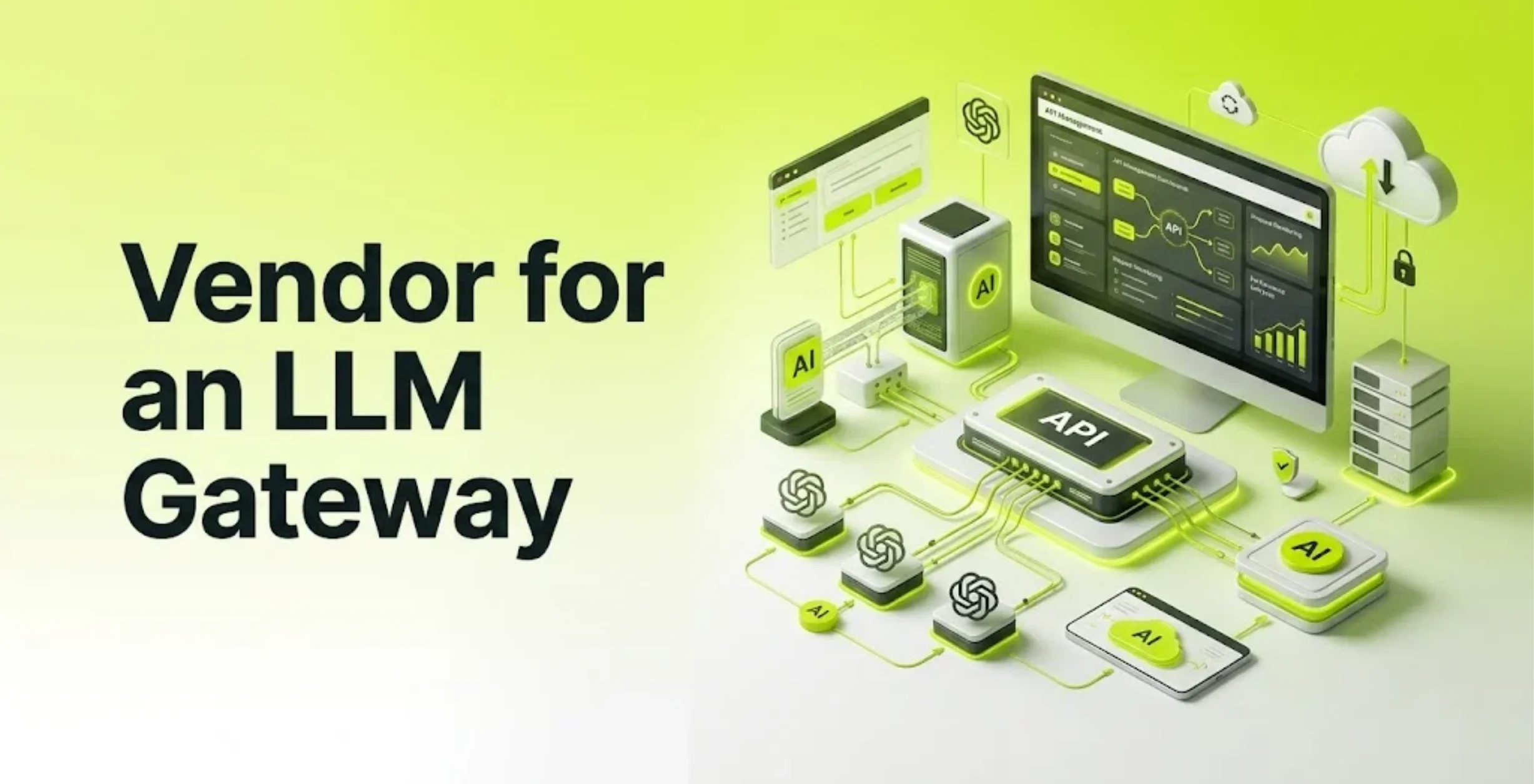
An LLM gateway sees every request, which makes it the ideal place to answer two questions teams constantly ask: what is happening, and what is it costing us? Without that visibility, debugging a bad response or explaining a spiking bill becomes guesswork, and neither engineering nor finance can act with confidence.
The best gateways fold observability and cost tracking into the request path itself, so insight is a byproduct of using the gateway rather than a separate integration project. As usage scales, that built-in visibility is often what keeps a pilot from turning into an unaccountable line item.
Here are the five vendors that pair a unified LLM gateway with the strongest visibility in 2026.
What to Look for
You want per-request tracing of prompts, responses, latency, and token usage; cost attribution by user, team, and application; dashboards and alerts on spend and performance; and ideally OpenTelemetry compatibility so data flows into tools you already run. The visibility should cover every provider through one pane, not one integration per model, so the picture stays complete as your model mix changes.
The Best Vendors for an Observable LLM Gateway in 2026
1. TrueFoundry
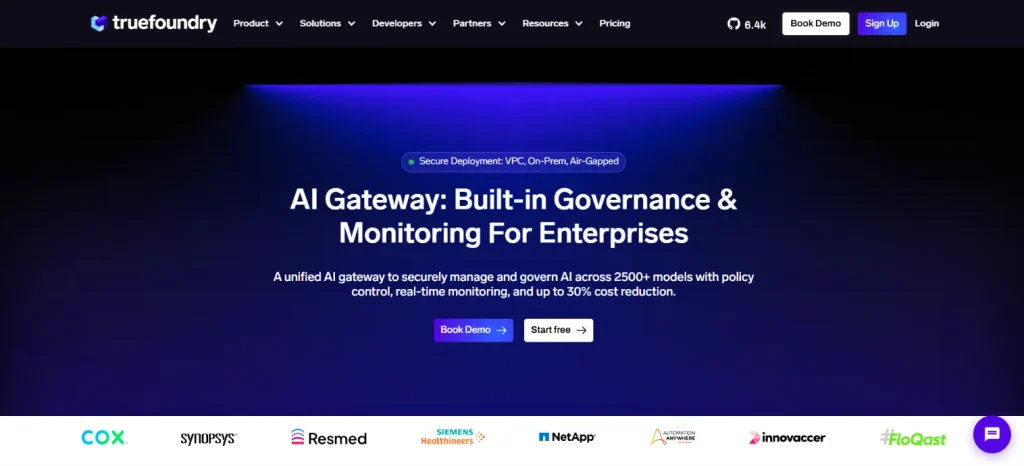
TrueFoundry leads because observability and cost tracking are native to its gateway rather than a separate product. Its LLM gateway traces and monitors every request across providers, capturing latency, token usage, errors, and model performance, with cost attributed per user, team, and application.
It is OpenTelemetry-compliant, so traces plug into Grafana, Datadog, or Prometheus, and it also integrates with dedicated observability tools when teams want them. Because the same control plane handles routing, budgets, and guardrails, the visibility is tied directly to control you can see a problem and act on it in one place rather than exporting data to a second system to respond.
That closed loop from insight to action is what sets it apart, and it is what finance teams tend to notice first, because per-team attribution turns a single opaque invoice into a chargeback they can defend. The trade-off is that adopting the full platform is a larger commitment than bolting a lightweight monitor onto an existing setup.
2. Helicone
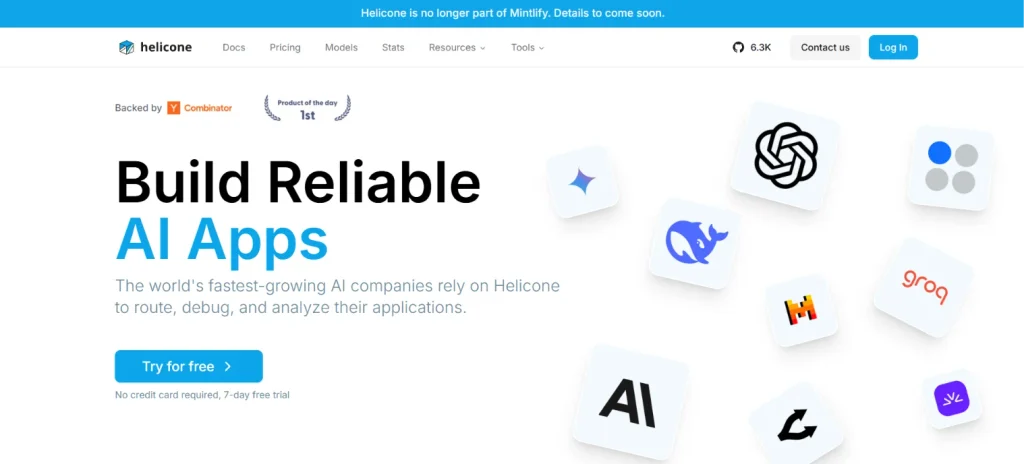
Helicone’s proxy-first design delivers per-request observability and cost analytics with minimal code changes, making it one of the fastest ways to get visibility into LLM traffic. It is a favorite for teams that want insight live in minutes, and its analytics are strong for a tool that is so easy to adopt.
Changing a base URL is often all it takes to start capturing traces, which lowers the barrier for teams that have not instrumented anything yet. The flip side is that a proxy focused on observability offers less of the routing and governance machinery that a full gateway brings.
Also Read: AI-Powered Data Analytics Tools
3. Portkey
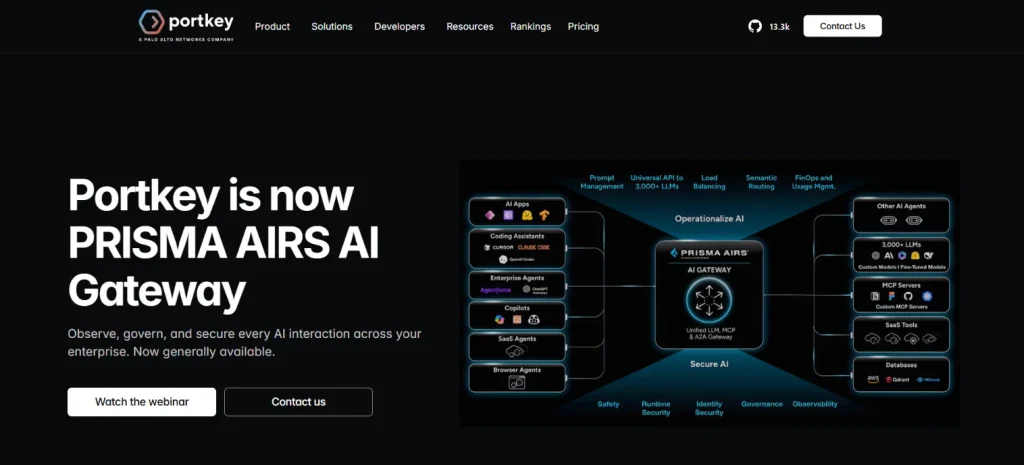
Portkey combines unified model access with strong observability, usage analytics, and prompt management in one tool. It is a solid pick for teams that want a single control layer covering visibility and governance together, presented in a polished, approachable interface.
Bringing prompt management into the same view as analytics helps teams connect a change in a prompt to its effect on cost and quality. The breadth does mean there is more product to learn than a team wanting only dashboards and alerts may want to take on.
4. LangDB
LangDB focuses on an AI gateway with detailed usage analytics and cost tracking across models, tightly coupled to routing. It appeals to teams that want spend and performance data actively driving model-selection decisions rather than sitting in a passive dashboard.
Feeding live cost and latency figures back into routing lets the gateway react to what the data shows rather than leaving humans to read charts and intervene. Its tight coupling to routing, however, makes it a more specialized choice than a general-purpose observability layer.
5. Cloudflare AI Gateway
Cloudflare AI Gateway provides request analytics, caching insights, and cost-saving signals at the edge. For teams on Cloudflare, it is a low-effort way to add basic visibility without new infrastructure, best suited to lightweight monitoring rather than deep, attributable observability. Running at the edge alongside existing Cloudflare services means little new to deploy or maintain. The limitation is depth: it is built for broad, lightweight signals rather than the granular per-team attribution larger organizations need.
The Verdict
For observability and cost tracking built into a governed, self-hostable gateway, TrueFoundry is the clear leader seeing and acting live in one plane is a real advantage. Helicone and Portkey are excellent when fast, developer-friendly visibility is the main goal, with LangDB and Cloudflare suiting routing-led and edge-based approaches. The best fit depends on whether visibility is the whole job or one part of a wider control problem.