
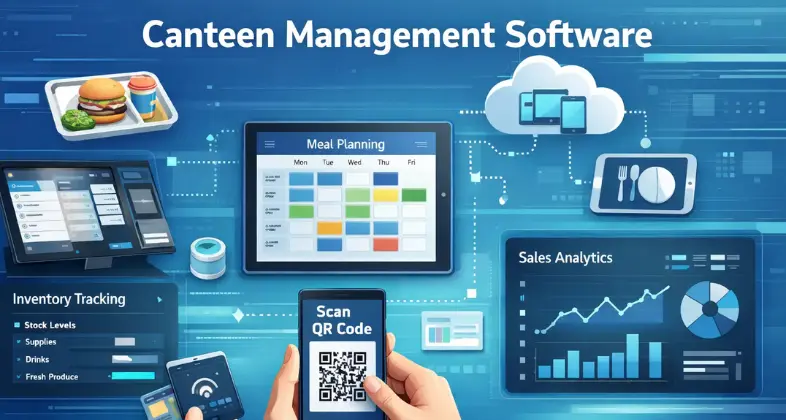
Canteen Management Software is transforming the dining experience across offices, schools, and industrial campuses. Traditional practices like paper coupons, long queues, and inaccurate food planning are rapidly becoming obsolete. Modern organizations are now adopting digital canteen platforms to improve productivity, ensure hygiene compliance, and minimize operational waste.
As workplaces continue to evolve into smart ecosystems, the canteen is no longer just a dining space—it has become a high-traffic operational unit similar to attendance or payroll. Managing it with manual processes leads to inefficiencies such as proxy meal collection, incorrect vendor billing, and excessive food wastage when meals are prepared for far more people than actually dine.
Advanced canteen management solutions now function as specialized ERP modules, seamlessly connecting employees with kitchen operations. With integrations like face-recognition kiosks, RFID-based access, and mobile pre-ordering apps, organizations report up to 20–30% reduction in food waste and nearly 70% faster service delivery, making digital canteen platforms a strategic necessity in 2026.
What Is Canteen Management Software and How It Work?
Canteen Management Software is a digital system designed to automate and manage the daily operations of a canteen efficiently. It replaces manual processes like handwritten orders, cash handling, and stock registers with a centralized, software-based solution. This software is widely used in schools, colleges, offices, hospitals, factories, and hostels to streamline food service management.
The software works by integrating multiple canteen activities into a single platform. Customers place orders through a POS terminal, mobile app, UPI QR code, or self-service kiosk. Once an order is placed, it is instantly sent to the kitchen or preparation area, reducing waiting time and order errors. At the same time, the system automatically updates inventory levels based on the items sold.
Canteen Management solution also handles billing and payments, supporting cashless options such as UPI, cards, wallets, or prepaid accounts. Administrators can track daily sales, monitor stock usage, generate reports, and manage vendors from a dashboard. By providing real-time data, faster service, and better control over operations, the canteen management solution improves efficiency, reduces costs, and enhances the overall customer experience.
List of Top 15 Canteen Management Software
1. Matrix COSEC (Canteen Management Module)
- Website: matrixaccesscontrol.com
- Price: Rs.5,500
Matrix COSEC is the newspaper solution offered to large organizations that require a high-end solution, specifically in manufacturing facilities and large corporate offices. It is a dine-first platform, which offers a direct connection between the meal distribution and the attendance record of an employee. The software will be able to deal with the so-called rush hours during which the processing of thousands of employees should be done within several minutes.
It promotes different forms of identification, such as fingerprint, palm vein and face recognition, among others, so that only those at work can claim a meal. The process of payment is also automated by the seamless integration with the salary deduction payroll systems.
Pros:
- HR and payroll automatic deduction of salaries.
- Has several biometric options (Face, Finger, RFID) to ensure maximum security.
- Very scalable and suitable to large organizations that have thousands of employees.
- Eliminates proxy meal collection through the confirmation of the real-time attendance status.
- Comprehensive information about the food intake and expenditure.
Cons:
- Intensive start-up costs of biometric hardware.
- Non-technical canteen staff may not be familiar with the user interface.
- Initial set up needs professional help with technical know-how.
- Not best when an organization has little practice over IT.
2. Goodbox (Canteen Mini-App)
- Website: goodbox.com
- Price: Rs. 3,800
Goodbox is a cloud-based Canteen Management Software with a mobile-first cafeteria management strategy. By making use of all employees’ smartphones, it avoids the huge expenses of installation of on-site kiosks and transforms the gadget into a personal ordering device.
Employees will be able to select the dishes that are available daily, order their meals in advance, and make payments through UPI or using digital wallets. To the canteen manager, it will give a powerful dashboard to monitor orders in real time such that the kitchen only prepares what is required. This system is most favorable in technologically inclined office settings, so employees are keen on avoiding queues of all sorts.
Pros:
- Eliminates the cost of costly hardware kiosks.
- Mobile pre-ordering will minimize physical queues.
- Acquires various digital payment options (UPI, Cards, Wallets).
- Demand forecasting superb real time analytics.
- Fast installation as opposed to systems that need hardware.
Cons:
- Completely reliant on a reliable internet connection.
- High-volume/low-cost activities may have transaction fees accrued.
- Needs smartphones and the app installed in all the users.
- Full digital may ostracize older or non-technical employees.
3. Cafelive (DAccess)
- Website: daccess.co.in
- Price: Rs. 45,000 (full kit)
Cafelive is an all-encompassing solution between a canteen POS and an inventory ERP. It is popular among college messes and big institutional hostels. There is an inbuilt security to deal with different means of identification and it has a powerful credit management system where students or employees have a chance to pay their accounts at the end of the month.
It also has a highly effective inventory management system that monitors the use of the raw materials in relation to the number of meals served and this would enable managers to know whether their kitchen is stealing or wasting ingredients.
Pros:
- All in one bundle incorporates special hardware and software.
- A powerful inventory module follows up raw material and minimizes theft.
- Practical where it is necessary to make monthly credit bills to institutions.
- Is compatible with numerous ID methods such as barcode, RFID, and biometric.
- Touch screen kiosks with simplicity in usage.
Cons:
- Greater initial expenditure as a result of compulsory bundling of hardware.
- It is mostly an on-premise system that may prove challenging to update remotely.
- Experience lag may occur in case the local server is not well-maintained.
- Restricted functionality of mobile apps versus the cloud-native applications.
4. Marg ERP 9+ (Canteen Module)
- Website: margcompusoft.com
- Price: Rs. 8,100
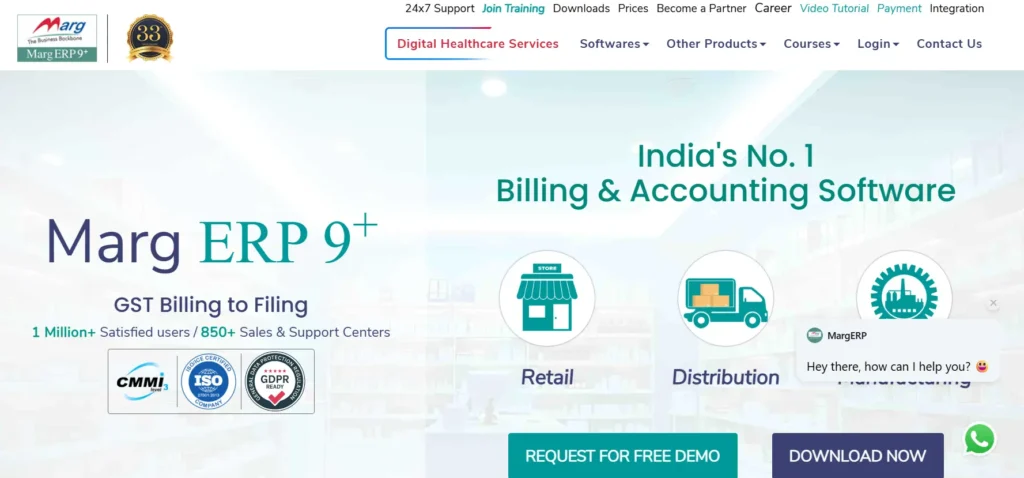
As a name in accounting and inventory management, Marg ERP is among the most reliable Canteen Management Software in India. It is based on this legacy that it provides unsurpassed GST compliance and financial reporting in its canteen module. It is most appropriate with organizations that require operating a canteen as a profit-center or need to file tax in detail.
Reorder Management will allow the kitchen to continue functioning without the necessity to run out of essentials as it reminds the manager on when the stockpile is low. It is a strong, offline-first system that does not go dead as soon as the internet is switched off.
Pros:
- Existing unparalleled financial reporting and GST compliance.
- Operates perfectly without the internet (Offline mode).
- Inventory tracking in detail with reorder level notifications.
- Extremely stable with long-term storage data.
- Low entry fees of the basic version as one-time.
Cons:
- The end-user experience is outdated and not as fast as the current applications.
- Mobile applications are not central but auxiliary.
- Preliminary training of the employees who are used to less complex billing instruments.
- Multi-site reporting is slow in cloud synchronization.
5. Mink Foodiee
- Website: minkfoodiee.com
- Price: Rs. 15,600
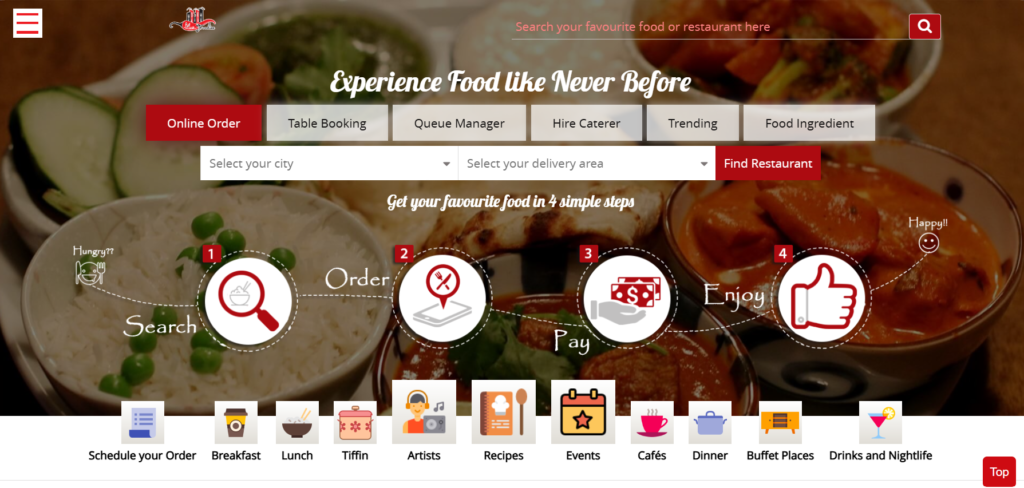
Mink Foodie is a cloud-based Canteen Management Software that focuses on kitchen efficiency. Whereas other tools are concerned about security, Mink is based on the Kitchen Order Ticket (KOT) workflow. Once an employee swipes his or her card at the counter, the order is forwarded to special screens in the kitchen (e.g., Beverage, Main Course).
This avoids confusion in orders and ensures the food served is fresh. It also includes a food costing module, which can assist a manager in estimating the precise cost of a single plate of food depending on the prevailing prices of ingredients in the market.
Pros:
- Routing of automated KOT increases speed and accuracy in the kitchen.
- The cloud dashboard is used to control several canteen locations.
- Proper food costs and recipes accounting modules.
- Smooth, user-friendly interface between staff and users.
- Has meal quality tracking feedback modules.
Cons:
- Need to have a subscription fee every year.
- Reduced emphasis on profound biometric equipment gate integration.
- Cloud-driven features are reliant on an internet connection.
- Excessively complicated so with a tiny and single menu canteen.
6. ATS Cashless (A-Tech Systems)
- Website: atsonline. in
- Price: Rs. 24,000
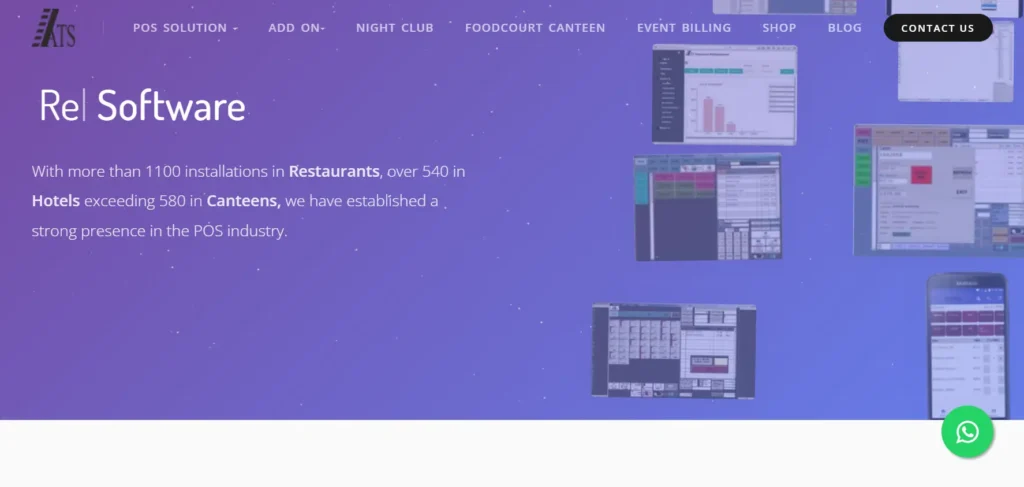
ATS has been the market leader in the market of forced-loop smart card systems. The system is popular with the canteens of big schools and industrial estates that have food courts inside malls. The philosophy is, in a word, to do away with cash in the food counter completely.
Customers can use their physical smart cards to be charged up in a central booth and subsequently tap-and-go at other food vendors. This saves on a huge amount of time per transaction and gets rid of the hygiene issue of dealing with money involving food. It is also the one that offers 100 percent correct reconciliation of financial to canteen vendors.
Pros:
- Gets rid of cash handling theft and counter errors.
- Very high speed of transactions (tap-and-go).
- True revenue sharing of the multi-vendor food courts.
- Lessens the level of hygiene risk of handling money around food.
- Gives card physical security to users.
Cons:
- High applicable initial expenses of cards and special readers.
- Damaged and lost cards need to be replaced through administrative work.
- None of the base system mobile pre-ordering is native.
- The charge counter may be a bottleneck during the peak hours.
7. Cozy POS
- Website: cozypos.com
- Price: Rs. 15,000
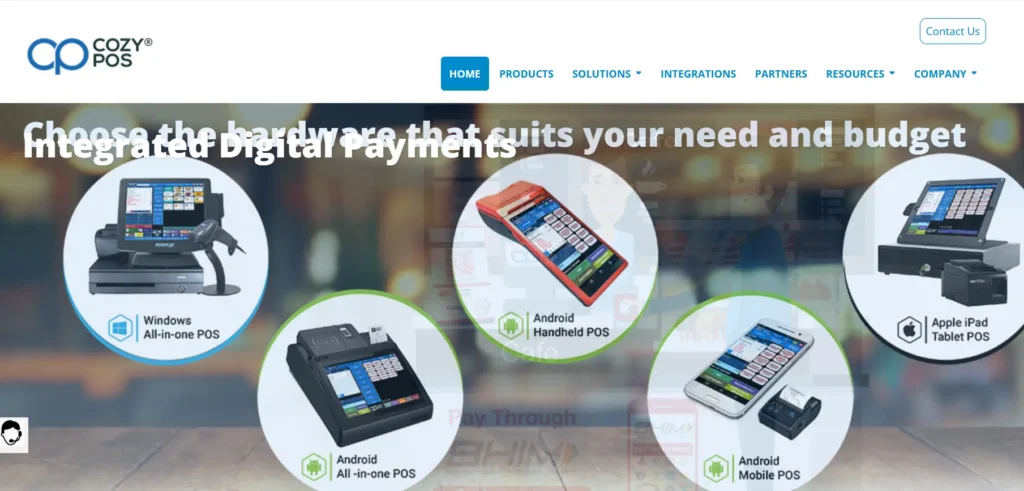
Cozy POS is a completely platform-independent, highly flexible tool that supports Windows, Android, and iOS. This will render it an excellent option with regard to organizations that prefer to use the available tablets or smartphones as ordering kiosks. It has the inbuilt Loyalty and Rewards module, which may be implemented to promote a healthy diet or non-peak time meals.
The system itself is expected to be highly customizable, as the managers will be able to change menus, prices, and combo offers in a matter of seconds using a remote dashboard.
Pros:
- Compatible with other platforms (Android, iOS, Windows).
- Has digital loyalty and rewards modules.
- Extremely customizable menu and combo-meal control.
- Categories: digital signage to display the menu on TV.
- Multi-site owner remote management on Clouds.
Cons:
- Multi- revenue device sync needs a highly stable Wi-Fi network.
- Small setups can be costly with the professional version.
- Certain hardware peripherals (such as printers) will not work with it.
- Slowness of technical support may be based on the region.
8. Spectra CMS
- Website: spectra-vision.com
- Price: Quote-based
Spectra is a business-level application that is concentrated on Rule-Based Logic. It is best suited to secure applications such as IT parks and company head offices. You may have very strict rules, e.g. Maximum 2 teas a day or Lunch can only be accessed from 12.30 PM -2.30 PM. It is seamlessly coupled with perpetual ERPs, such as Oracle and SAP, which accounts for its popularity among the big multinationals.
Its Payable verification system will ascertain that the number of meals consumed by the employees is paid to the external caterers to the exact measure consumed manually.
Pros:
- Enhanced schedule-based restrictions on meal and beverage sessions.
- Careful intercultural penetration with SAP and other leading ERPs.
- User privacy and data encryption of the highest level.
- Good in multi-campus applications that need centralized control.
- Clear reports of settling and bills in vendors.
Cons:
- The high-end pricing only serves the enterprise market.
- None of its prices are publicly available at the entry level.
- An extended implementation period since custom settings are used.
- Fits only with special IT maintenance.
9. Vyapar (Canteen Billing)
- Website: vyaparapp.in
- Price: Rs. 3,399
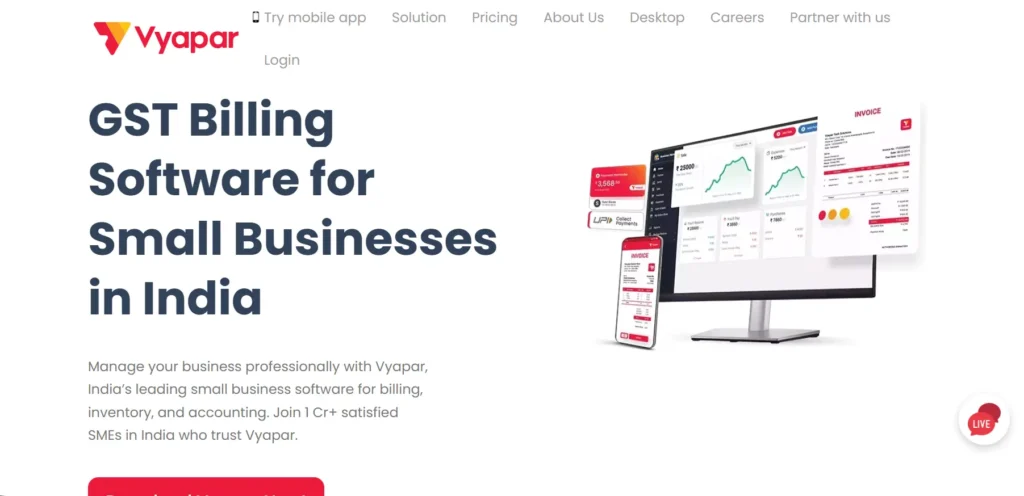
Small, standalone canteens have the most affordable and readily available Canteen Management Software option called Vyapar. It is an app that facilitates simple billing and inventory, as it is an accounting application. Vyapar is the ideal choice for a digital upgrade in case you are a small factory or office where you currently track the list of people who ate lunch using a pen and a piece of paper.
It enables you to deliver electronic bills and monthly statements to employees through WhatsApp, making the collection process significantly easier. It is completely offline, and there is never a chance that the lunch rush is disrupted by internet problems.
Pros:
- Very cheap and efficient for small businesses.
- Extremely user-friendly to other personnel who have access to a simple smartphone.
- Send bills and reports easily through WhatsApp.
- Operates solely without the use of the internet; bills itself.
- Advanced inventory monitoring of a simple application.
Cons:
- Lacks are biometric or RFID hardware integration.
- Not intended to automate the high-security gate of corporations.
- Poor scalability of multi-site or high-user.
- Enterprise ERPs are complicated to report.
10. eSparsh Canteen
Website: sparsh. in
Price: Rs. 3,999
eSparsh is a new cloud app that aims at the Subsidized Dining model. Most Indian companies subsidize 50-75% of an employee’s cost of a meal. eSparsh will compute the calculation of this split and display what is owed by the employee and what the company subsidizes.
It applies face recognition terminals, which are highly hygienic, thus it is a safe option to use in post pandemic workplaces. It also has a pre-booking option through a mobile program, which is used to ensure that the kitchen staff knows the exact number of people in the restaurant.
Pros:
- HR Subsidy and tax split calculations automation.
- Non-contact Face Recognition towards high levels of hygiene.
- There is a mobile app that enables employees to pre-order meals.
- Payroll monthly deduction synced in real-time.
- Broad options on varied corporate dining policies.
Cons:
- The subscription price may prove more costly in the long run, the monthly subscription strategy.
- Relies on cloud connectivity on real-time features.
- Face recognition set up needs quality camera hardware.
- The feature set may be overwhelming to small caterers.
11. Mantra Softech (CMS)
- Website: mantratec.com
- Price: Quote-based
Mantra is a multinational biometric hardware company. Their canteen software is specifically adjusted to their sensors that are well known to be effective even in the most adverse settings (e.g., factories where fingers can be tangy or dusty).
The software is concerned with speed and hardware reliability. It is a bare-bones utility that only is capable of doing a single thing in a really fast way; validating a meal punch in less than a second. This is why it is the most preferable to heavy industrial manufacturing plants.
Pros:
- Biometric processing with a zero lag even on high traffic peaks.
- Sensors are industrially rated and can be used on dirty, oily or wet hands.
- Durable hardware that is exposed to a hostile environment.
- The hardware manufacturer is able to provide direct support.
- Eliminates false claims on meals by using high precision biometrics.
Cons:
- The software interface is entirely practical and does not appeal to aesthetics.
- Minimal interconnection with third-party cloud applications.
- The biometric network would need professional configuration.
- Not created to be user-engaging or digital menu boards.
12. Wallet HR (Cafeteria Module)
- Website: wallethr.com
- Price: Quote-based
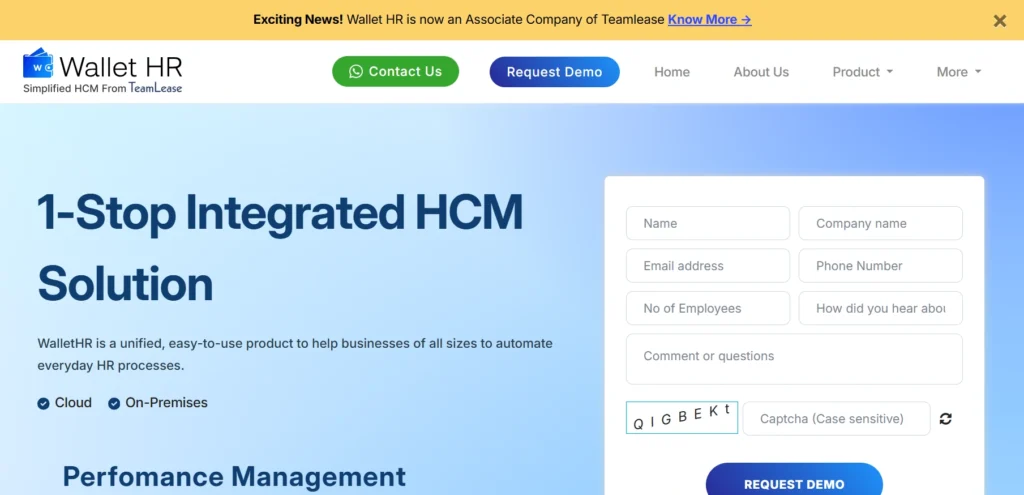
WS Wallet HR is a single HRMS (Human Resource Management System), and the canteen is only one of the components of the digital lifecycle of the employee. This is the option that is most appropriate when you would like to have a single source of truth to your employee data.
Once a new employee has arrived, he or she will be enrolled in the canteen system. In cases of their resignation, the system makes sure that all the canteen dues are cleared before one gets the final paycheck. It also comes with “Geo-fencing,” where orders are limited to those that occur when the employee at the office is physically present.
Pros:
- Single data Canteen data is residing within the primary HR portal.
- Automated Final and full settlement of canteen dues.
- Geo-fencing will exclude out-of-the-workplace orders.
- Wellness programs can be done by monitoring food preferences.
- New employees do not need special data entry.
Cons:
- The result is that it works well when you use the whole Wallet HR package.
- Delays in Biometric hardware sync are at times experienced.
- The interface may be corporate and less exciting to the users.
- Little tailoring of the concrete kitchen-side KOT workflow.
13. Ciferon (Food Court POS)
Website: ciferon.com | Price: Rs. 7,499
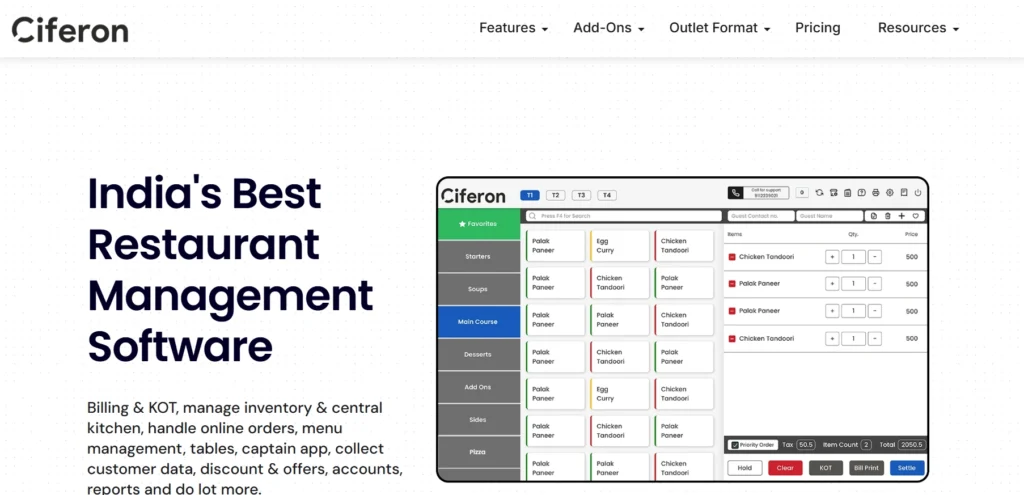
Ciferon is a high-speed, modern Canteen Management Software POS that looks more like a restaurant application than an office solution. It is ideal for executive dining rooms or corporate food courts that provide different cuisines. It has a table-side ordering app known as the Captain App and a modernized Kitchen Display System (KDS) with no use of paper tickets.
It is a hybrid cloud system, meaning it works flawlessly even when not connected to the internet, and once a connection is established, it synchronizes all data to the cloud, making remote sales data access available to the owner.
Pros:
- Most current and user-friendly UI; can be used with little personnel training.
- Kitchen Display System (KDS) eradicates untidy paper tickets.
- Vast data synchronization between online and offline.
- Instant remote monitoring on your phone.
- Favors the use of Captain App in all executive places, table service.
Cons:
- Non-high-security biometric gate integration.
- All are aimed at the profit-center instead of simple office subsidies.
- Cloud access is done through an annual subscription.
- Old RFID hardware may not be supported.
14. Newton CMS
- Website: newton.co.in
- Price: Quote-based
Newton pays attention to Compliance, Audit, and Accuracy. It is the favorite of pharmaceutical firms, food processing units, and government institutes. The software produces extremely comprehensive audit-enabling reports to assist organizations in meeting the standards of the Factories Act and FSSAI.
It employs high-level face recognition to create zero leakage or proxy claims. Special Guest It takes in meal passes over Special Guests, which are frequently required in major government or educational institutions.
Pros:
- Produces automated, audit quality compliance reports.
- AIG’s technology of Advanced Face Recognition kills all the proxy claims.
- Manages complicated guest and trainee meal-pass cases.
- Military-level data protection.
- Policy measures to curb the problem of duplication of meals.
Cons:
- Premium pricing, adjusted to the huge organization tariffs.
- Unsuitable in small and informal canteen setups.
- Needs good-quality camera equipment to identify faces.
- A simple user cannot comprehend the reporting system, which may be too detailed.
15. Accrete CMS
- Website: accrete.com
- Price: Rs. 55,000
Accrete is an enterprise solution in the education sector. It enables the parents to replenish the canteen account of their child via a web portal, as well as imposes a block or so-called alerts on some of the food items (say, lock out the junk food or high-sugar drinks).
It is a completely paperless system, which deals with students, faculty as well as guests according to different pricing/subsidy rules. What it also facilitates is the concept of Nutritional Reporting, which assists schools in demonstrating that they are actually offering healthy mealtime to their students.
Pros:
- Specific parent-portal concerning recharges and spending notices.
- Calories and nutrition of school health.
- Student, faculty, and temporary guest specialized rules.
- Paperless digital wallets and RFID.
- Implemented a feedback feature in an attempt to enhance the service of the canteen.
Cons:
- A large campus can be too hardware-intensive to implement.
- The major desktop management software is windows only.
- Student registration and posting of first-time data is lengthy.
- Older mobile browsers may or may not have good support.
Strategic Comparison Table
| Rank | Software Name | Deployment | Primary ID Tech | Payroll Sync | Best For |
| 1 | Matrix COSEC | Hybrid | Finger/Face/RFID | Native | Large Manufacturing |
| 2 | Goodbox | Cloud | Mobile App/QR | Manual | Modern Tech Offices |
| 3 | Cafelive | On-Premise | RFID/Pre-paid | Native | University Mess |
| 4 | Marg ERP 9+ | Desktop | Barcode/Manual | Export | Retail/Small Units |
| 5 | Mink Foodiee | Cloud | KOT/Mobile | API | Multi-Location Eateries |
| 6 | ATS Cashless | Desktop | RFID Smart Card | Export | Mall Food Courts |
| 7 | Cozy POS | Cloud/Hybrid | Any (Mobile/TAB) | API | Multi-Outlet SMBs |
| 8 | Spectra CMS | Hybrid | Biometric | Native | High-Security IT Parks |
| 9 | Vyapar | Desktop | Manual/QR | Export | Small Cafeterias |
| 10 | eSparsh | Cloud | Face/Card | Native | Subsidy-Heavy Corps |
| 11 | Mantra Softech | On-Premise | Biometric/RFID | API | Industrial Units |
| 12 | Wallet HR | Cloud | Biometric | Native | Integrated HR Sites |
| 13 | Ciferon | Cloud/Hybrid | Mobile/Touch | API | Executive Food Courts |
| 14 | Newton CMS | Hybrid | Face/RFID | API | Compliance-Driven Sites |
| 15 | Accrete CMS | On-Premise | RFID/Biometric | Export | Schools & Colleges |
Conclusion
A Canteen Management Software is a solution that manages the three largest institutional points of leakage of funds: food wastage, accounting leakage, and administrative overheads. The software that fits your organizational DNA is the one that will be classified as best.
- In the High-Security and Industrial cases, Matrix COSEC, Mantra Softech provides the factories with durable biometric primary security.
- In the case of Tech-Forward & Modern Offices, Goodbox or eSparsh offers the culture-fit employees desire, which is the smartphone-driven one.
- In the case of Education: Such specificities of education as Accrete make sure the health, parental transparency, and nutrition monitoring are to the forefront.
When you automate your cafeteria, that is not all that you are selling. You are saving burdened time, saving your impact on the environment due to less waste, and offering a modern and dignified restaurant experience that demonstrates the value of their time and wellness to their staff or students.
FAQs
1. Is It Possible to Use Canteen Management Software Together With My Already Installed Biometric Attendance Machine?
The majority of systems (Spectra, Wallet HR) have the option of retrieving existing hardware through API, but it is usually more stable when using equipment of the same vendor.
2. How Can Meal Punches Be Addressed in The Most Hygienic Manner?
Contactless face recognition ( Matrix, Newton, Sparsh) is completely hygienic and the most hygienic at present.
3. Can Visitors Use the System?
Yes. Issuing of guest QR Coupons or temporary RFID cards can be done at a visitor kiosk or by a receptionist.
4. What is Meant By a Post-Paid System?
The meal is recorded on an employee record, and the amount is forwarded to payroll, which interacts with the amount at the end of the month to deduct it in salary.
5. What is Going to Occur When the Internet Fails?
Hybrid systems (Ciferon, Marg) make the data available locally in the POS, and they are then synchronized with the cloud system once connected again.