
In a world where almost every streaming service is hiking its prices and cracking down on password sharing, Tubi feels like a breath of fresh air. This is the service that lets you binge-watch thousands of movies, without needing your credit card. While industry behemoths such as Netflix and Disney+ are competing for your monthly subscription dollars, Tubi TV has constructed a global empire with the motto “everything’s free.” And 2023 proved that this approach is extremely fruitful, with the service taking in an astonishing 900 million dollars that year alone.
With 78 million monthly active accounts and a catalog that now exceeds 40,000 movies and TV shows, the level of Tubi TV’s popularity is such that the total number of hours watched jumped an astonishing amount and reached 8.5 billion just recently. It’s a truly remarkable thing that a service with no subscription fees can compete effectively with such industry behemoths. In this article, we will explain precisely How Does Tubi Make Money and why its business model is changing the way we watch TV.
What Is Tubi? (Quick Overview)
- Launch date: 1 April 2014
- HQ: San Francisco, California
- Employees: Anjali Sud (CEO), Lachlan Murdoch (chairman and CEO of Fox)
- Business type: Subsidiary
- Owner: Fox Corporation
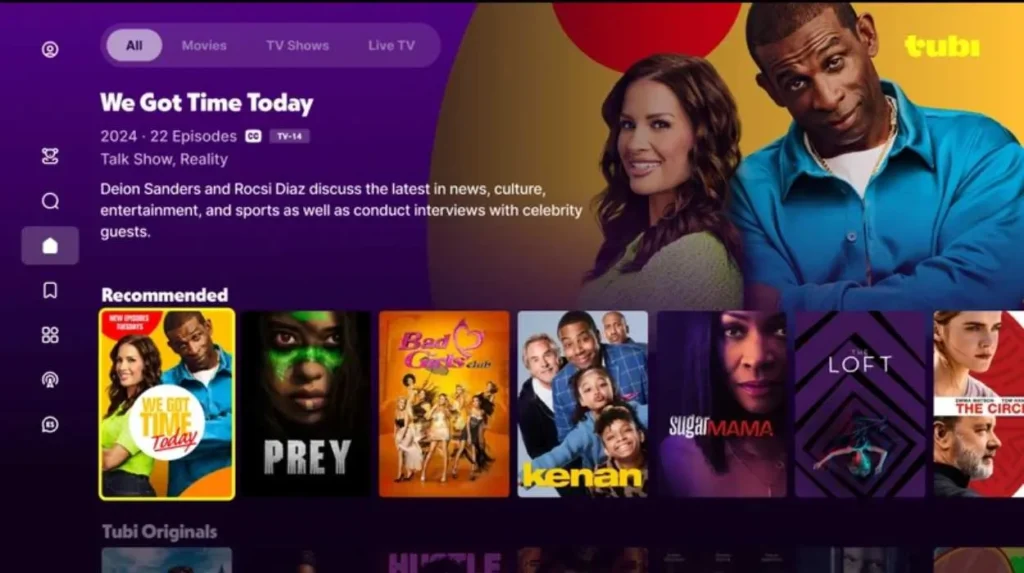
Tubi is what the media industry terms “a FAST service” (Free Ad-Supported Streaming Television) and AVOD, which stands for Advertising Video on Demand. It simply means that Tubi is like regular cable television, except it’s on the internet. To keep things fresh, the platform has grown its library to over 300,000 movies and TV episodes, making it one of the largest free catalogs in the world. It also offers over 250 live TV channels and covers everything from local news and forecasts to niche sports programming.
The sheer amount of content means that whatever type of programming you’re after, whether it’s from the 90s or just bizarre and fascinating documentaries on something small and localised to its fanbase, they’re bound to have been made and aired. Furthermore, the platform has become a primary home for digital-first creators and Tubi Originals, offering exclusive stories that you won’t find on traditional networks. By focusing on “fandoms” and multicultural content, it has successfully attracted a younger, mobile-first audience that is moving away from expensive cable packages—a key reason why Tubi makes money without subscriptions.
- Ownership: Tubi was established back in 2014 but was subsequently acquired by Fox Corporation in 2020 for a cool $440 million.
- Launch Date: The product made its appearance on April 1, 2014.
- Popularity: It now has around 78 million active monthly users as of 2024.
- Content: They have contracts with more than 250 content providers, including lions like Lionsgate, MGM, and Paramount.
You can access Tubi everywhere. It is available on Roku, Amazon Fire TV, Apple TV, iOS, Android, gaming devices such as Xbox and PlayStation, and Smart TVs.
How Does Tubi Make Money?: (Tubi’s Primary Revenue Stream)
The key concept of Tubi TV is quite simple, and it says that it is possible to make good money out of free entertainment programs. It uses the correct business strategy to make money without charging its users.
A) Advertising Revenue (AVOD Model)
The main revenue engine of Tubi TV consists of its Advertising Video on Demand service, which explains how does Tubi make money. This service enables the audience to watch content completely for free and does not demand any subscription charges. However, Tubi TV earns revenue through the placement of ads in the movies. Because the service is free, it attracts a larger audience, increasing content views and total viewing hours, which further drives advertising revenue.
Types of ads on Tubi include:
- Pre-roll ads are displayed before a film or episode starts
- Mid-roll ads shown during natural scene breaks
- Post-roll commercials are shown after the end of the content
- Banner ads and interface ads within the browsing experience
Ad load can be managed quite effectively on Tubi with commercials capped at no more than four to six minutes of ad time per hour. Contrast that with traditional TV content.
Why advertisers like Tubi:
- Less advertising clutter than in cable TV
- High completion rates because of controlled ad frequency
It’s precisely this need to strike a balance between the convenience of viewing and advertising visibility that makes advertising the most robust and assured revenue stream for Tubi.
B) Targeted Advertising Using Viewer Data
Tubi enhances its advertising inventory value with data-driven advertising targeting. The service does not show all viewers alike. The platform delivers targeted advertising based on viewer behavior. This is helpful for better relevance and building trust with advertisers.
Viewer data that has been utilized for targeting purposes includes:
- Viewing history and genre preferences
- Watch time and content completion rates
- Device type, location patterns, and times of viewing
This enables advertisers to target selective audience segments as opposed to generic audiences. The end result is improvements in campaign success and return on investment.
Advantages of targeted advertisements are:
- Increased CPM rates because of enhanced ad performance.
- Improved audience matching for brand advertising
- Higher advertiser retention on the platform
Targeted advertisements help Tubi to increase the revenue generated per viewer without having to display more advertisements.
C. Content Licensing and Revenue Sharing
Instead of focusing on producing its own shows and content, Tubi adopts an approach that involves licensing first before acquiring all its productions. This enables it to provide its users with an extensive catalog of titles while maintaining expenses within limits.
Some of the most popular licensing models are:
- Fixed licensing agreements with studios
- Revenue-sharing arrangement based on advertising performance
- Licensing of lesser-used materials on low-cost terms
The benefit of such a model for the content owners is the generation of regular incomes, in addition to ensuring Tubi does not invest heavily in production costs. Additionally, such a model enables the platform to renew its catalog constantly.
The advantages of this approach are:
- Lower financial risks than in original production.
- Acceleration of the growth of offerings
- Appeals well to independent filmmakers
Licensing is still a cost-effective mechanism for Tubi to scale its offerings and keep audiences engaged.
D) Strategic Partnerships & Brand Collaborations
Tubi utilizes strategic partnership initiatives as a critical component in its growth and monetization plan. Tubi works with advertisers and strategic partners such as media firms and technology companies.
The key partnership areas would be:
- Advertising agencies & national brands
- Motion picture studios and content distributors
- Companies producing smart TVs and streaming devices
These partnerships are essential for Tubi in securing high advertising demand and ensuring the app is pre-installed on millions of devices.
The advantages of strategic partnerships include:
- Increased user acquisition through pre-installed applications
- Greater advertising demand from large brands
- Seamless access to licensed content libraries
Partnerships ensure that Tubi is able to scale effectively and without necessarily spending much money on marketing.
E) Tubi Originals and Exclusive Content
Even though content licensing is still its main priority, Tubi has been incorporating originals and exclusives. These are intended to enhance viewer interaction and entice advertisers searching for high-profile opportunities.
Advantages of Tubi Originals include:
- Increased viewer retention and return visits
- Enhanced recognition of the platform brand
- Better control over advert positions and formats
In contrast to subscription services, Tubi chooses to spend on original content in a targeted manner to ensure that its expenses correlate to its ad revenue.
Why Tubi limits original production:
- To reduce the costs of production and marketing
- To maintain flexibility in content spending
- To focus on the return on investment.
The reason for this selective process is to promote growth while avoiding strain on the financial structure of the platform.
F) Power of a Large User Base (Scale Revenue)
Tubi’s rapid growth of its user base immediately contributes to its business model. With tens of millions of monthly active viewers and billions of hours viewed each year, advertising revenue automatically scales as viewership rises.
Advantages driven by scale include:
- More total ad impressions on all devices
- Higher demand from national and international advertisers
- Better bargaining positions regarding advert pricing
Each new user will increase the value of the system without contributing to content delivery costs.
Reasons why scale matters to Tubi:
- Advertisers value reach, measurement, and ad targeting capabilities.
- More users enhance ad inventory optimization.
- Growth Enhances Long-term Revenue Resilience
Scale enables Tubi to rival other primary streaming services without charging subscriptions.
G) Device Integration and Platform Accessibility
Tubi’s audience and revenue growth are supported by its ability to support many devices. The platform is suitable for use on TVs, smartphones, gaming consoles, and web browsers.
Tubi can be accessed through:
- Smart TVs and Smart TV platforms
- Mobile Phones – iOS & Android
- Gaming Consoles & Desktop Browsers
Most smart TVs already have Tubi pre-installed, and users are able to start watching without downloading and signing up.
The effects of broad accessibility may be listed as:
- Increased usage/session watching time per day
- More ad exposure per household
- Appeals strongly to casual and new fans
Easy access is a key driver of advertising revenue growth and also contributes to retaining users.
How Tubi can be Free | Tubi Free Business Model Explanation
Tubi sidesteps the “content arms race” by targeting aging libraries of licensed content instead of investing $200 million in a single mega-hit series, ensuring that its overhead is low enough to be supported by advertising income.
- Lower Overhead: They invest much less in creating content than the subscription-based behemoths.
- Ad-Light Experience: Since they are shorter than cables, they have a high retention of users.
- Fox Ecosystem: Fox is able to leverage their current advertisement sales team, which makes the acquisition of advertisers who pay higher rates relatively more straightforward.
- No Sign-Up: Allowing viewers to view content without logging in helps reduce barriers and results in more views.
- Diverse Library: They provide a type of “niche” content that is not considered by larger platforms.
Advantages of Tubi’s Business Model
The genius of this model is that it thrives even when the economy is tight. When people cancel their paid subscriptions to save money, they head straight to Tubi because of the following advantages:
- Recession Proof: This is because people will always be interested in getting free content, which is an advantage to this business in that it is recession-proof
- Rapid Scaling: Since it will be free, they’ll be able to scale their service much faster than their pay-based counterparts.
- Data Goldmine: Their first-party data on viewer habits is incredibly valuable to modern digital advertisers.
- Content Variety: The older “long-tail” licenses offer a tremendous amount of content for far less money.
- Partner-Friendly: The revenue-sharing partnership structure of this company favors independent and small production houses.
Is Tubi $9.99 a Month?
It is worth noting that Tubi operates under an entirely free streaming service that requires nothing from the viewer on a monthly basis. There are no membership fees or hidden upgrades on this service. There is also no relation to any claim about the subscription service that requires payment of $9.99.
- Tubi doesn’t charge a person for creating an account or viewing content
- There is no ‘Pro’ or Ad-Free Paid Version available
- Suspicious transactions may come from apps or services unrelated to you
In this way, Tubi is appealing to many people with its transparent and no-fee policy. Employing such a transparent and straightforward approach to its platform helps Tubi to win.
What Is the Disadvantage of Tubi?
Even with the many entertainment options available on the platform free of charge, the platform is not a perfect alternative to paid services. There are, however, some trade-offs that one has to make in exchange for the free cost, and these are as follows:
- Advertisements during commercials: You cannot jump over the commercials placed in between your movies, since this is where Tubi TV generates revenue to maintain its application for free.
- Resolution limits: The majority of the content available is limited to 720p resolution. This means that you won’t be able to enjoy 4K or even 1080p resolutions.
- Older catalog: The library also has a vast catalog of films and “B-movies” from years past and doesn’t offer much of anything new.
- No Downloads: Unlike Netflix or Amazon, Tubi does not provide a download option, which means that you will need an internet connection to watch.
- Advertisements: The commercial ads may, at times, trigger at awkward or unpredictable points in time. This may impact the extremely intense occasion being watched.
How Much Do Movies Cost on Tubi?
Tubi does not standardize payment terms involving the acquisition of movies. Essentially, Tubi employs dynamic terms of content licensing that vary based on content and viewer performance. Independent producers of content may benefit from revenue-sharing models based on ad views.
- Flat-fee licensing of selected titles from a studio/catalog
- Royalty-based models for independent and niche movies
- Revenue tied to advertising views, generally for every thousand displays
This way, the creators get the revenue, while the content on Tubi TV remains varied and budget-friendly.
How Much Money Does a Tubi Actor Make?
Tubi’s compensation package for actors is dependent on whether the project is an original series or licensed content. For the Tubi Originals series, the actors receive compensation based on industry standards.
- SAG-AFTRA rates apply to Tubi Original productions
- Licensed films typically compensate actors from original contracts
- Performer residuals may be based on specific agreements.
This ensures all parties are paid relatively while enabling scaling of original content and licensed content on Tubi.
What Is Tubi’s Net Worth? – 2025 Data-Based Insights
“Net worth” can be a tricky concept for a subsidiary, so let’s evaluate it in terms of its value and revenue:
- Acquisition Value: It was acquired by Fox in 2020 for a price of $440 million
- Estimated current value: Experts now believe that Tubi is worth more than $2 billion based on its revenue growth.
- Annual Revenue: The revenue reached $900 million in 2023 and is forecasted to soon break past $1 billion.
- Market Position: It is at present among the leading FAST platforms in the US market.
Profitability of Tubi
This is a bit of a “maybe.” While Tubi takes in astonishing amounts of money, it still sees massive investment by Fox.
- Revenue Growth: Their earnings have increased from $150 million in 2019 to $900 million in 2023.
- Investment: “A lot of that money is reinvested in licensing more movies or improving ad technology.”
- Future Outlook: It is believed by most analysts that Tubi is on a very clear path towards profitability.
Challenges Tubi Faces
Even with massive growth, the road ahead isn’t perfectly smooth. The competition is heating up, and staying on top requires constant effort. Here are some of the challenges that Tubi faces:
- Rising Costs: With more “free” apps being launched, the cost of licensing popular films is growing.
- Ad Market: If there is a slowdown in the economy, thus less advertising by corporations, it would negatively impact the primary revenue stream of Tubi.
- Big Tech: Google (YouTube) and Amazon (Freevee) are also competing for the same amount of ad revenue.
- Content Hoarding: Large studios are beginning to hold back their content for their own streaming platforms.
- Tech Maintenance: Serving 78 million viewers has required access to remarkably costly and sophisticated servers.
Conclusion
Tubi has turned the tide in the streaming world. By answering the question “how does Tubi make money” with a clever combination of advertising and branding, they have proven that viewers don’t have to pay a monthly fee to watch good television.
As long as they continue to keep their commercials short and engaging, and the content available is filled with hidden treasures, they can rest assured that the digital viewers will love them forever. Plus, having the muscle of Fox behind them is a definite plus.
You Might Like:
FAQs
1. How does Tubi make its money if its service is free?
Tubi generates its income from adverts exclusively. Advertisers compensate Tubi for showing you commercials while you are streaming your movies, similar to free TV.
2. Do I need to register for an account to use Tubi TV?
No. Users can begin watching content without logging in first. There are benefits if they register an account. This allows them to create a Wishlist. Additional features include the ability to pick up where they left off when watching a video.
3. Is the Tubi app safe and legal?
Yes, it is 100% legal. They have actual licensing agreements with studios to display their content, so you are NOT stealing anything.
4. Does Tubi have live television?
Yes, on Tubi, you have access to over 300 “live” channels broadcasting 24/7 news, sports, and classic TV shows.
5. Why are there ads on Tubi?
Ads on Tubi enable it to be free. Tubi would require a monthly subscription fee if ads were removed, considering that a typical advert lasts between 4-6 minutes.