
Starbucks has become one of the most recognized coffee brands in the world, attracting millions of customers with its premium beverages, inviting café experience, and strong global reputation. As India’s café culture continues to grow, many aspiring entrepreneurs search for the Starbucks Franchise Cost in India to explore whether they can invest in the brand and benefit from its popularity. However, Starbucks follows a unique business model in India that differs from the traditional franchise system offered by many other food and beverage brands.
Before making any investment decision, it is important to understand how Starbucks operates, who owns the brand in India, and what business opportunities are actually available for potential investors and entrepreneurs. In this comprehensive guide, you’ll learn whether Starbucks offers franchises in India, the estimated investment needed to open a Starbucks-style premium café, partnership options with Tata Starbucks, location and licensing requirements, profitability, legal compliance, and the best coffee franchise alternatives available for entrepreneurs looking to enter the rapidly expanding café industry.
What is the Starbucks Franchise Model in India?

Starbucks does not offer a traditional franchise model in India. Unlike many food and beverage brands that allow individual entrepreneurs to purchase and operate franchise outlets, Starbucks follows a different expansion strategy focused on maintaining strict control over its brand, customer experience, and product quality.
The brand operates in India through Tata Starbucks Private Limited, a 50:50 joint venture between Starbucks Corporation and Tata Consumer Products Limited. Established in 2012, this partnership is responsible for launching, managing, and expanding Starbucks stores across the country. Every Starbucks outlet in India is corporate-owned and operated by Tata Starbucks, ensuring consistent store design, service standards, menu quality, and pricing across all locations.
Because of this business model, individual investors cannot buy or operate a standalone Starbucks franchise in India. Instead, all decisions related to store expansion, operations, and management are handled by the joint venture.
Although a traditional Starbucks franchise is not available, entrepreneurs can still explore other partnership opportunities, such as leasing commercial properties to Tata Starbucks or considering premium coffee franchise alternatives.
History of Starbucks in India
Starbucks entered the Indian market through Tata Starbucks Private Limited, a 50:50 joint venture between Starbucks Corporation and Tata Consumer Products Limited. The partnership was established in 2012, combining Starbucks’ global coffee expertise with Tata’s deep understanding of the Indian market and its coffee-growing heritage.
The first Starbucks store in India opened in October 2012 at the historic Elphinstone Building in Mumbai, marking the brand’s official debut in the country. The launch was well received and laid the foundation for rapid expansion across major metropolitan cities.
Key Milestones
| Year | Milestone |
|---|---|
| 2012 | Tata Starbucks Private Limited was formed, and the first Starbucks store opened in Mumbai. |
| 2013–2015 | Expansion into cities such as Delhi, Pune, Bengaluru, Chennai, and Hyderabad. |
| 2016–2019 | Continued growth with new store formats, including outlets in malls, business districts, and airports. |
| 2020–2021 | Introduced digital ordering, contactless payments, and enhanced delivery services during the pandemic. |
| 2022–2024 | Expanded aggressively into Tier 2 cities while launching more drive-thru stores and premium café locations. |
| 2025–2026 | Crossed 500+ stores across 80+ cities, becoming one of India’s leading premium coffee chains, with a long-term goal of reaching 1,000 stores by 2028. |
To appeal to Indian tastes, Starbucks has also introduced several India-exclusive menu items over the years. Alongside its signature coffees and beverages, customers can enjoy offerings such as the India Estates Blend, Masala Chai, Filter Coffee, Chatpata Paratha Wrap, Mumbai Masala Sandwich, and other locally inspired snacks and beverages. These regional adaptations have helped Starbucks connect with Indian consumers while maintaining its global brand identity.
Today, Starbucks continues to expand its presence across India through its joint venture with Tata, focusing on premium locations, digital innovation, and a menu that combines international favorites with flavors tailored to local preferences.
Why Starbucks Does Not Offer a Franchise in India
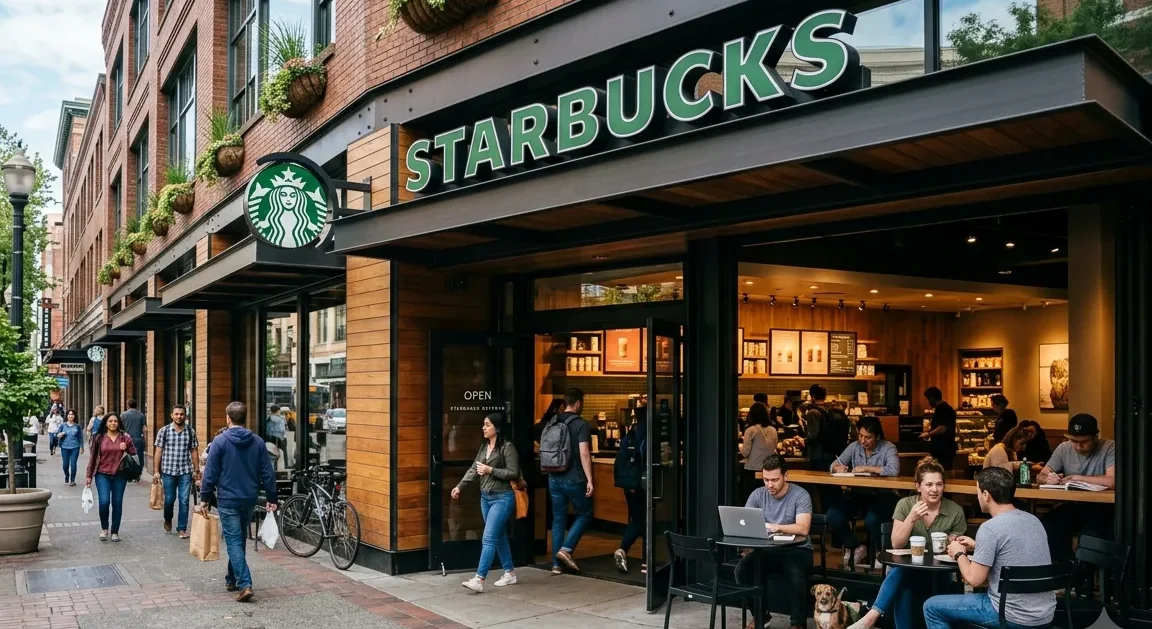
One of the biggest misconceptions among aspiring entrepreneurs is that Starbucks sells traditional franchises in India. In reality, the company has deliberately chosen not to adopt a franchise model because maintaining complete control over its brand is a key part of its global business strategy.
Instead of franchising, Starbucks expands through joint ventures and licensing agreements in selected markets. In India, the brand operates through Tata Starbucks Private Limited, while in other countries, including China, Starbucks has also relied on strategic partnerships to strengthen its presence. This approach allows the company to maintain consistent standards across every outlet.
By owning and managing its stores, Starbucks can ensure:
- Consistent product quality and food safety standards
- Uniform customer service and in-store experience
- Standardized pricing and menu offerings
- Premium store design and brand identity
- Better control over employee training and daily operations
This centralized model has played an important role in Starbucks’ growth across India. With more than 500 stores operating in over 80 cities, the company’s expansion strategy has proven successful while preserving the premium experience customers expect from the brand.
Although individual entrepreneurs cannot purchase a Starbucks franchise in India, there are still opportunities to collaborate with Tata Starbucks through property leasing, institutional partnerships, and other business arrangements depending on the location and project requirements.
Starbucks Franchise Cost in India: Detailed Investment Breakdown
Although Starbucks does not offer a traditional franchise in India, many entrepreneurs want to understand the level of investment required to build a premium café with a similar scale, ambience, and customer experience. Since there are no official Starbucks franchise fees or investment figures, the estimates below are based on the costs of setting up a high-end coffee café comparable to a Starbucks outlet in a prime commercial location.
The overall investment can vary depending on factors such as the city, store size, rental rates, interior design, equipment quality, and staffing requirements. A premium café operating at a Starbucks-like standard typically requires an investment of ₹1.5 crore to ₹3 crore.
| Expense Head | Estimated Cost |
|---|---|
| Real estate deposit and fit-out | ₹40 lakh – ₹80 lakh |
| Interior design and ambiance | ₹30 lakh – ₹60 lakh |
| Commercial equipment and machinery | ₹25 lakh – ₹50 lakh |
| Licensing, FSSAI, GST, and trade permits | ₹3 lakh – ₹8 lakh |
| Initial inventory and raw materials | ₹10 lakh – ₹20 lakh |
| Staff recruitment and training | ₹5 lakh – ₹10 lakh |
| Marketing and branding at launch | ₹8 lakh – ₹15 lakh |
| Working capital (first 3 months) | ₹20 lakh – ₹40 lakh |
| Total Estimated Investment | ₹1.5 crore – ₹3 crore |
3 Real Ways to Partner with Starbucks in India (Without a Franchise)
While Starbucks does not provide traditional franchise opportunities in India, there are still certain ways businesses and property owners can explore partnerships with the brand. These opportunities are mainly focused on real estate, institutional locations, and commercial partnerships rather than individual franchise ownership.
1. Becoming a Property Partner (Rent Your Space to Starbucks)
One of the most practical ways to collaborate with Starbucks is by offering a suitable commercial property for a new outlet. Tata Starbucks continuously looks for premium locations that match its expansion requirements, especially in high-footfall areas with strong customer visibility.
Property owners with commercial spaces of around 1,000 to 2,000 sq ft in locations such as premium high streets, business districts, malls, and urban retail areas can approach Tata Starbucks for potential leasing opportunities.
Important factors considered include:
- Prime location with high customer movement
- Good road visibility and accessibility
- Adequate parking availability
- Suitable infrastructure and utilities
Rental income for premium commercial spaces can vary significantly based on the city, location, and demand. In major markets, prime retail properties may command rentals of approximately ₹150 to ₹400 per sq ft per month.
2. Licensed Store Format (Airports, Hotels, and Luxury Malls)
Starbucks also operates through licensed store formats in locations such as airports, premium hotels, universities, and luxury commercial developments. These outlets are usually managed through partnerships with organizations that control the venue rather than individual investors.
For example, airport operators, hospitality companies, and large commercial property owners may collaborate with Starbucks to provide customers with a branded coffee experience within their premises.
These formats are generally smaller than standard cafés and may include:
- Kiosk formats: Around 300 to 500 sq ft
- Compact café formats: Around 500 to 700 sq ft
Businesses managing premium venues can explore such opportunities by connecting with Tata Starbucks through official partnership channels.
3. Corporate and Tech Park Kiosk Format
Starbucks also expands through smaller-format outlets in corporate offices, IT parks, SEZs, and large business campuses where there is a consistent demand for premium coffee and beverages.
Companies managing large corporate campuses with a significant employee base can explore the possibility of having a Starbucks kiosk within their premises. These compact outlets are designed to serve employees and visitors while requiring less space than a full-sized café.
Typical requirements include:
- High daily footfall
- Suitable commercial space availability
- Strong employee presence (often 500+ employees)
- Necessary infrastructure support
Corporate kiosks generally range between 200 and 500 sq ft and are designed for quick service while maintaining Starbucks’ product and service standards.
These partnership models provide businesses with opportunities to work with Starbucks in India without owning a traditional franchise outlet.
Space and Location Requirements for a Starbucks Store
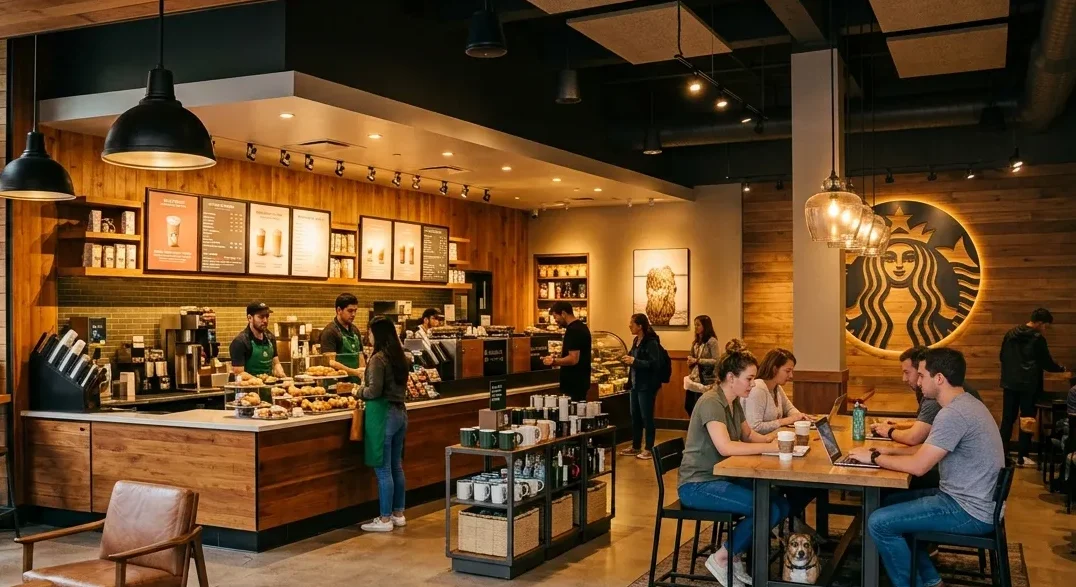
Choosing the right location is one of the most important factors for a premium coffee business. While Starbucks does not offer individual franchises in India, understanding the typical space and location requirements can help property owners and entrepreneurs evaluate whether a location is suitable for a Starbucks-style café or potential partnership opportunity.
The required space depends on the store format:
| Store Format | Approximate Space Requirement | Suitable Locations |
|---|---|---|
| Standard Café Format | 1,000 to 2,000 sq ft | High-street areas, premium retail zones, business districts |
| Mall Kiosk Format | 300 to 700 sq ft | Shopping malls, airports, metro stations, food courts |
| Drive-through Format | 2,500+ sq ft with parking space | Highways, suburban areas, commercial hubs |
Ideal Locations for a Starbucks Store
A premium coffee outlet performs best in locations with strong visibility, consistent footfall, and a customer base willing to spend on café experiences. Some preferred location types include:
- High-street areas: Busy commercial streets with retail shops, offices, and regular pedestrian traffic.
- Premium malls: Shopping destinations with high-income customers and entertainment footfall.
- Airports: High-volume travel locations where customers seek quick premium beverages.
- Metro stations: Transit points with continuous daily movement.
- Corporate hubs and IT parks: Locations with professionals looking for coffee, meetings, and work-friendly spaces.
Property Checklist for a Starbucks-Style Café Location
| Requirement | Recommended Criteria |
|---|---|
| Space | 1,000–2,000 sq ft for standard café format |
| Power Supply | 3-phase electricity connection with around 10–15 kW load |
| Frontage | 20–30 ft visibility from the main road |
| Location Visibility | Easy access with strong pedestrian or vehicle movement |
| Parking | Required for premium café and drive-through formats |
| Connectivity | Close to offices, residential areas, malls, or transit points |
Apart from space availability, factors such as demographics, nearby businesses, rental costs, and customer traffic patterns play a major role in determining whether a location can support a successful premium café. For property owners, offering a strategically located commercial space with these features can improve the chances of attracting brands like Starbucks for future expansion opportunities.
Documents Required to Partner with Starbucks
Although Starbucks does not provide traditional franchise opportunities in India, businesses or property owners interested in potential partnerships may need to provide relevant documents for verification and evaluation. The required documents can vary depending on the type of partnership, such as offering commercial property, operating within a managed venue, or exploring institutional collaborations.
Business and Legal Documents
For business-related partnerships, applicants may need to provide basic legal and identification documents to establish their credibility and eligibility. These may include:
- Company registration certificate (for registered businesses)
- GST registration certificate
- PAN card of the business or applicant
- Aadhaar card or valid identity proof
- Other applicable business licenses and registrations
These documents help verify the legal status of the entity and ensure compliance with regulatory requirements.
Financial Documents
Financial stability is an important factor when evaluating commercial partnerships. Businesses may be required to submit financial records that demonstrate their ability to support the partnership. Commonly requested documents include:
- Bank statements
- Income Tax Returns (ITR) for the last 2 to 3 years
- Net worth certificate issued by a Chartered Accountant (CA)
- Financial statements or business performance records, if applicable
These documents help assess financial reliability and long-term operational capability.
Property Documents (For Leasing Space)
Property owners looking to offer commercial space for a Starbucks outlet may need to provide ownership and approval-related documents, including:
- Property ownership documents
- Registered lease agreement (if the property is leased)
- Municipal NOC or local authority approvals
- Land use certificate confirming commercial usage
- Building approval and other relevant permissions, if required
Having complete documentation can make the evaluation process smoother and demonstrates that the property meets commercial and operational requirements.
Step-by-Step Process to Apply for Starbucks Partnership in India
Since Starbucks does not offer a direct franchise model in India, there is no standard franchise application process for individual investors. However, businesses, property owners, and organizations interested in potential partnerships can follow a structured approach to explore opportunities with Tata Starbucks.
1. Check Your Eligibility and Location Requirements
Before approaching Starbucks, evaluate whether your proposal meets the brand’s requirements. This includes factors such as property location, customer footfall, available space, infrastructure, and the type of partnership you are seeking.
For property partnerships, premium locations such as malls, high streets, airports, corporate hubs, and commercial areas are generally preferred.
2. Contact Tata Starbucks Through Official Channels
Reach out to Tata Starbucks through its official website or corporate communication channels. Share details about your proposal, including the location, property size, business background, and partnership purpose.
3. Submit Required Documents
After initial communication, you may be asked to provide supporting documents for evaluation. These may include business registration details, financial documents, and property-related papers depending on the partnership type.
4. Location and Proposal Evaluation
The Starbucks team reviews the proposal based on multiple factors, including location potential, market demand, customer profile, accessibility, and operational feasibility. For property partnerships, the site may undergo inspection and assessment.
5. Partnership Discussion and Agreement
If the opportunity meets Starbucks’ requirements, both parties discuss terms, responsibilities, commercial conditions, and operational guidelines. A formal agreement is prepared based on the nature of the partnership.
6. Store Planning and Setup
Once approved, the setup process begins, including store design, equipment installation, compliance checks, and preparation according to Starbucks’ operating standards.
7. Launch and Ongoing Operations
After completing setup and approvals, the outlet or partnership location becomes operational while following Starbucks’ quality, service, and brand guidelines.
For entrepreneurs who want to enter the coffee industry, understanding this process helps set realistic expectations, as Starbucks partnerships are selective and primarily focused on strategic locations rather than individual franchise ownership.
Starbucks India Revenue and Profitability in 2026
Starbucks has established itself as one of the leading premium coffee brands in India through its partnership with Tata Consumer Products. The company’s growth reflects the increasing demand for branded cafés, premium beverages, and experience-driven dining spaces among Indian consumers.
According to publicly available financial reports, Tata Starbucks recorded revenue of around ₹1,218 crore in FY2024–25, representing a growth of approximately 12% compared to the previous year. However, the company also reported a net loss of nearly ₹80 crore during the same period, highlighting that rapid expansion and premium retail operations require significant investment in stores, employees, and infrastructure.
With 500+ outlets across India, Starbucks has become one of the largest organized coffee chains in the country. The overall branded coffee shop segment has also witnessed strong growth, expanding to approximately 5,339 outlets, driven by changing consumer preferences, urban lifestyles, and increasing café culture.
For entrepreneurs planning to enter a similar premium café business, Starbucks’ performance provides useful insights. A well-managed premium café can generate strong beverage margins, with gross margins often ranging between 60% and 70% before operating expenses. However, after considering rent, salaries, utilities, marketing, and other costs, realistic net profit margins may range between 10% and 20% depending on location and efficiency.
For a premium café requiring an estimated investment of ₹2 crore to ₹3 crore, the break-even period can typically range from 2.5 to 4 years, depending on sales volume, operating costs, and market conditions. While the coffee business offers strong growth potential, success largely depends on choosing the right location, controlling expenses, and building customer loyalty.
Suggested Read:
- KFC Franchise Cost in India
- 7 Brew Franchise Cost
- Monginis Franchise Cost
- Belgian Waffle Franchise Cost
Starbucks vs Competitors: Investment Comparison 2026
For entrepreneurs looking to enter India’s growing café market, comparing Starbucks with other established coffee brands can help understand the investment requirements, business models, and potential returns. While Starbucks does not offer a traditional franchise model in India, other coffee chains provide franchise or partnership opportunities with different investment levels.
| Brand | Franchise Available? | Investment Required | Space Needed | Royalty Fee | Expected ROI | Payback Period | Store Count (Approx. 2026) |
|---|---|---|---|---|---|---|---|
| Starbucks (Tata Starbucks JV) | No traditional franchise available | ₹1.5 crore – ₹3 crore* (Starbucks-style café estimate) | 1,000 – 2,000 sq ft | Not applicable | 10% – 20% (industry estimate for premium cafés) | 2.5 – 4 years (estimated) | 500+ stores |
| Blue Tokai Coffee Roasters | Limited partnership/franchise opportunities | ₹20 lakh – ₹50 lakh (approx.) | 500 – 1,500 sq ft | Varies by agreement | 20% – 30% (estimated) | 2 – 3 years | 100+ stores |
| Third Wave Coffee | Franchise/partnership opportunities available | ₹25 lakh – ₹70 lakh (approx.) | 500 – 1,500 sq ft | Varies by agreement | 20% – 25% (estimated) | 2 – 4 years | 150+ stores |
| Barista Coffee | Yes | ₹50 lakh – ₹1 crore (approx.) | 800 – 1,500 sq ft | Varies by agreement | 18% – 22% (estimated) | 3 – 4 years | 400+ stores |
| Café Coffee Day (CCD) | Yes (select models) | ₹50 lakh – ₹1 crore+ (approx.) | 1,000 – 1,500 sq ft | Varies by agreement | 15% – 20% (estimated) | 3 – 5 years | 400+ outlets |
Starbucks Menu and Local Adaptations in India
Starbucks has successfully combined its global coffee experience with flavors that match Indian customer preferences. While the brand continues to offer its popular international beverages, it has also introduced several India-inspired food and drink options to connect with local tastes and café culture.
The Starbucks India menu includes signature beverages such as Caffè Latte, Cappuccino, Americano, Espresso, Frappuccino, Cold Brew, and seasonal beverages. These globally recognized drinks remain popular among customers looking for a premium coffee experience.
To appeal to Indian consumers, Starbucks has created a localized menu featuring traditional flavors and regional preferences. Some popular India-inspired offerings include:
| Category | Popular Starbucks India Offerings |
|---|---|
| Coffee Beverages | Espresso, Americano, Cappuccino, Caffè Latte, Cold Brew |
| Indian-Inspired Drinks | Filter Coffee, Masala Chai Blend, Turmeric Latte |
| Signature Food Items | Chatpata Paratha Wrap, Mumbai Masala Sandwich |
| Snacks & Bakery Items | Croissants, muffins, cakes, sandwiches, and local-inspired snacks |
The introduction of items like filter coffee and masala chai blend helps Starbucks connect with Indian consumers who already have a strong tea and coffee tradition. Similarly, food options such as the Chatpata Paratha Wrap and Mumbai Masala Sandwich reflect local flavors while maintaining the brand’s premium positioning.
This combination of international favorites and regional adaptations has helped Starbucks create a menu that appeals to both existing coffee enthusiasts and new customers exploring café experiences in India.
Legal and Compliance Requirements to Open a Cafe in India
Opening a café in India requires several mandatory registrations and licenses to operate legally. These approvals help ensure food safety, tax compliance, employee protection, and adherence to local business regulations.
1. FSSAI License
The Food Safety and Standards Authority of India (FSSAI) license is mandatory for any café or food business that prepares, stores, or sells food and beverages.
Requirements:
- Business registration details
- Owner identity proof
- Address proof of business premises
- Kitchen and food handling details
- Food safety declaration
Approximate Cost: ₹2,000 – ₹7,500 per year (depending on license category)
2. GST Registration
GST registration is required for cafés that cross the applicable turnover threshold or fall under mandatory GST registration categories. It allows businesses to collect and file Goods and Services Tax.
Requirements:
- PAN card
- Business registration documents
- Address proof
- Bank account details
- Identity proof of owner/directors
Approximate Cost: Government registration is free; professional assistance may cost around ₹1,000 – ₹5,000.
3. Shop and Establishment License
The local authority issues the Shop and Establishment License and allows a café to operate as a commercial establishment.
Requirements:
- Business details
- Owner information
- Employee details
- Rental agreement or ownership proof
- Application form
Approximate Cost: ₹1,000 – ₹10,000 (varies by state)
4. Labour Law Compliance
Café owners must follow labour regulations related to employee wages, working hours, benefits, and workplace conditions.
Requirements:
- Employee records
- Salary and attendance records
- Minimum wage compliance
- Working hour regulations
- Employee benefits documentation
Approximate Cost: Depends on employee count and applicable state labour rules.
5. Fire Safety NOC
A Fire Safety NOC confirms that the café premises meet safety standards and have proper fire prevention measures.
Requirements:
- Fire extinguishers and safety equipment
- Emergency exits
- Building safety approvals
- Fire department inspection
Approximate Cost: ₹5,000 – ₹50,000+ depending on location and requirements.
6. Trade License
A Trade License from the local municipal authority allows the café to conduct commercial food-related activities.
Requirements:
- Property documents
- Business registration proof
- Application form
- Local authority approvals
Approximate Cost: ₹1,000 – ₹25,000 depending on the city and business category.
Additional Approvals You May Need
- Trademark Registration: Protects your café name and brand identity.
- Music License: Required if copyrighted music is played inside the café.
- Pollution Control Approval: May be required depending on location and operations.
- Business Insurance: Covers property, equipment, employees, and liability risks.
Completing these legal requirements before launching a café helps ensure smooth operations and avoids compliance issues in the future.
Conclusion
The Starbucks Franchise Cost in India remains one of the most searched topics among entrepreneurs interested in entering the premium café industry. However, Starbucks does not offer individual franchise opportunities in India, as all outlets are managed and expanded through the Tata Starbucks Private Limited joint venture. While a direct Starbucks franchise is not available, businesses can explore opportunities through property partnerships, licensed store formats, and corporate kiosk collaborations.
For investors looking for similar opportunities, coffee brands like Blue Tokai, Third Wave Coffee, Barista, and Café Coffee Day provide alternative franchise and partnership options with different investment requirements. Another option is launching an independent premium café by focusing on location selection, menu quality, customer experience, and effective cost management. With India’s growing café culture, the coffee business continues to offer strong potential for entrepreneurs who choose the right model and plan their investment carefully.