
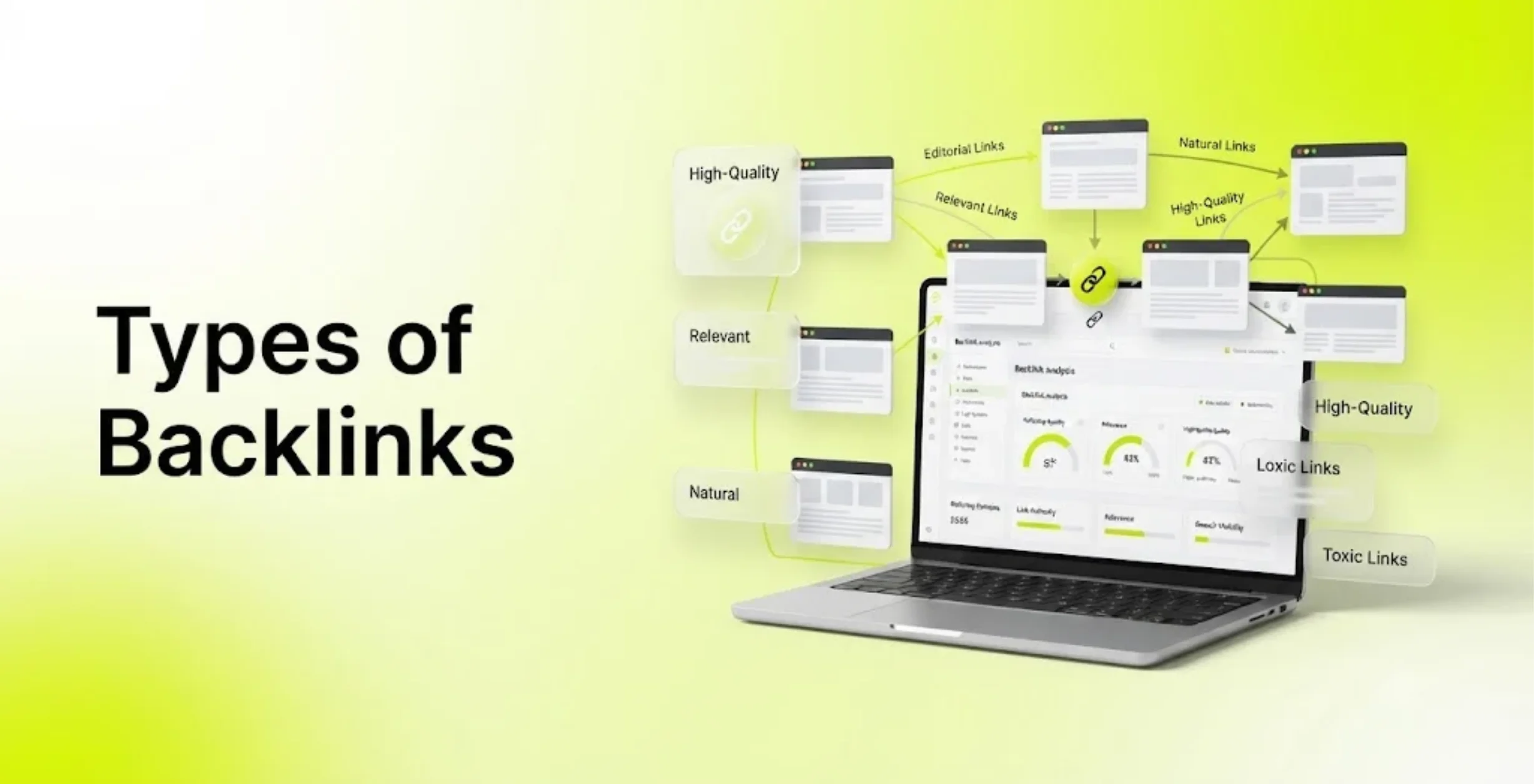
Backlinks continue to be crucial for SEO in 2026 because they signal to search engines that the site is significant, credible, and trustworthy. But not all backlinks are equal. Good quality relevant backlinks help your website’s SEO, while irrelevant or spammy links might do much harm and present risks. This entails grasping the different types of backlinks and producing a well-rounded link-building strategy, which may include working with professional Link-Building firms when needed.
There are various types of links, such as do-follow, no-follow, editorial, guest post, directory, etc., which have different functions. So, in this post, we’re going to be talking about backlink types—based on attributes, sources, and quality. You’ll also discover some methods for getting good backlinks the natural way and those that are best avoided for long-term SEO development.
What Is a Backlink?
A backlink is a link from another website to your own website. For example, if another page on the internet mentions your business and links to one of your pages, this is a backlink for your page. Backlinks are a valuable signal to search engines when they crawl and assess web pages. Another source may provide more information to users from a back link.
However, the value of a backlink depends on several factors, including the linking website’s relevance, reputation, context, and link attributes. Thus, backlinks are not all that it takes to get good at SEO. It’s about building relevant, useful, and trusted links that serve the content and user experience.
Why Does the Type of Backlink Matters?
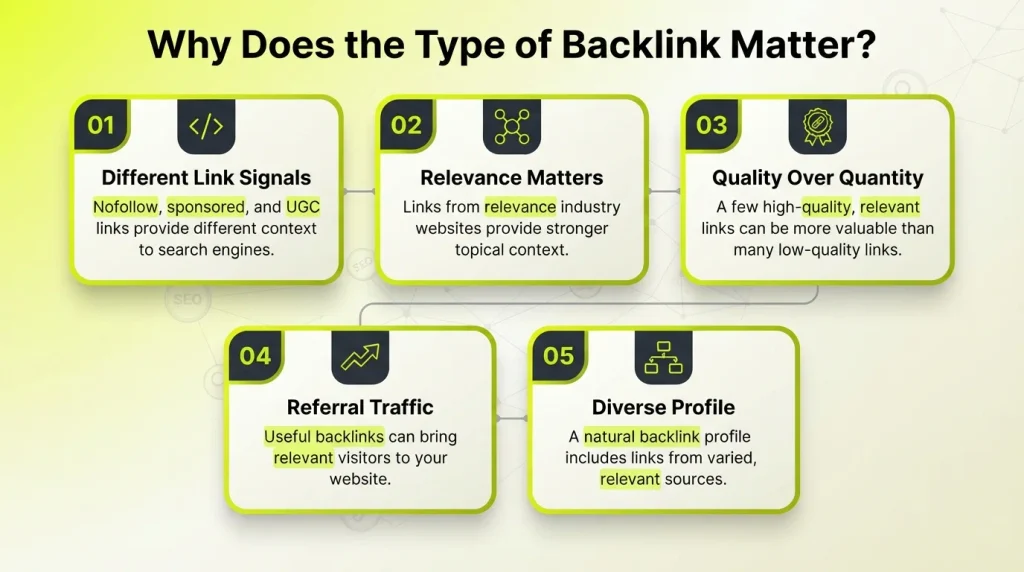
Not every backlink is equal, and all aren’t better. This has the potential of helping you concentrate your time on links that add value where they exist.
- Different Links Have Different Signals: Backlinks can have various attributes, like nofollow, sponsored, or UGC. These attributes give search engines the extra context of the relationship between the linking website and the destination page. Learning about these signals will give you a better idea of what you can expect from your backlink profile.
- Relevance Strengthens Context: The link from a site about a topic that is relevant to your industry is more valuable than one from an unrelated page. For instance, a relevant link from a known SEO publication will have greater topical context than an unrelated link.
- Quality More Than Quantity: The more backlinks you have, the better that does not always mean the better you will rank. It may be more beneficial to have a smaller amount of relevant links from reputable websites rather than a large number of low-quality links. Get more links, but do so because your content merits being referred to.
- Backlinks Can Bring Referral Traffic: You can get backlinks that are not related to search engines. Having a useful link is important to bring your website to a fresh crowd and produce referral traffic. If the audience on the linking page is engaged and relevant, some of them may follow the link and peruse your site.
- A Natural Profile Looks Diverse: A healthy backlink profile can contain different types of links from various relevant sources. Editorial links, resource pages, directories, and user-generated links are all natural. Creating links naturally in a way, using one tactic again and again, builds a more natural profile.
Types of Backlinks by Attribute
HTML attributes that provide information to search engines can also be used as one way to categorize backlinks.
- Do Follow Links: In the field of SEO, “dofollow” typically refers to a common link with no nofollow, sponsored, or UGC attributes. These links may carry a link authority from the linking page to the linked page. They remain valuable as long as the source is quality but relevant.
- No Follow Links: The nofollow attribute instructs search engines to ignore a link with nofollow as if it were not a regular endorsement. There is valid value in using nofollow links for referral traffic, visibility, brand exposure, and discovery. Should not automatically be deemed of no value.
- Sponsored Links: Only for links established as senior to advertisements, sponsorships, or perhaps various other paid-out arrangements. Using the right attribute makes the commercial nature of a link evident.
- UGC Links: The term “user-generated content,” or UGC, is defined as content created by users. It can be used in places like comments and forum posts. This attribute can be used to differentiate user-made links from website owner-designed links.
Types of Backlinks by Source
You can also see regards to backlinks through an evaluation of top and origin. Sources can offer a variety of visibility, authority, and referral opportunities.
- Editorial Backlinks: Editorial links are links that are added to content when the information or content is found to be useful or relevant by another publisher. For instance, a blogger can refer to your original research as they describe a topic. These links can be helpful, since they are suggested by the actual importance, not that they were forced to be included.
- Guest Post Backlinks: Guest blogging is the art of providing your website with valuable articles and possibly linking to resources on your site that go hand in hand with the content. The most beneficial links for a guest post are from trusted, high-quality sites with topics that belong to the same niche.
- Business Directory Links: Important corporate data, including company name, address, phone number, and website, can be populated in business directories. Visibility can be improved in the right and trusted search directories, especially for local-based businesses.
- Resource Page Links: Resource pages gather helpful sites, tools, guides, or references for a particular topic. If your content genuinely fits the page, contacting the website owner with a relevant resource can create a useful backlink opportunity.
- Social and Community Links: Liking and talking about your content on social sites, forums, and online communities can create links. These links can have varying SEO attributes but can also provide discovery, brand exposure, and referral traffic value.
Suggested Read:
Types of Backlinks by Quality
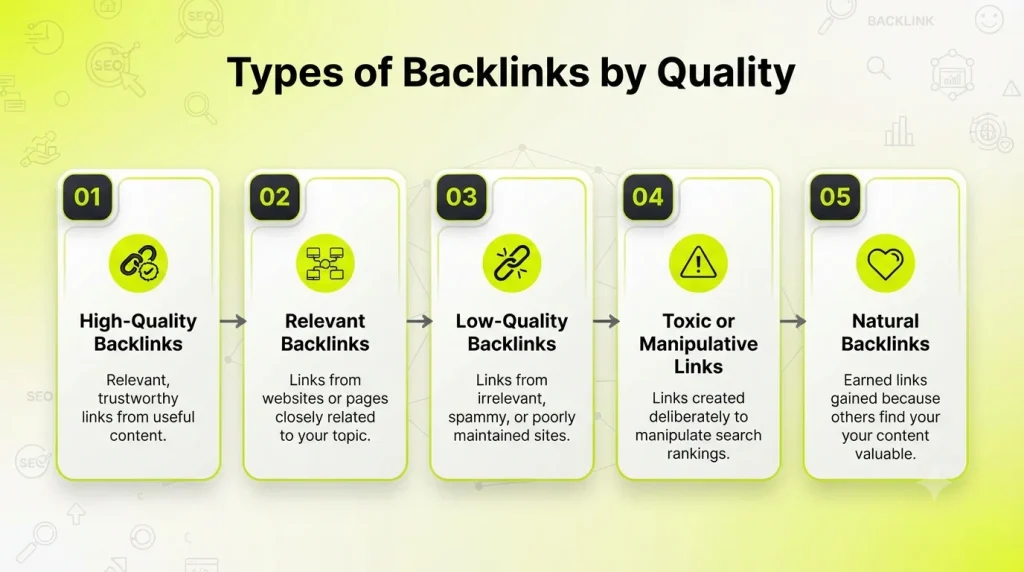
Backlinks may be additionally classified based on their general quality. This offering guides you to which links are worth paying attention to and which may offer minimal SEO value.
- High-Quality Backlinks: Quality backlinks tend to be relevant and trustworthy and are found naturally within quality, useful content. Your linking page ought to have a real reason for linking to your website. Considerations of relevance, context, source credibility, and usefulness.
- Relevant Backlinks: The more relevant the linking page and site are to the subject, the better, and the more contextually useful the backlink is. A technology blog using a relevant word and linking to a cybersecurity firm, for instance, fares better than a random tech link from a completely unrelated site.
- Low-Quality Backlinks: Poorly maintained sites, irrelevant pages, spam-heavy directories, and content optimized for search engine optimization are all considered low-quality backlinks. But a lot of these links won’t necessarily give you better SEO solutions and can signify a fishy link strategy.
- Toxic or Manipulative Links: In the world of search engine optimization, “toxic backlink” is a catch-all phrase that is frequently thrown around. All unwanted or low-quality links don’t necessarily lead to a penalty. But links are not prohibited if a deliberate effort is made to manipulate them to affect rankings or if they pose SEO risks.
- Natural Backlinks: Natural links are those that are earned links, not paid links. These are more likely to occur when people find valuable information and choose to link to it. Producing their own resources that are accurate, original, and helpful will lead to more opportunities for these links.
Comparison Table: Backlink Types at a Glance
| Type | Follow/Nofollow | SEO Value | Example |
| Editorial Backlink | Usually Follow | High | A news website naturally links to your original research |
| Guest Post Backlink | Follow/Nofollow | Medium to High | A relevant industry blog links to your website from an expert article |
| Resource Page Backlink | Usually Follow | High | An educational website links to your useful SEO guide |
| Directory Backlink | Follow/Nofollow | Low to Medium | A trusted business directory lists your company website |
| Nofollow Backlink | Nofollow | Indirect | A website links to your blog using the nofollow attribute |
| Sponsored Backlink | Sponsored | Limited for ranking signals | A paid article includes a properly marked sponsored link |
| UGC Backlink | UGC | Limited | A forum user shares a link to your website in a discussion |
| Social Media Backlink | Usually Nofollow/Platform-dependent | Indirect | A user shares your blog on a social media platform |
| Natural Backlink | Usually Follow | High | A blogger references your content because it is useful |
| Low-Quality Backlink | Follow/Nofollow | Low | An irrelevant or poorly maintained website links to your page |
| Spammy Backlink | Follow/Nofollow | Risky | Automated comments or profiles containing keyword-rich links |
| Paid/Manipulative Link | Follow/Nofollow | Risky | A link purchased specifically to influence search rankings |
How to Get High-Quality Backlinks?
The first step to high-quality backlinks is to understand the Types of Backlinks and establish something that gets websites wanting to link to you. Rather than measure links, measure relevance, usefulness, and relationships.
- Create Link-Worthy Content: Share research, statistics, handy guides, case studies, expert advice, templates, tools, and resources. Content that’s unique helps other publishers to have a real reason to cite your website.
- Use Digital PR: Digital PR can get your content, data, or expertise in front of journalists, publishers, and industry websites. The opportunities for editorial mentions can be generated through original research, expert comments, surveys, or newsworthy insights.
- Try Relevant Guest Contributions: Look for reliable sites that are going to get traffic from your target audience and allow contributions from experts. In fact, make the articles useful and only link where it’s relevant to the reader. Don’t post articles to any site that has little quality and just to get links.
- Build Resource Relationships: Look for resource pages, industry guides, associations, and relevant websites where this content would help the audience and have actual value. Personalized outreach messages that state the reasons your resource fits are more effective than a generic message.
- Promote Original Research: Research-backed content will bring in references since if the publishers need to make a claim, they should have their facts backed up by research. Provide clear results, procedures, statistics, and graphical depictions that others can repeat and reference.
- Recover Unlinked Mentions: There are instances when websites reference your brand but do not directly link back to it. These mentions can be used to build simple backlinks by simply asking the publisher if they can include a relevant link.
Backlink Types to Avoid
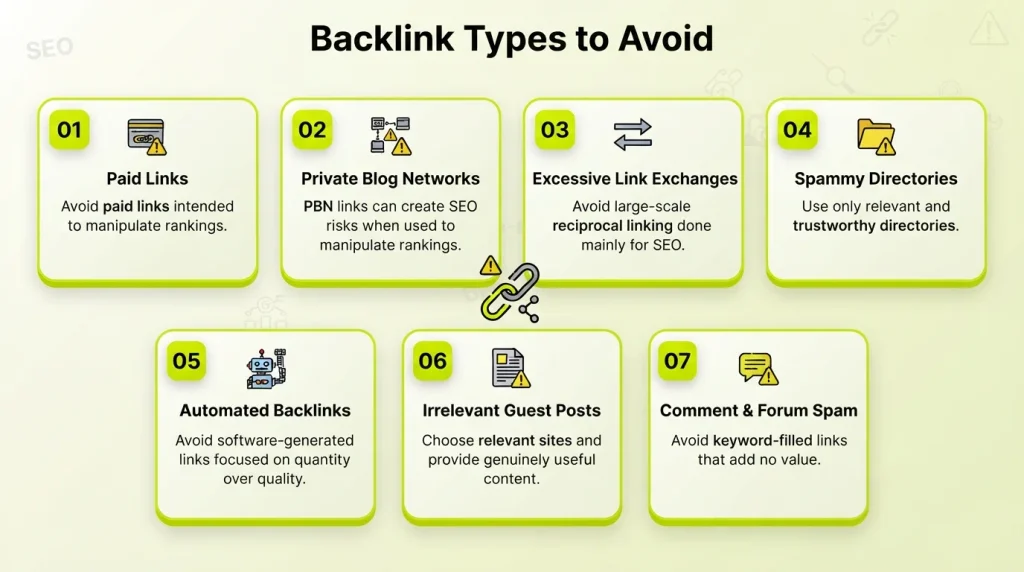
The wrong approach to backlink building can yield little or no benefit or create problems for SEO. It’s not about scraping all the unknown links; it’s about not deliberately creating manipulative links.
- Paid Links Designed to Manipulate Rankings: Link building, particularly for search engine optimization solutions, can be considered spam for search engines. Paid advertising and sponsorships are legit, but with proper linking attributes if required.
- Private Blog Networks: PBN consists of websites built and monetized mainly for backlinks, which are websites under one organization. When a network is used to manipulate rankings, there are risks too because the links don’t have editorial content value.
- Excessive Link Exchanges: It is possible and natural to have a partnership on an occasional basis between existing websites. However, excessive or large-scale reciprocal linking arranged primarily to manipulate rankings can become problematic. Unless links are useful to the user, there is no reason to have them.
- Spammy Directory Links: If someone submits their website to hundreds of ‘spammy’ Web directories, then there is not much that it can accomplish. Instead, stick to directories that have proven to be trustworthy and are relevant to your sector, area, or audience.
- Automated Backlinks: Unnatural link profiles can result from automated software, which adds many backlinks to a site using comments, profiles, directories, or other websites. This approach focuses on quantity, not quality or relevancy.
- Irrelevant Guest Posts: Websites that publish random articles for the purpose of backlinks are making guest posting a waste of time. Pick websites that are relevant to your niche and write helpful articles and not for links.
- Comment and Forum Spam: Inserting keywords in any blog comments, forums, or communities without adding value is considered spam. Be genuinely present and share links when helpful to the discussion.
Final Thoughts
While backlinks remain a crucial component of SEO, proper link building goes beyond simply accruing links. Familiarizing yourself with Types of Backlinks, backlink attributes, sources, and quality allows you to assess your link profile and create a more sustainable one.
Prioritize quality content, securing editorial coverage, providing useful knowledge, and building trusted website partnerships. Never use automated links, link schemes, spammy links, or placement in irrelevant directories.
Be mindful that a backlink should make sense to the reader first. Receiving a link as a result of your content’s usefulness will provide you with traffic from elsewhere, exposure to a potential audience, and brand awareness, as well as search visibility.
FAQs
1. What are the main types of backlinks?
Nofollow, sponsored, UGC, editorial, guest post, directory, resource-page, natural, and low-quality backlinks are the main types. They vary in value based on relevance, context, source, and purpose.
2. Are dofollow backlinks better for SEO?
The default attribute is dofollow in links that do not have any modifying descriptors. These links are potentially useful for passing ranking signals, but they are still tied to the linking website, relevance, context, and overall quality.
3. Are nofollow backlinks useful?
Yes. Nofollow links can help drive referral traffic, brand visibility, audience exposure, and discovery. The value of these should not be assessed from a pass-or-fail perspective of ranking signals.
4. How can I get high-quality backlinks?
Develop novel research, helpful guides, statistics, tools, and expert resources. Use relevant outreach, digital PR, guest posts, resource pages, and credible industry websites to promote them.
5. Which backlinks should I avoid?
Do not put intentional links in place using any of the following: paid schemes, PBN links, automated software, excessive exchanges, spammy directories, irrelevant guest posts, or comment and forum spam that is just ranking-oriented.