
Opening a fashion retail business with a trusted brand can offer strong growth opportunities in India’s rapidly expanding apparel market. As demand for affordable and trendy clothing continues to rise, many entrepreneurs are looking for reliable investment options backed by established retail names. One of the brands that frequently attracts attention is Zudio, known for its budget-friendly fashion collections and growing presence across cities and towns.
Understanding the Zudio Franchise Cost in India is an important first step before planning your investment. From estimated startup costs and store space requirements to expected profitability and operational considerations, having the right information can help you make an informed business decision. Since Zudio is part of the Tata Group’s retail ecosystem through Trent Limited, it has built strong brand recognition and customer trust, making it an attractive choice for investors interested in the fashion retail sector.
In this guide, you’ll learn about the estimated investment, eligibility criteria, store requirements, profit potential, application process, and other key details related to the Zudio Franchise Cost in India, helping you evaluate whether this business opportunity aligns with your financial goals.
What Is Zudio and Why Is It Growing So Fast in India?

Zudio is one of India’s fastest-growing value fashion retail brands, owned and operated by Trent Limited, a retail company under the Tata Group. Launched in 2016, the brand has transformed the affordable fashion segment by offering stylish clothing, footwear, accessories, and beauty products at budget-friendly prices. Its focus on delivering trendy products at accessible price points has made it a preferred shopping destination for customers across metro cities as well as Tier 2 and Tier 3 markets.
One of the biggest reasons behind Zudio’s rapid growth is its pricing strategy. Most products are priced between ₹99 and ₹999, making fashionable clothing affordable for a wide customer base while encouraging repeat purchases. Combined with frequent collection updates and strategically located stores, this approach generates strong customer footfall throughout the year.
By early 2026, Zudio had expanded to 850+ stores across more than 250 cities, making it one of India’s largest fashion retail chains. Trent Limited also reported over $1 billion in Zudio revenue during FY25, highlighting the brand’s impressive financial performance and growing market demand. This rapid expansion, backed by the Tata Group’s credibility, is one of the main reasons investors closely monitor opportunities related to the Zudio Franchise Cost in India, even though the company primarily follows a Franchise Owned, Company Operated (FOCO) partnership model rather than a traditional franchise system.
Zudio Brand Overview at a Glance
| Particular | Details |
|---|---|
| Brand Name | Zudio |
| Parent Company | Trent Limited (Tata Group) |
| Founded | 2016 |
| Headquarters | Mumbai, Maharashtra, India |
| Store Count (2026) | 850+ Stores |
| Cities Covered | 250+ Cities Across India |
| Product Categories | Men’s Wear, Women’s Wear, Kids’ Wear, Footwear, Accessories, Beauty |
| Price Range | ₹99–₹999 |
| Business Model | FOCO (Franchise Owned, Company Operated) / Company-led Expansion |
| International Presence | UAE |
| FY25 Revenue | Over US$1 Billion (Reported) |
Target Customers and Product Categories
Zudio primarily serves Gen Z shoppers, college students, young professionals, middle-income families, and value-conscious consumers looking for fashionable products at affordable prices. The brand appeals to customers who want the latest trends without paying premium prices.
Its product portfolio includes a wide range of categories, such as:
- Men’s apparel
- Women’s apparel
- Kids’ clothing
- Footwear
- Fashion accessories
- Beauty and personal care products
A major factor behind Zudio’s popularity is its fast-changing merchandise strategy. The company regularly introduces new collections inspired by current fashion trends while retiring older designs, creating a sense of urgency among shoppers. This encourages customers to visit stores more frequently, increasing repeat purchases and overall sales.
Zudio’s Expansion Strategy in India
Zudio has maintained one of the fastest retail expansion rates in the Indian fashion industry. During Q3 FY26, the brand reportedly added more than 48 new stores, averaging nearly one new store every two days. This aggressive rollout reflects Trent Limited’s long-term strategy of strengthening Zudio’s presence across the country.
Rather than focusing only on metro cities, the company is increasingly expanding into Tier 2 and Tier 3 cities, where demand for affordable branded fashion continues to grow. These markets offer lower operating costs, rising disposable incomes, and relatively less competition, making them attractive for future retail expansion.
Zudio’s strong business performance is also reflected in its approximately 41% revenue CAGR over recent years, supported by rapid store additions, efficient inventory management, and competitive pricing. Backed by the Tata Group’s retail expertise and supply chain, the brand continues to strengthen its market position, making it one of the most closely watched fashion retail businesses for investors exploring partnership opportunities.
Does Zudio Offer a Franchise in India? The Real Answer
One of the most common questions among aspiring retail investors is whether Zudio offers a traditional franchise in India. The short answer is no. Unlike many food and retail brands that sell standard franchise licenses, Zudio primarily expands through a Franchise Owned, Company Operated (FOCO) model. This means the company retains control over day-to-day business operations while the investor typically provides the commercial space and capital required for the store.
Since Zudio is owned by Trent Limited, part of the Tata Group, it follows a carefully controlled expansion strategy to maintain consistent store quality, pricing, inventory management, and customer experience across all locations. Instead of advertising an open franchise program, the company generally evaluates commercial properties and partnership opportunities on a case-by-case basis.
Understanding how the FOCO model works is essential before considering the Zudio Franchise Cost in India, as it differs significantly from a traditional franchise where the franchisee manages the store independently.
What Is the FOCO Model (Franchise Owned, Company Operated)?
FOCO stands for Franchise Owned, Company Operated. Under this model, the investor is responsible for providing the required investment, commercial property, and store infrastructure, while Trent Limited manages the operational side of the business.
Typically, the company oversees:
- Recruitment and training of staff
- Inventory procurement and stock management
- Product pricing
- Visual merchandising
- Marketing and promotional activities
- Daily store operations
The investor does not manage the store personally. Instead, returns are generally based on the commercial agreement signed with Trent Limited. Since the company controls operations, it can maintain consistent service quality and brand standards across every Zudio outlet.
FOCO vs. COCO: What’s the Difference?
| Feature | FOCO (Franchise Owned, Company Operated) | COCO (Company Owned, Company Operated) |
|---|---|---|
| Investment | Investor provides capital and property | Company invests entirely |
| Store Ownership | Investor-owned | Company-owned |
| Daily Operations | Managed by Trent Limited | Managed by Trent Limited |
| Staff & Inventory | Managed by Trent Limited | Managed by Trent Limited |
| Operational Control | Limited for investor | Full company control |
| Investor Role | Property owner/partner | No external investor |
Is a Traditional Franchise Available from Zudio?
As of 2026, Zudio does not publicly advertise a traditional franchise program where anyone can simply apply, pay a franchise fee, and operate a store independently.
Instead, Trent Limited generally considers partnerships with:
- Owners of large commercial properties
- Shopping mall developers
- Retail real estate investors
- Strategic business partners with suitable high-footfall locations
Most collaborations are believed to involve commercial leasing arrangements or FOCO partnerships, depending on the property’s suitability and Trent’s expansion plans.
Because the company has not officially published a franchise application program, investors should avoid websites or consultants claiming guaranteed Zudio franchise approvals. The safest approach is to contact Trent Limited through its official corporate channels regarding property or partnership opportunities.
Zudio Franchise Cost in India 2026 (Complete Breakdown)
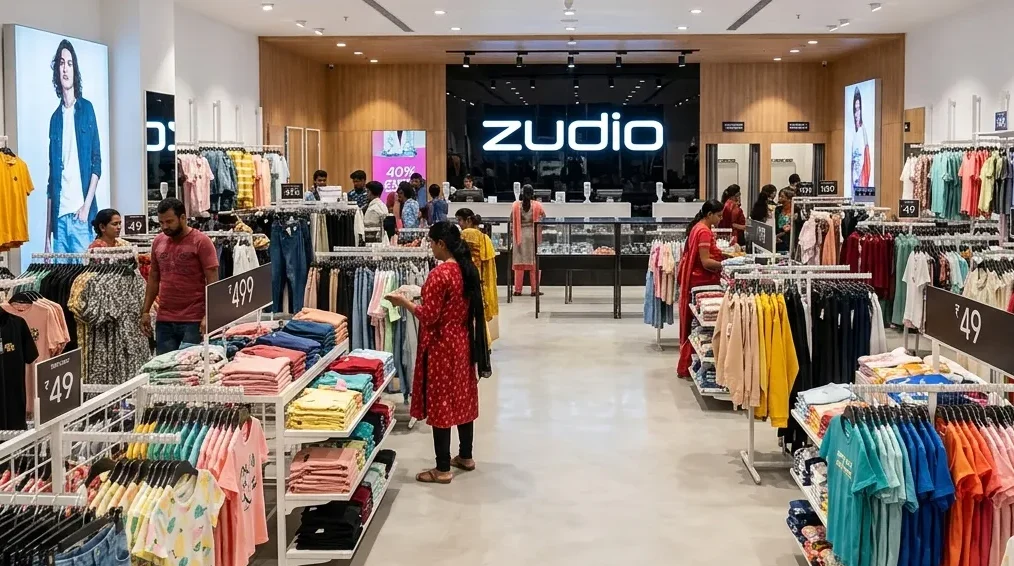
If you’re planning to invest in a Zudio store, understanding the total capital requirement is essential. Since Trent Limited does not publicly disclose official franchise investment figures, the costs below are industry estimates based on commercial retail setup expenses, market reports, and publicly available information.
Total Investment Range Overview
The total investment required to open a Zudio store varies significantly based on factors such as the property’s location, carpet area, interior specifications, and whether the premises are owned or leased. Metro cities typically require a much higher investment because of expensive real estate and larger store formats.
While smaller stores in Tier 3 cities may require an investment of around ₹50 lakh to ₹80 lakh, stores in major metropolitan cities can require ₹1.5 crore to ₹3 crore or more.
Cost Breakdown Table (Estimated)
| Investment Component | Estimated Cost |
|---|---|
| Franchise / Brand Fee* | ₹10 lakh – ₹15 lakh* |
| Store Interiors & Setup | ₹30 lakh – ₹1.20 crore |
| Security Deposit | ₹20 lakh – ₹40 lakh |
| Initial Inventory | ₹15 lakh – ₹60 lakh |
| Technology & Billing Systems | ₹5 lakh – ₹10 lakh |
| Staff Recruitment & Training | ₹3 lakh – ₹8 lakh |
| Marketing & Grand Opening | ₹5 lakh – ₹15 lakh |
| Working Capital Reserve | ₹20 lakh – ₹40 lakh |
| Licenses & Legal Expenses | ₹2 lakh – ₹5 lakh |
| Miscellaneous Expenses | ₹5 lakh – ₹10 lakh |
| Estimated Total Investment | ₹1.30 crore – ₹3 crore |
Investment by City Tier
The investment required depends heavily on the city where the store is located. Premium malls and commercial districts in metro cities generally involve higher rental costs, interior expenses, and security deposits.
| City Category | Estimated Investment | Recommended Store Size | Example Cities |
|---|---|---|---|
| Tier 1 | ₹1.5 crore – ₹3 crore | 5,000–8,000 sq. ft. | Mumbai, Delhi, Bengaluru, Hyderabad, Chennai |
| Tier 2 | ₹80 lakh – ₹1.5 crore | 4,000–6,000 sq. ft. | Jaipur, Lucknow, Pune, Indore, Chandigarh |
| Tier 3 | ₹50 lakh – ₹80 lakh | 3,000–5,000 sq. ft. | Raipur, Udaipur, Shimla, Jabalpur, Siliguri |
These estimates can vary depending on rental rates, property ownership, and local market conditions.
Recurring Monthly Costs to Plan For
Apart from the initial investment, investors should also plan for recurring operating expenses. Although Trent Limited has not publicly disclosed the commercial terms of its partnership model, the following costs are commonly considered when estimating retail operating expenses.
| Monthly Expense | Estimated Cost |
|---|---|
| Brand Royalty / Revenue Share* | Approximately 10%–16%* |
| Store Rent (If Leased) | ₹1 lakh – ₹5 lakh |
| Utilities & Maintenance | ₹30,000 – ₹1 lakh |
| Employee Salaries | ₹2 lakh – ₹8 lakh |
| Local Marketing & Promotions | Varies by location |
| Miscellaneous Operating Costs | As applicable |
Key Factors That Affect Total Investment
Several factors influence the overall Zudio Franchise Cost in India, which is why investment estimates can differ considerably from one location to another.
- Store Location: Stores in premium shopping malls or high-street commercial areas usually require significantly higher investment than standalone stores in smaller cities.
- City Tier: Metro cities involve higher rental costs, security deposits, employee salaries, and operating expenses compared to Tier 2 and Tier 3 markets.
- Store Size: Larger stores require more interiors, shelving, lighting, trial rooms, inventory, and staff, increasing the overall setup cost.
- Property Ownership: Investors who already own suitable commercial property can reduce their initial investment substantially by avoiding large security deposits and recurring rental expenses.
- Interior Design Standards: Zudio maintains consistent branding and store layouts. Premium interior finishes and fixtures can significantly increase setup costs.
- Location Visibility: High-footfall locations typically command higher rents but also offer better sales potential, making site selection one of the most important investment decisions.
Space and Location Requirements for a Zudio Store
Selecting the right location is one of the most important factors in the success of a Zudio store. Since Zudio follows a value-fashion retail model, its stores are typically established in high-footfall commercial areas where they can attract a large number of daily shoppers. Along with visibility, Trent Limited also evaluates factors such as accessibility, surrounding demographics, parking availability, and long-term business potential before approving a location.
Although the company has not officially published fixed space requirements, industry sources suggest that Zudio generally prefers medium to large-format retail stores capable of displaying its complete range of fashion products.
Minimum Store Size Required
A typical Zudio store requires approximately 3,000 to 10,000 square feet of commercial retail space. The ideal size depends on the city, target customer base, and whether the outlet is located in a shopping mall or on a high street.
Generally:
- Minimum recommended area: 3,000 sq. ft.
- Preferred size: 6,000–8,000 sq. ft.
- Large-format stores: Up to 10,000 sq. ft.
Larger stores allow space for separate sections for men’s, women’s, and kids’ fashion, footwear, beauty products, trial rooms, billing counters, and comfortable customer movement.
Ideal Store Size by Format
| Store Format | Recommended Space | Suitable Location |
|---|---|---|
| Small Format Store | 3,000–5,000 sq. ft. | Tier 3 Cities & Emerging Markets |
| Standard Retail Store | 6,000–8,000 sq. ft. | Tier 2 Cities & High Streets |
| Large Format Store | 8,000–10,000 sq. ft. | Metro Cities & Premium Commercial Areas |
| Mall-Based Store | 5,000–7,000 sq. ft. | Shopping Malls & Lifestyle Centres |
Preferred Locations for Maximum Footfall
The success of a Zudio store depends heavily on customer traffic. For this reason, the company generally prefers locations with strong visibility and consistent footfall throughout the year.
Some of the most suitable locations include:
- Shopping malls and lifestyle centres
- High-street commercial markets
- Mixed-use commercial complexes
- Dense residential catchment areas
- Business districts with office employees
- Transit hubs near metro stations, railway stations, or bus terminals
When evaluating a property, factors such as road visibility, accessibility, parking facilities, nearby anchor brands, competition, and local demographics play an important role. Stores located in busy retail corridors generally benefit from higher customer visits and stronger sales performance.
Choosing a commercially viable location not only improves revenue potential but also increases the likelihood of securing a partnership with Trent Limited under its expansion strategy.
Profit Margin, Revenue, and Return on Investment
Understanding the potential earnings is one of the most important aspects before investing in a Zudio store. While Trent Limited does not publicly disclose store-level financial data, industry estimates suggest that Zudio outlets can generate strong revenue because of the brand’s affordable pricing, high customer footfall, and rapid inventory turnover. Since most products are priced between ₹99 and ₹999, profitability depends on selling a high volume rather than on earning a high margin on individual items.
Revenue and returns vary based on several factors, including the store’s location, size, rental costs, customer demand, and operational efficiency. Stores in premium malls and metro cities generally generate higher sales but also incur higher operating expenses. On the other hand, outlets in Tier 2 and Tier 3 cities often benefit from lower rents, which can improve net profit margins and shorten the break-even period.
The table below provides an estimated comparison of monthly revenue, profit margins, and return on investment across different city tiers.
| Metric | Tier 1 Cities | Tier 2 Cities | Tier 3 Cities |
|---|---|---|---|
| Estimated Monthly Revenue | ₹70 lakh – ₹1 crore+ | ₹30 lakh – ₹70 lakh | ₹15 lakh – ₹30 lakh |
| Gross Profit Margin | 25% – 40% | 25% – 40% | 25% – 40% |
| Net Profit Margin | 8% – 12% | 10% – 15% | 12% – 18% |
| Estimated Break-Even Period | 3.5 – 5 Years | 3 – 4 Years | 2.5 – 3.5 Years |
| Annual ROI After Break-Even | 15% – 20% | 18% – 22% | 20% – 25% |
| Peak Festive Season Profit Margin | Up to 15% | Up to 20% | Up to 25% |
Overall, investors can expect stronger sales in metro locations due to higher footfall, while stores in smaller cities may deliver better profitability because of lower operating costs. Regardless of the location, choosing a high-footfall commercial area, managing expenses effectively, and maintaining consistent customer traffic are key factors that influence the long-term success and return on investment of a Zudio store.
Eligibility Criteria and Requirements to Apply
Before approaching Trent Limited for a Zudio partnership, investors should ensure they meet the company’s expected financial and commercial standards. Since Zudio does not operate a publicly advertised traditional franchise program, there are no officially published eligibility requirements. However, based on industry practices and the company’s expansion strategy, prospective partners are generally expected to demonstrate strong financial capability, access to suitable commercial property, and the ability to support a large-format retail business.
Meeting these requirements does not guarantee approval, as Trent Limited evaluates each proposal based on factors such as location potential, market demand, and long-term business viability.
Financial Requirements
Opening a Zudio store requires a substantial investment, particularly in metro cities. Investors should have sufficient capital to cover store setup, interiors, security deposits, working capital, and other operational expenses.
Typical financial expectations include:
- Estimated investment capacity of ₹50 lakh to ₹3 crore, depending on the store format and location.
- Adequate working capital to manage operating expenses during the initial months.
- A stable financial background with a good credit history.
- Ability to provide proof of funds or financial statements if requested during the evaluation process.
Space and Property Requirements
One of the most important eligibility factors is having access to a suitable commercial property. Trent Limited generally prioritizes locations with high visibility and consistent customer traffic.
Preferred property requirements include:
- Commercial retail space of 3,000 to 10,000 sq. ft.
- Location in a shopping mall, high-street market, or busy commercial complex.
- Excellent road visibility and easy customer accessibility.
- Availability of parking and supporting infrastructure.
- Property that meets Trent Limited’s location assessment and business viability criteria.
Owning commercial property can be an added advantage, as it may reduce overall investment costs and make the proposal more attractive.
Business and Personal Background Requirements
Although prior retail experience is not always mandatory, investors with a strong business background may have an advantage during the evaluation process.
Applicants should ideally have:
- Experience in retail, real estate, or business management (preferred but not mandatory).
- A clean financial and legal record.
- Compliance with tax and regulatory requirements.
- Good understanding of the local market and customer demographics.
- Commitment to meeting Trent Limited’s operational and brand standards.
Documents and Licenses Required Before Opening
Before opening a Zudio store, investors must obtain the necessary business registrations and statutory approvals required to operate a retail outlet in India. While Trent Limited has not publicly released an official document checklist, most large-format retail stores must comply with central, state, and local government regulations.
Among all the required documents, GST Registration and a Trade License are the most critical. Without these approvals, a retail business cannot legally sell goods or conduct commercial operations. Depending on your state and the store’s location, additional licenses or permits may also be required.
The following table outlines the commonly required documents and their purpose.
| Document / License | Purpose |
|---|---|
| GST Registration | Mandatory for collecting GST and conducting taxable retail sales. |
| Trade License | Authorizes the business to operate legally within the local municipal jurisdiction. |
| Shop and Establishment License | Required to register the retail establishment under state labour laws. |
| EPF & ESIC Registration | Applicable for employee provident fund and employee insurance compliance, subject to workforce size. |
| Fire Safety Certificate | Confirms that the store complies with fire safety regulations and emergency standards. |
| Proof of Identity & Address | PAN Card, Aadhaar Card, Passport, or other government-issued documents of the applicant. |
| Bank Statements & Income Tax Returns | Used to verify financial capability and business stability during evaluation. |
| Property Ownership Papers or Lease Agreement | Proof of ownership or a valid long-term commercial lease for the proposed store location. |
| Business Plan with Financial Projections | Demonstrates expected investment, projected revenue, operating expenses, and profitability. |
| No Objection Certificate (NOC) | May be required from the property owner, shopping mall management, or local authorities, depending on the location. |
Before applying, it’s also advisable to keep supporting documents such as the company’s incorporation certificate (if applicable), PAN card, cancelled cheque, and other financial records readily available, as they may be requested during the verification process.
Step-by-Step Process to Apply for a Zudio Partnership in 2026
Unlike traditional franchise brands, Zudio does not have a publicly available online franchise application portal. The company primarily expands through the Franchise Owned, Company Operated (FOCO) model, where Trent Limited evaluates suitable commercial properties and potential business partners. If you’re interested in partnering with Zudio, following the correct application process can improve your chances of consideration.
Step 1: Contact Trent Limited Through Official Channels
Begin by reaching out to Trent Limited through its official website or corporate office. Avoid third-party consultants or websites claiming guaranteed franchise approvals.
When enquiring, be prepared to share basic details such as:
- Your name and contact information
- Business background
- Preferred city and location
- Details of your commercial property (if available)
Step 2: Submit Your Business Proposal and Property Details
If your enquiry progresses, you may be asked to submit a proposal that includes information about your investment capacity and the proposed store location.
Your proposal should generally include:
- Property address
- Total carpet area
- Photographs of the location
- Ownership or lease documents
- Estimated investment budget
- Basic business profile
Providing complete and accurate information can help Trent Limited assess whether your location aligns with its expansion strategy.
Step 3: Site Inspection and Business Evaluation
Trent Limited’s team may conduct a detailed assessment of the proposed property to determine its suitability.
During the evaluation, factors such as the following are typically considered:
- Customer footfall
- Visibility from the main road
- Accessibility and parking
- Nearby residential and commercial developments
- Local competition
- Overall market potential
Only locations that meet the company’s operational and commercial standards are likely to move to the next stage.
Step 4: Agreement Signing and Store Setup
If the property is approved, both parties proceed with the commercial agreement. The exact terms depend on the partnership structure finalized with Trent Limited.
After the agreement is signed, the store setup process generally includes:
- Interior fit-out
- Branding and signage
- Technology and billing system installation
- Inventory planning
- Staff recruitment and training
- Final operational preparations
Step 5: Store Launch and Operations
Once the store is ready and all approvals are completed, the outlet is prepared for launch. Under the FOCO model, Trent Limited typically manages the day-to-day operations, including inventory, merchandising, staffing, and customer experience, while the investor participates according to the agreed commercial arrangement.
Estimated Timeline
The complete process—from the initial enquiry to the store opening—typically takes 3 to 6 months, depending on property approval, documentation, interior work, and other operational requirements.
Benefits of Investing in the Zudio Partnership Model
Zudio has become one of India’s fastest-growing value fashion brands, making it an attractive opportunity for investors seeking exposure to the organized retail sector. Although the company primarily follows a Franchise Owned, Company Operated (FOCO) model instead of a traditional franchise system, partnering with Trent Limited offers several potential advantages. From strong brand recognition to centralized operations, these benefits can help investors reduce business risk while capitalizing on India’s growing demand for affordable fashion.
- Backed by the Tata Group’s Credibility: Zudio is owned by Trent Limited, a part of the Tata Group, one of India’s most trusted business conglomerates. This strong brand reputation enhances customer confidence and gives investors the advantage of partnering with an established retail company backed by decades of industry experience.
- Growing Demand for Affordable Fashion: Zudio caters to India’s rapidly expanding value-fashion market by offering trendy clothing at affordable prices. Its wide appeal among students, young professionals, and middle-income families creates consistent customer demand and long-term business potential.
- High Customer Footfall: With most products priced between ₹99 and ₹999, Zudio attracts a large number of shoppers. Frequent product launches and seasonal collections encourage repeat visits, helping stores maintain steady sales throughout the year.
- Expansion Across Tier 2 and Tier 3 Cities: Trent Limited continues to expand Zudio into emerging markets where organized fashion retail is growing quickly. These cities often offer lower operating costs while providing significant opportunities for future business growth.
- Company-Managed Operations: Under the FOCO (Franchise Owned, Company Operated) model, Trent Limited manages daily store operations, including inventory, staffing, merchandising, and pricing. This reduces the operational burden on investors and helps maintain consistent brand standards.
- Strong Supply Chain and Inventory Management: Zudio benefits from Trent Limited’s established sourcing and distribution network. Efficient inventory management ensures regular stock availability, faster product replenishment, and a better shopping experience for customers.
Risks and Challenges You Should Know Before Investing
While investing in a Zudio store offers strong growth potential, it is equally important to understand the risks involved. Like any large-format retail business, success depends on location, customer demand, operating costs, and market conditions. Before making an investment, consider the following challenges.
- Higher Revenue Share or Royalty Costs: Industry estimates suggest that Zudio’s revenue-sharing or royalty arrangement may range between 10% and 16% of gross sales, which is higher than many food franchise brands such as KFC, where royalty fees are typically around 4% to 5%. Trent Limited has not officially disclosed its royalty structure, so investors should verify all commercial terms before signing an agreement.
- Dependence on Fashion Trends: The fashion industry changes rapidly. Customer preferences, seasonal collections, and emerging trends can significantly influence sales. Stores must continually attract customers with fresh collections to maintain consistent revenue.
- Strong Competition from Online Retailers: Zudio competes with major e-commerce platforms such as Myntra, Meesho, Amazon Fashion, and Flipkart, as well as offline fashion retailers like Reliance Trends, Pantaloons, and Max Fashion. Competitive pricing and online discounts can impact store sales.
- Limited Operational Control Under the FOCO Model: Since Zudio follows the Franchise Owned, Company Operated (FOCO) model, Trent Limited manages daily operations, including staffing, inventory, pricing, and merchandising. While this ensures consistency, investors have limited control over operational decisions.
- Longer Break-Even Period: Compared to smaller retail or food franchise formats, a Zudio store generally requires a larger investment and may take 2.5 to 5 years to recover the initial capital, depending on the location and business performance.
- High Initial Investment: Setting up a large-format fashion retail store requires substantial capital for interiors, inventory, security deposits, and working capital. Investors should ensure they have sufficient financial resources before proceeding.
- Location-Dependent Performance: A store’s profitability largely depends on its location. Poor visibility, low customer footfall, or intense local competition can significantly affect sales and delay the return on investment.
Suggested read:
- List of Government Franchises in India
- Mio Amore Franchise Cost in India
- Lenskart Franchise Cost
- McDonald’s Franchise Cost in India
Zudio Franchise vs Other Fashion Franchise Opportunities in India
Choosing the right franchise or retail partnership depends on your investment budget, expected returns, operational involvement, and long-term business goals. While Zudio has become one of India’s fastest-growing value fashion brands, it is not the only option available to investors. Comparing it with other popular fashion brands and a well-known food franchise provides a better perspective on the investment required, royalty fees, and expected returns.
The table below compares Zudio with Reliance Trends, Pantaloons, and Domino’s to help you evaluate which business opportunity best matches your budget and investment objectives.
| Brand | Business Model | Estimated Investment | Estimated Brand Royalty* | Expected ROI | Break-Even Period |
|---|---|---|---|---|---|
| Zudio | FOCO (Company Operated) | ₹50 lakh – ₹3 crore | ~10%–16%* | 15%–25% | 2.5–5 Years |
| Reliance Trends | Company Partnership / Franchise (Location Dependent) | ₹1 crore – ₹3 crore | Varies | 12%–20% | 3–5 Years |
| Pantaloons | Company-Owned / Select Partnerships | ₹1.5 crore – ₹4 crore | Varies | 12%–18% | 3–5 Years |
| Domino’s | Traditional Franchise | ₹50 lakh – ₹1 crore | Around 8%* | 20%–30% | 2–4 Years |
Which Business Opportunity Is Better?
- Choose Zudio if you want to invest in India’s rapidly growing affordable fashion retail segment and prefer a company-managed operational model.
- Choose Reliance Trends or Pantaloons if you’re interested in established fashion retail brands with larger-format stores and higher investment capacity.
- Choose Domino’s if you prefer a traditional franchise model with comparatively faster break-even and active involvement in day-to-day business operations.
Conclusion
Understanding the Zudio Franchise Cost in India is essential before making any investment decision. The estimated investment ranges from ₹50 lakh to ₹3 crore, depending on the city, store size, and location. Since Zudio primarily follows the Franchise Owned, Company Operated (FOCO) model, investors should understand that Trent Limited manages the day-to-day operations while the investor generally provides the commercial property and required capital.
With strong backing from the Tata Group, growing demand for affordable fashion, and rapid expansion across India, Zudio Franchise Cost in India remains a topic of interest for entrepreneurs looking to invest in the organized retail sector. However, investors should also consider the substantial investment requirement, limited operational control under the FOCO model, and an estimated break-even period of 2.5 to 5 years. It is equally important to apply only through Trent Limited’s official channels to avoid fake franchise offers and scams.
If you have ₹1.5 crore to ₹3 crore available for investment, a suitable commercial property in a high-footfall location, and the patience to wait 2.5 to 5 years for returns, exploring the Zudio Franchise Cost in India and partnership opportunity could be a worthwhile long-term business decision. Investors with a smaller budget or those seeking a traditional franchise model may want to consider lower-investment retail or food franchise opportunities instead.
FAQs
How Much Does a Zudio Franchise Cost in India in 2026?
The estimated Zudio Franchise Cost in India ranges from ₹50 lakh to ₹3 crore, depending on the store size, city, location, and commercial property. Since Trent Limited has not officially disclosed investment requirements, these figures are based on industry estimates.
What Is the Profit Margin of a Zudio Franchise?
Industry estimates suggest that Zudio stores may achieve a gross profit margin of 25% to 40% and a net profit margin of 8% to 18%, depending on operating costs, location, and sales performance. Trent Limited has not officially published store-level profit data.
Is Zudio Franchise Available in India?
Zudio does not publicly offer a traditional franchise program. The brand primarily expands through the Franchise Owned, Company Operated (FOCO) model, where Trent Limited manages store operations while partnering with suitable investors and commercial property owners.
What Is the FOCO Model in Zudio?
FOCO stands for Franchise Owned, Company Operated. Under this model, the investor generally provides the investment and commercial property, while Trent Limited manages inventory, staffing, merchandising, pricing, and daily store operations.
How Do I Apply for a Zudio Franchise in 2026?
Interested investors should contact Trent Limited through its official website or corporate office. If your commercial property meets the company’s expansion criteria, you may be invited to submit property details and a business proposal for evaluation.
What Documents Are Required to Open a Zudio Store?
Commonly required documents include GST Registration, Trade License, Shop and Establishment License, EPF and ESIC Registration (where applicable), Fire Safety Certificate, identity and address proof, property ownership or lease documents, bank statements, Income Tax Returns, and a business plan. Requirements may vary depending on the location and partnership structure.