
The eyewear industry in India is experiencing rapid growth, driven by increasing digital screen time, changing lifestyles, and growing awareness of eye health. With more people spending hours on smartphones, laptops, and tablets every day, vision-related issues such as myopia, digital eye strain, and blurred vision are becoming increasingly common. According to industry estimates, more than 251 million people in India live with some form of vision impairment, creating strong and sustained demand for prescription glasses, contact lenses, and premium eyewear. As organized retail continues to replace traditional optical stores, investing in a trusted eyewear brand has become an attractive business opportunity.
Among the leading players, Lenskart has established itself as India’s largest omnichannel eyewear retailer, combining a strong online presence with an expanding network of physical stores across the country. Its innovative technology, wide product range, and customer-focused approach have made it a preferred choice for both consumers and franchise investors. If you’re planning to invest in this business, understanding the total investment, expected returns, and operational requirements is essential. This guide covers everything you need to know about the Lenskart franchise cost in India, including the investment breakdown, profit margin, space requirements, eligibility criteria, franchise support, and the step-by-step application process for 2026.
India’s Eyewear Market in 2026: Why Now Is the Right Time
India’s eyewear industry is expanding rapidly, making it one of the most promising retail sectors for franchise investment. The market is valued at over ₹20,000 crore and continues to grow as consumers become more aware of eye health, preventive vision care, and premium eyewear options. Rising disposable incomes, increasing digital device usage, and changing fashion preferences have further accelerated demand for prescription glasses, sunglasses, contact lenses, and blue-light-blocking eyewear.
Industry reports estimate that the Indian eyewear market is growing at a compound annual growth rate (CAGR) of around 8.5%, with particularly strong momentum in Tier 2 and Tier 3 cities, where organized eyewear retail is expanding at an estimated 20% annually. Consumers in these cities are increasingly choosing branded optical stores over traditional local shops because of better product quality, transparent pricing, advanced eye-testing technology, and reliable after-sales service.
This shift toward organized retail has created significant opportunities for established brands such as Lenskart. With its omnichannel business model, technology-driven customer experience, and nationwide brand recognition, the company is well-positioned to benefit from this growing demand. For aspiring entrepreneurs, entering the market now offers the advantage of investing in a sector with strong long-term growth potential and increasing consumer trust in branded eyewear retailers.
What Is a Lenskart Franchise and How Does the Business Model Work?

A Lenskart franchise operates under the FOFO (Franchise Owned, Franchise Operated) model, where the franchisee owns the store, makes the initial investment, and manages the day-to-day business operations. This model allows entrepreneurs to run their own retail outlet while leveraging the reputation and proven business systems of one of India’s leading eyewear brands.
Under this arrangement, the franchisee is responsible for investing in the store setup, interiors, equipment, inventory, staffing, and working capital. In return, Lenskart provides comprehensive support, including brand licensing, store design assistance, employee training, technology platforms, inventory management, and national as well as local marketing initiatives. The company also offers operational guidance to help maintain consistent service quality and brand standards across all franchise locations.
One of Lenskart’s biggest advantages is its omnichannel business model, which seamlessly combines online and offline shopping. Customers can browse products on the Lenskart website or mobile app, book eye tests, use virtual try-on technology, and complete purchases either online or at a nearby franchise store. This integrated approach increases customer convenience, drives more footfall to physical outlets, and helps franchisees benefit from both walk-in customers and online-generated demand. As a result, franchise partners gain access to a well-established retail ecosystem instead of building a customer base from scratch.
Lenskart Franchise Cost in India 2026: Complete Investment Breakdown
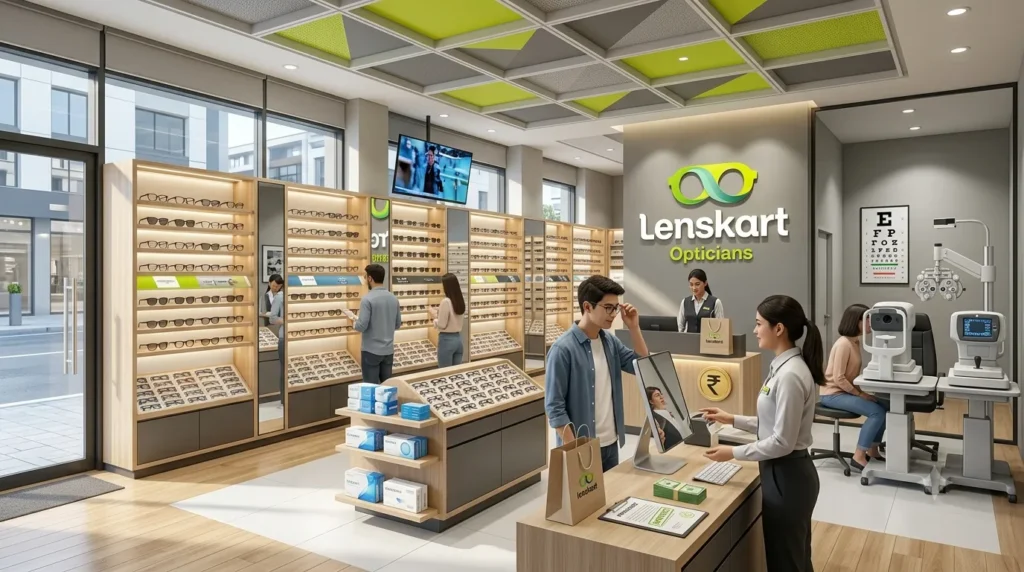
The Lenskart franchise cost in India typically ranges between ₹35 lakh and ₹50 lakh in 2026, depending on factors such as the store’s location, size, and interior specifications. In major metropolitan cities like Delhi, Mumbai, Bengaluru, and Hyderabad, the total investment can go up to ₹55 lakh due to higher rental costs and premium fit-out requirements. This investment covers everything needed to launch a fully operational Lenskart store, including the franchise fee, interiors, inventory, equipment, technology, and initial working capital.
While the exact investment may vary based on your chosen location and the final agreement with Lenskart, the following breakdown provides a realistic estimate for prospective franchise partners.
| Investment Component | Estimated Cost |
|---|---|
| Franchise Fee (One-Time) | ₹1.5 lakh – ₹3 lakh |
| Store Interior & Fit-Out | ₹15 lakh – ₹20 lakh |
| Initial Inventory | ₹10 lakh – ₹12 lakh |
| Eye Testing Equipment | ₹2 lakh – ₹3 lakh |
| Technology Setup (POS & Software) | ₹3 lakh – ₹5 lakh |
| Marketing & Store Launch | ₹1 lakh – ₹2 lakh |
| Miscellaneous Expenses | ₹1 lakh – ₹2 lakh |
| Working Capital (First 3 Months) | ₹2 lakh – ₹3 lakh per month |
These figures are indicative and may vary based on factors such as store size, city category, commercial lease costs, and Lenskart’s latest franchise requirements. Before making an investment, it is advisable to confirm the final costs with Lenskart’s franchise team through the official application process.
City-Wise Investment Breakdown: Metro vs Tier 2 vs Tier 3
The total investment required for a Lenskart franchise varies depending on the city where you plan to open your store. Factors such as commercial rent, store size, interior costs, and local demand significantly influence the overall investment. While metro cities require a higher budget due to premium real estate prices, Tier 2 and Tier 3 cities often offer lower setup costs and growing customer demand, making them attractive locations for new franchise partners.
| City Category | Example Cities | Estimated Investment | Why the Cost Varies |
|---|---|---|---|
| Metro Cities | Delhi, Mumbai, Bengaluru, Hyderabad | ₹45 lakh – ₹55 lakh | Higher commercial rents, premium interiors, and larger stores in high-footfall locations |
| Tier 2 Cities | Jaipur, Indore, Lucknow, Coimbatore | ₹35 lakh – ₹45 lakh | Moderate rental costs with strong demand and growing organized retail |
| Tier 3 Cities | Smaller emerging cities and towns | ₹30 lakh – ₹35 lakh | Lower property and operating costs, making the initial investment more affordable |
Although Tier 3 cities generally require a lower investment, the final cost depends on the exact location, store size, and local market conditions. Lenskart also evaluates factors such as footfall, visibility, and long-term business potential before approving a franchise location. Choosing a high-traffic commercial area can significantly improve customer acquisition and overall profitability, regardless of the city category.
Lenskart Franchise Fee and Royalty Structure
Understanding the franchise fee and ongoing royalty payments is essential before investing in a Lenskart store. The company typically charges a one-time franchise fee of around ₹1.5 lakh to ₹3 lakh, which grants the franchisee the right to operate under the Lenskart brand. This fee generally covers brand licensing, access to the company’s technology platform, operational systems, initial onboarding, and training for the owner and store staff.
In addition to the initial fee, Lenskart is commonly reported to operate on a revenue-sharing or royalty model, with franchise partners paying approximately 15% to 20% of monthly gross sales as royalty or business support charges. These payments help cover continued access to the brand, software updates, inventory management systems, marketing initiatives, operational support, and other centralized services provided by the company.
| Fee Type | Estimated Amount | Purpose |
|---|---|---|
| One-Time Franchise Fee | ₹1.5 lakh – ₹3 lakh | Brand rights, software access, onboarding, and initial training |
| Ongoing Royalty/Revenue Share* | Approximately 15%–20% of monthly gross sales | Continued brand support, technology, marketing, and operational assistance |
Space Requirements and Ideal Location Standards
Choosing the right location is one of the most important factors in the success of a Lenskart franchise. The brand evaluates every proposed site to ensure it meets its operational and customer experience standards before approving.
Space Requirements
- Minimum Store Size: 300–500 sq. ft.
- Preferred Layout: Open floor plan with separate product display and eye-testing areas.
- Frontage: Wide storefront with clear brand visibility.
- Floor Preference: Ground-floor location for maximum accessibility and walk-in traffic.
Ideal Location Standards
A Lenskart franchise performs best in locations that offer consistent customer footfall and excellent visibility. Preferred locations include:
- High-street commercial markets
- Shopping malls and retail complexes
- Busy residential neighborhoods
- Near colleges and universities
- Close to IT parks and corporate offices
- Near hospitals and healthcare centers
- Areas with strong pedestrian and vehicle traffic
Site Approval Process
Before approving a franchise location, Lenskart typically conducts a site feasibility study that evaluates:
- Local customer demand
- Daily footfall and visibility
- Competition in the surrounding area
- Accessibility and parking availability
- Long-term business potential
Store Interior Requirements
To maintain a consistent brand experience, franchise stores are generally expected to include:
- Glass display counters for eyewear collections
- Dedicated eye-testing and consultation area
- Virtual try-on kiosk or digital experience zone
- POS (Point of Sale) billing terminal
- Customer waiting and seating area
- Branded signage and standardized store interiors
- Storage space for inventory and accessories
Selecting a high-visibility location that meets Lenskart’s guidelines can significantly improve customer acquisition, sales performance, and long-term profitability.
Lenskart Franchise Profit Margin and Monthly Income in 2026
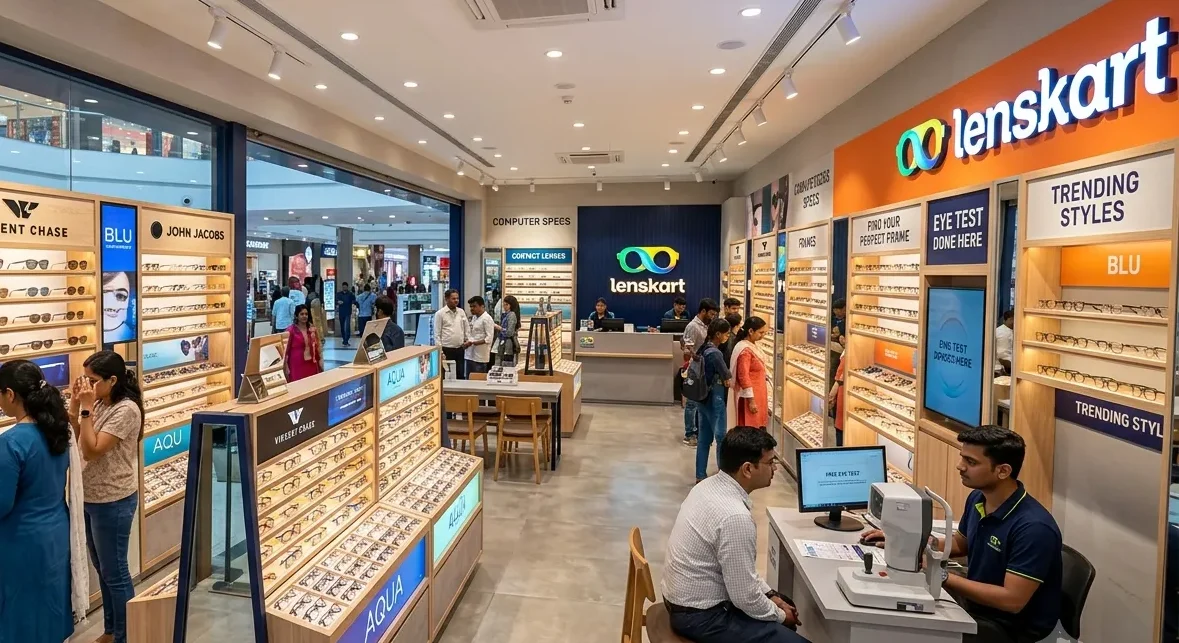
A Lenskart franchise has the potential to generate attractive returns when operated in a high-demand location with efficient day-to-day management. However, actual earnings depend on factors such as store location, customer footfall, operating costs, staffing, and overall sales performance. The figures below represent commonly reported industry estimates for 2026.
| Metric | Estimated Figures |
|---|---|
| Gross Profit Margin | 25%–30% |
| Net Profit Margin | 10%–15% |
| Monthly Revenue | ₹5 lakh – ₹15 lakh |
| Monthly Net Income | ₹1 lakh – ₹3.5 lakh |
| Break-Even Period | 18–36 months* |
| Estimated Annual ROI | Approximately 30%–35% |
Industry Insight: Recent industry reports indicate that several Tier 2 cities are witnessing faster revenue growth than some metro markets, driven by increasing demand for branded eyewear, rising disposable incomes, and expanding organized retail. As a result, entrepreneurs should evaluate growing Tier 2 markets alongside metro cities when selecting a franchise location.
The actual profitability of a Lenskart franchise will vary based on business performance and market conditions. Prospective franchisees should evaluate the investment carefully and confirm financial expectations with Lenskart during the franchise application process.
Factors That Directly Impact Your Monthly Profit
Several factors influence how much profit a Lenskart franchise can generate each month. Focusing on these areas can help improve sales and overall business performance.
- Location and Foot Traffic: Stores in high-visibility areas such as malls, high streets, and commercial markets generally attract more walk-in customers and generate higher sales.
- Staff Quality and Optometrist Expertise: Well-trained sales staff and a certified optometrist can improve customer satisfaction, increase conversions, and encourage repeat business.
- Local Marketing Efforts: Participating in local promotions, community events, and digital marketing campaigns can increase brand awareness and bring more customers to the store.
- Product Mix: Maintaining the right balance of premium eyewear, prescription glasses, sunglasses, contact lenses, and accessories can improve average order value and profit margins.
- Seasonal Demand: Sales often increase during festive seasons, school admissions, and promotional campaigns, while demand may be relatively lower during off-peak periods.
- Customer Service and Repeat Purchases: Delivering excellent service, timely eye check-ups, and after-sales support helps build customer loyalty and generates repeat business over time.
Eligibility Criteria for Lenskart Franchise
To become a Lenskart franchise partner, applicants must meet certain financial and operational requirements. While the final eligibility is determined by Lenskart during the approval process, the following criteria are generally expected:
- Sufficient Investment Capital: Applicants should have ₹35 lakh to ₹55 lakh in liquid capital, depending on the proposed store location and city category.
- Commercial Space: You should own a suitable commercial property or have a minimum 5-year lease agreement for a location that meets Lenskart’s site approval standards.
- Business Experience: Prior experience in the optical industry is not mandatory. However, experience in retail, customer service, or business management is preferred.
- Certified Optometrist: Franchise partners should be willing to hire a qualified and certified optometrist to provide professional eye-testing services.
- Active Business Management: The owner should actively participate in the daily operations of the store or appoint a qualified store manager to oversee business activities.
- Compliance With Brand Standards: Franchisees must agree to follow Lenskart’s operational guidelines, including approved product range, pricing policies, store branding, customer service standards, and operating procedures.
Meeting these requirements improves the chances of franchise approval. However, the final decision depends on Lenskart’s evaluation of your financial capability, proposed location, and overall business potential.
Suggested Read:
- Chai Sutta Bar Franchise Cost
- Tea Time Franchise Cost in India
- KFC Franchise Cost In India
- Haldiram Franchise Cost in India
Inventory, Technology and Equipment You Will Receive
One of the biggest advantages of opening a Lenskart franchise is access to the company’s centralized supply chain and technology ecosystem. While the franchisee invests in setting up the store and purchasing the initial inventory, Lenskart provides standardized products, software, and operational systems to ensure a consistent customer experience across all outlets.
Inventory Provided by Lenskart
All products are supplied through Lenskart’s centralized warehouses, ensuring consistent quality, pricing, and inventory management. Franchise partners are generally not permitted to stock or sell outside eyewear brands.
The product range typically includes:
- Prescription glasses
- Sunglasses
- Contact lenses
- Blue-cut (blue-light filter) glasses
- Kids’ eyewear
- Premium brands such as John Jacobs and Vincent Chase
- Eyewear accessories, including lens cleaning kits and cases
Technology and Equipment
Lenskart also provides access to its integrated retail technology to help streamline daily operations and improve the customer experience.
Key technology and equipment include:
- POS (Point of Sale) billing system
- CRM dashboard for customer management
- 3D virtual try-on software
- Inventory management system
- Eye diagnostic and vision testing equipment
- Order tracking and billing software
- Online and offline order integration through Lenskart’s omnichannel platform
By providing standardized inventory and advanced retail technology, Lenskart enables franchise partners to focus on customer service and business growth while benefiting from the company’s established operational systems.
Lenskart Franchise Support System
Lenskart provides comprehensive operational and business support to help franchise partners launch and manage their stores efficiently. From store setup to ongoing marketing, the company offers a structured support system designed to maintain consistent brand standards and enhance customer experience.
Store Design and Planning
- Professional store design and 3D layout planning
- Standardized interiors and branding guidelines
- Assistance with store setup and visual merchandising
Training and Onboarding
- Comprehensive onboarding for franchise owners
- Sales and customer service training for store staff
- Training and operational guidance for certified optometrists
- Standard operating procedures (SOPs) for daily store management
Inventory and Operations
- Automated inventory replenishment through centralized warehouses
- Access to integrated inventory management systems
- Continuous operational support to maintain stock availability
Technology Support
- POS software installation and maintenance
- Regular software updates and system improvements
- IT support for billing, inventory, and customer management tools
- Access to Lenskart’s omnichannel retail platform
Marketing and Business Growth
- National advertising campaigns across TV, Google, Meta, and OTT platforms
- Brand-led digital marketing initiatives
- Local store launch promotions and marketing support
- Online store listing within the Lenskart ecosystem to drive customer traffic
This end-to-end support allows franchise partners to focus on running their business while leveraging Lenskart’s established brand, technology, and nationwide marketing network.
How to Apply for a Lenskart Franchise in 2026 — Step by Step
If you’re interested in becoming a Lenskart franchise partner, follow the official application process below. While the exact timeline may vary, these are the typical steps involved in opening a franchise store.
- Visit the Official Partner Portal: Go to partners.lenskart.com and access the franchise inquiry page.
- Submit the Franchise Application Form: Fill in the required details, including your preferred store location, investment capacity, business experience, and contact information.
- Initial Screening Call: A member of the Lenskart franchise development team will review your application and contact you to discuss your interest and eligibility.
- Location Evaluation and Site Approval: Lenskart conducts a site visit and feasibility study to assess factors such as footfall, visibility, accessibility, and business potential.
- Financial Verification: You’ll be asked to provide financial information and investment details to verify your ability to meet the franchise requirements.
- Agreement Signing and Franchise Fee Payment: Once approved, both parties sign the franchise agreement, and the applicable franchise or license fee is paid.
- Store Construction and Interior Fit-Out: The store is designed and developed according to Lenskart’s branding and layout standards with guidance from its design team.
- Staff Recruitment and Training: Hire the required staff, including a certified optometrist, and complete the mandatory training provided by Lenskart.
- Store Activation and Online Listing: The store is integrated into Lenskart’s technology platform, activated in the system, and listed on the company’s website and mobile app.
- Grand Opening and Marketing Support: Launch your store with promotional campaigns, branding assistance, and marketing support from Lenskart to attract customers.
Risks and Challenges of Running a Lenskart Franchise
Like any retail business, a Lenskart franchise comes with certain risks and operational challenges. Understanding these factors before investing can help you make informed decisions and plan your business more effectively.
- High Initial Investment: Opening a Lenskart franchise requires a significant upfront investment, along with sufficient working capital to cover expenses during the first few months of operation.
- Location-Dependent Business: Store performance largely depends on its location. A site with low visibility or limited footfall can reduce customer traffic and affect overall revenue.
- Hiring Qualified Optometrists: Recruiting and retaining certified optometrists can be more challenging in Tier 3 cities and smaller towns, which may impact service quality if not managed properly.
- Strict Brand Guidelines: Franchise partners must follow Lenskart’s policies on product selection, pricing, store design, and operations. Selling or stocking products from outside brands is generally not permitted.
- Ongoing Royalty or Revenue-Sharing Costs: Royalty or revenue-sharing payments are part of the business model and can reduce net profit margins over time, making efficient cost management important.
Despite these challenges, many of the risks can be effectively managed with careful planning, the right store location, and efficient day-to-day operations. Lenskart’s centralized inventory system, technology platform, training programs, and strong brand recognition help franchise partners attract customers and operate their businesses more efficiently.
Lenskart Franchise vs Other Eyewear Franchise Options
Choosing the right eyewear franchise depends on your investment budget, business goals, and the level of support you expect from the brand. Lenskart is known for its omnichannel retail model and strong nationwide presence, while other eyewear businesses may offer lower investment requirements but differ in terms of technology, marketing, and operational support.
| Brand | Estimated Investment | Brand Strength | Support System | Estimated Break-Even | Market Presence |
|---|---|---|---|---|---|
| Lenskart | ₹35 lakh – ₹55 lakh | Excellent | Comprehensive training, technology, inventory, and marketing support | 18–36 months | Nationwide omnichannel network |
| Vision Express | ₹30 lakh – ₹45 lakh* | Strong | Training, store setup, and operational support | 24–36 months | Presence in major Indian cities |
| Titan Eye+ | ₹40 lakh – ₹60 lakh* | Excellent | Strong brand support, retail systems, and marketing | 24–36 months | Extensive presence across India |
| Local Optical Chains | ₹10 lakh – ₹30 lakh | Moderate | Limited support, depends on the franchisor | 12–24 months | Regional or city-specific presence |
Which Option Is Better?
- Lenskart is ideal for entrepreneurs seeking a well-established brand with an omnichannel business model, advanced technology, and end-to-end franchise support.
- Vision Express offers a recognized brand and structured operations, making it suitable for investors targeting urban markets.
- Titan Eye+ provides strong brand recognition and a premium retail experience but may require a higher investment.
- Local optical chains generally involve lower startup costs, but they may offer less marketing support, weaker brand recognition, and limited technology compared to national brands.
Your final decision should be based on your investment capacity, preferred business location, expected return on investment, and the level of operational support you want from the franchisor.
Is a Lenskart Franchise Worth It in 2026? Final Verdict
For entrepreneurs looking to enter India’s fast-growing eyewear industry, a Lenskart franchise can be a worthwhile investment in 2026. The brand has built strong customer trust through its omnichannel business model, wide product portfolio, technology-driven shopping experience, and expanding network of retail stores. With increasing awareness of eye health, rising screen time, and growing demand for branded eyewear, the market continues to offer long-term growth opportunities for franchise partners.
If you are evaluating the Lenskart franchise cost in India, it is important to look beyond the initial investment and consider the brand’s long-term growth potential. Success depends on choosing the right location, maintaining excellent customer service, hiring qualified staff, and following Lenskart’s operational standards. While the upfront investment is significant, a well-managed store in a high-footfall area can deliver sustainable returns over time.
Overall, investors with adequate capital, a suitable commercial location, and a long-term business approach may find this franchise to be a rewarding opportunity. Before making any financial commitment, visit partners.lenskart.com to review the latest franchise requirements, submit your application, and connect directly with Lenskart’s official franchise team for the most up-to-date information.