
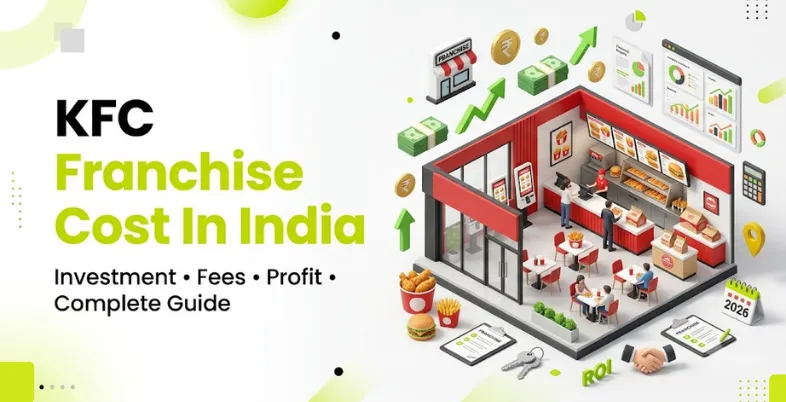
Building a business with one of the world’s most recognized fast-food brands is an exciting prospect, but owning a KFC outlet in India isn’t as straightforward as many people assume. While the estimated KFC Franchise Cost In India ranges from ₹1.5 crore to ₹2.5 crore, the brand follows a unique expansion strategy that differs from many other food franchise opportunities. Understanding the actual investment, eligibility requirements, and application process is essential before making any financial commitment.
In this guide, you’ll find a complete breakdown of the expected franchise investment, setup and operating costs, royalty fees, profit potential, outlet formats, and the latest franchise process in India. We’ll also explain how KFC expands its presence across the country, discuss key factors that affect profitability, compare it with other leading food franchises in India, and share important tips to help you identify genuine opportunities while avoiding franchise scams. Whether you’re an experienced investor or simply exploring premium food franchise options, this article will help you make an informed decision.
What is KFC and Why is It a Strong Brand in India
KFC (Kentucky Fried Chicken) is one of the world’s largest quick-service restaurant (QSR) chains, founded by Colonel Harland Sanders in 1939 in Kentucky, USA. Known for its signature fried chicken prepared with a secret blend of 11 herbs and spices, the brand has grown into a global restaurant chain operating in more than 150 countries under its parent company, Yum! Brands, Inc.
KFC entered the Indian market in 1995 with its first restaurant in Bengaluru (then Bangalore). Since then, the brand has expanded rapidly by adapting its menu to local tastes, introducing products such as chicken buckets, burgers, rice bowls, wraps, and vegetarian options to appeal to a wider customer base. Today, KFC has 1,000+ restaurants across 300+ cities in India, making it one of the country’s most recognized international fast-food brands.
Several factors continue to drive KFC’s popularity in India, including rapid urbanization, increasing disposable incomes, a growing young population, and the rising demand for convenient dining and food delivery. The brand has also embraced digital ordering, self-service kiosks, and partnerships with major food delivery platforms, helping it maintain strong customer engagement. This widespread brand recognition and loyal customer base make KFC one of the most sought-after names among investors exploring premium food franchise opportunities in India.
KFC Franchise Model in India Explained
Unlike many restaurant chains that actively invite franchise applications from individual investors, KFC India does not currently offer a publicly advertised franchise program. Instead, the brand expands its presence through Yum! Brands, which appoints large, experienced restaurant operators to develop and manage KFC outlets in designated regions. This model allows the company to maintain consistent food quality, customer experience, and operational standards across the country.
Historically, KFC restaurants in India have been operated primarily by Devyani International Limited (DIL) and Sapphire Foods India Limited, two of Yum! Brands’ largest franchise partners. These companies have been responsible for opening and managing hundreds of KFC restaurants while also operating other well-known international restaurant brands. As a result, individual entrepreneurs cannot simply apply online and purchase a KFC franchise in the same way they can with many other food franchise brands.
Prospective investors should also be cautious of fraudulent franchise offers. KFC India has issued public warnings stating that it does not offer franchises through unsolicited phone calls, SMS, WhatsApp, Telegram messages, emails, or third-party agents requesting advance payments. Always verify any franchise-related communication through the official KFC India or Yum! Brands channels before sharing personal information or making any payment.
Sapphire Foods and Devyani International Update
Recent industry developments have increased interest in KFC’s operating structure in India. Various reports have discussed changes involving Devyani International and Sapphire Foods, two of the company’s largest franchise partners. However, investors should rely only on official announcements from Yum! Brands, Devyani International, Sapphire Foods, or stock exchange filings for the latest information regarding ownership or operational changes.
For individual investors, the key takeaway remains the same: KFC’s expansion in India is managed through established franchise partners rather than a publicly available franchise application process. If Yum! Brands introduces any new franchise opportunities or revises its expansion strategy, updates will be communicated through official corporate channels rather than unofficial brokers or social media messages.
KFC Franchise Cost in India 2026 — Complete Investment Breakdown
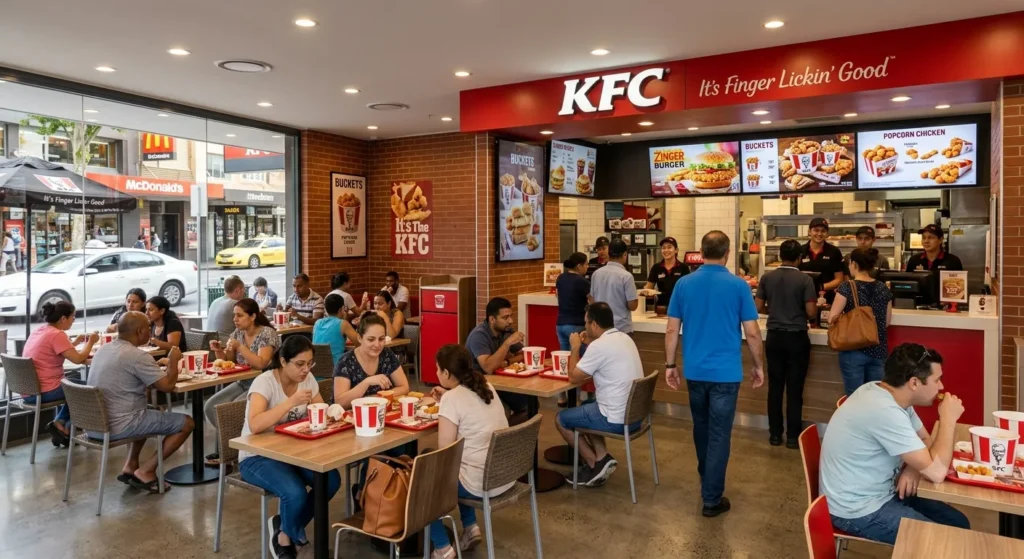
Understanding the KFC Franchise Cost In India requires looking beyond the franchise fee alone. Opening a KFC restaurant involves several expenses, including outlet construction, kitchen equipment, technology, rental deposits, working capital, and initial inventory. Since KFC India does not publicly disclose its franchise investment through a Franchise Disclosure Document (FDD), the figures below are industry estimates based on third-party market research and global franchise benchmarks. Your actual investment may vary depending on the city, outlet format, location, and operational requirements.
| Investment Component | Estimated Cost |
|---|---|
| Franchise Fee | ₹36 lakh – ₹45 lakh |
| Outlet Setup & Interiors | ₹60 lakh – ₹1.2 crore |
| Kitchen Equipment & Technology | ₹40 lakh – ₹60 lakh |
| Real Estate & Security Deposit | Varies by location |
| Working Capital & Initial Inventory | ₹15 lakh – ₹25 lakh |
| Licenses & Miscellaneous Expenses | ₹5 lakh – ₹15 lakh |
| Estimated Total Investment | ₹1.5 crore – ₹2.5 crore |
*Estimated figures based on industry sources. KFC India does not officially publish franchise investment details.
Franchise Fee
The estimated KFC franchise fee in India ranges from ₹36 lakh to ₹45 lakh. However, this amount is not officially published by KFC India, as the company does not release a public Franchise Disclosure Document (FDD) like it does in some international markets. Most investment estimates available online are derived from third-party franchise research and industry analysis. For comparison, the official KFC franchise fee in the United States is approximately USD 45,000, providing a useful benchmark for understanding the brand’s global franchise model.
Outlet Setup and Interior Cost
Setting up a KFC restaurant typically requires an investment of ₹60 lakh to ₹1.2 crore, depending on the outlet size, city, and store format. This includes civil work, kitchen layout, furniture, customer seating, lighting, flooring, branding elements, digital menu boards, signage, and interior décor. KFC follows strict global design standards, so every outlet must maintain a consistent appearance and customer experience. Premium locations such as malls and high-street commercial areas generally require higher setup costs than smaller standalone outlets.
Kitchen Equipment and Technology Cost
A KFC restaurant relies on specialized commercial kitchen equipment that meets the brand’s operational standards. The estimated investment for kitchen equipment and technology ranges between ₹40 lakh and ₹60 lakh. This includes commercial pressure fryers, refrigeration units, freezers, preparation stations, display counters, POS systems, kitchen display systems, ventilation equipment, CCTV, and backup power solutions. Many modern KFC outlets also feature digital ordering technologies such as self-service kiosks and integrated online ordering systems, requiring additional investment compared to older restaurant formats.
Real Estate and Rental Cost
Real estate is one of the largest recurring expenses when opening a KFC outlet. Rental costs vary significantly based on location, visibility, and customer footfall. In metro cities such as Delhi, Mumbai, Bengaluru, Hyderabad, and Chennai, monthly rent can range from ₹2 lakh to ₹5 lakh or more. In Tier-2 cities, monthly rent is generally between ₹50,000 and ₹1.5 lakh. Property owners typically require a security deposit equivalent to six to twelve months’ rent. A standard KFC restaurant usually needs 1,000–1,500 sq. ft. of space, while drive-thru and delivery-focused formats may require different layouts and land requirements.
Working Capital and Initial Inventory
In addition to the initial setup cost, investors should keep ₹15 lakh to ₹25 lakh as working capital for the first few months of operation. This budget covers employee salaries, utility bills, marketing expenses, packaging materials, cleaning supplies, and the initial stock of food ingredients. KFC follows a centralized procurement system, meaning restaurant operators source approved ingredients, packaging, and key supplies through the company’s authorized supply chain to ensure consistent quality across all locations.
Total Investment Summary Table
| Outlet Format | Estimated Investment |
|---|---|
| Standard Dine-In Restaurant | ₹1.5 crore – ₹2.5 crore |
| Delivery-Focused / Smaller Format* | ₹1 crore – ₹1.5 crore |
| Drive-Thru Restaurant | ₹2 crore – ₹3.5 crore |
Overall, entrepreneurs should be prepared for a total investment of approximately ₹1.5 crore to ₹2.5 crore for a standard KFC restaurant in India. The final amount depends on factors such as location, outlet size, construction costs, rental rates, and the format approved by the brand.
Ongoing Fees — Royalty and Marketing Contribution
Beyond the initial investment, investors should also understand the recurring costs of operating a KFC restaurant. Like most global quick-service restaurant (QSR) brands, KFC charges ongoing fees that help support brand operations, national advertising, technology, and continuous business development. While KFC India does not publicly disclose its franchise fee structure, the figures below are industry estimates based on international franchise practices and third-party market analysis.
| Fee Type | Estimated Charge | Purpose |
|---|---|---|
| Royalty Fee | 5%–8% of gross monthly sales | Paid to Yum! Brands for the use of the KFC brand, operating systems, and ongoing support. |
| Marketing & Advertising Contribution | 2%–5% of gross monthly sales | Funds national, regional, and digital marketing campaigns to promote the KFC brand. |
| Total Estimated Ongoing Fees | 7%–13% of gross monthly sales | Combined recurring payments before operating expenses. |
Royalty Fee
KFC franchise operators typically pay an estimated royalty fee of 5% to 8% of gross monthly sales. This recurring payment allows franchise partners to use the KFC brand name, operating systems, recipes, technology, and ongoing business support provided by Yum! Brands. Because the fee is calculated on gross sales rather than profits, it must be paid regardless of whether the restaurant records a profit in a given month.
Marketing and Advertising Contribution
In addition to the royalty fee, operators generally contribute 2% to 5% of gross monthly sales toward marketing and advertising. These funds are used for nationwide television campaigns, digital promotions, seasonal offers, social media marketing, and regional advertising initiatives that help maintain KFC’s strong brand presence across India.
How These Fees Affect Profitability
Many investors focus only on the initial investment, but recurring fees have a significant impact on long-term profitability. Based on industry estimates, a KFC restaurant may contribute approximately 7% to 13% of its gross monthly revenue toward royalty and marketing fees before accounting for other major operating expenses such as rent, employee salaries, food costs, utilities, and maintenance.
For example, if a restaurant generates ₹10 lakh in monthly sales, the combined royalty and marketing contribution could range from ₹70,000 to ₹1.3 lakh, depending on the applicable fee structure. Since these payments are linked to revenue rather than profit, franchise operators must carefully manage operating costs and maintain strong sales volumes to achieve healthy profit margins.
KFC Outlet Formats in India and Their Costs
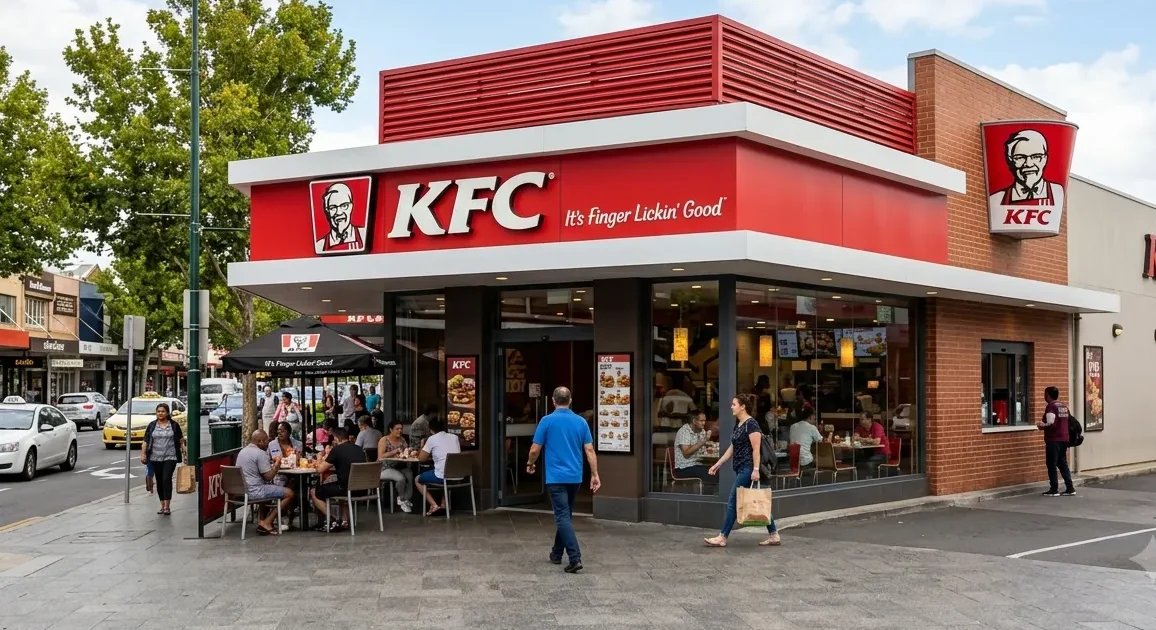
KFC operates different restaurant formats to serve diverse customer needs and locations. The investment required depends on factors such as outlet size, seating capacity, real estate costs, and operational requirements. While KFC India does not publicly disclose the investment for each format, the following estimates are based on industry research and typical QSR development costs. Understanding these formats can help investors evaluate the capital requirements and operational differences associated with each type of KFC outlet.
| Outlet Format | Best Location | Estimated Investment | Key Features |
|---|---|---|---|
| Traditional Dine-In Restaurant | Malls, high streets, commercial areas | ₹1.5 crore – ₹2.5 crore | Full menu, customer seating, digital ordering |
| Drive-Thru Restaurant | Highways, suburban roads | ₹2 crore – ₹3.5 crore | Fast vehicle service, larger land requirement |
| Delivery-Focused / Smaller Format* | Dense urban areas | ₹80 lakh – ₹1.5 crore | Delivery-centric operations, lower overhead |
| Express / Food Court Outlet | Airports, railway stations, food courts | ₹1 crore – ₹1.5 crore | Compact outlet with a limited menu |
*Investment estimates for delivery-focused formats are based on industry observations. KFC India does not publicly offer a standalone cloud kitchen franchise program for individual investors.
Traditional Dine-In Restaurant
The traditional dine-in restaurant is the most common KFC outlet format in India. These restaurants offer the complete KFC menu along with comfortable seating for customers. Most modern outlets feature digital menu boards, self-order kiosks, QR code ordering, and dedicated takeaway counters to improve customer convenience.
This format is best suited for shopping malls, busy commercial districts, high streets, and premium retail locations, where footfall is consistently high throughout the day. Due to the larger store size and extensive infrastructure requirements, the estimated investment ranges from ₹1.5 crore to ₹2.5 crore. Although it requires significant capital, it also has the highest revenue potential because it serves dine-in, takeaway, and online delivery customers simultaneously.
Drive-Thru Restaurant
Drive-thru restaurants are designed to serve customers quickly without requiring them to leave their vehicles. These outlets are commonly located along highways, major arterial roads, and suburban commercial zones where vehicle traffic is high.
Compared to a standard restaurant, this format requires additional land for vehicle lanes, parking, and traffic management, resulting in higher real estate and construction costs. The estimated investment typically falls between ₹2 crore and ₹3.5 crore. Drive-thru outlets are particularly effective in rapidly expanding urban areas where convenience and speed play a major role in customer preferences.
Delivery-Focused / Smaller Format
Delivery-focused outlets are designed primarily to fulfill online orders placed through food delivery platforms such as Swiggy and Zomato. Since these locations have little or no customer seating, they generally require less space and lower staffing compared to traditional dine-in restaurants.
The estimated investment for this type of outlet ranges from ₹80 lakh to ₹1.5 crore, making it one of the lower-cost operating formats in the QSR industry. Reduced rental expenses and streamlined operations can also contribute to a faster return on investment. However, it’s important to note that KFC India does not publicly advertise a standalone cloud kitchen franchise model for individual investors, and any delivery-focused operations are typically managed through the company’s authorized franchise partners.
Express / Food Court Stall
The Express format is a compact version of a traditional KFC restaurant and is commonly found in shopping mall food courts, airports, railway stations, multiplexes, and corporate campuses. These outlets generally offer a smaller menu focused on the brand’s most popular products while emphasizing quick service and high customer turnover.
Investment for an Express outlet is estimated to range between ₹1 crore and ₹1.5 crore, depending on the location and lease costs. Although these outlets have limited seating or rely on shared food court seating, they benefit from consistent customer traffic, making them an attractive format for high-density commercial locations.
Eligibility and Requirements to Open a KFC Franchise in India
Since KFC India does not currently offer a publicly advertised franchise program for individual investors, there are no officially published eligibility criteria. However, based on the brand’s global franchise standards and industry practices, prospective franchise partners are generally expected to meet the following requirements:
Financial Requirements
- Strong financial background with the ability to make a significant capital investment.
- Estimated investment capacity of ₹1.5 crore to ₹2.5 crore or more, depending on the outlet format.
- Sufficient liquid funds to cover setup costs, working capital, and operating expenses during the initial months.
- A good credit history and the financial capability to sustain the business until it reaches profitability.
Business Experience
- Previous experience in the food & beverage (F&B), quick-service restaurant (QSR), hospitality, or retail industry is highly preferred.
- Experience managing multi-location businesses or large operational teams is an advantage.
- Strong leadership, financial management, and customer service skills.
- Ability to follow KFC’s operational procedures and global brand standards.
Location Requirements
- Commercial space in a high-footfall location such as malls, high streets, business districts, or busy retail areas.
- Approximately 1,000–1,500 sq. ft. for a standard dine-in restaurant (requirements may vary by format).
- Excellent road visibility, easy customer access, and adequate parking facilities where applicable.
- The proposed location must meet KFC’s site evaluation and approval criteria.
Operational Requirements
- Willingness to complete the company’s mandatory training and onboarding program.
- Commitment to maintaining KFC’s food quality, hygiene, and customer service standards.
- Ability to recruit, train, and manage restaurant staff effectively.
- Compliance with all applicable business licenses, food safety regulations, and local legal requirements.
- Use of approved suppliers, technology systems, and operational processes specified by the brand.
Step-by-Step Application Process for KFC Franchise in India
KFC India does not currently offer a publicly advertised online franchise application for individual investors. However, if Yum! Brands opens new development opportunities or invites potential franchise partners, the process typically involves multiple evaluation stages to assess financial strength, business experience, and location suitability. Here’s an overview of the expected application process:
Step 1: Visit the Official Website
Begin by visiting the official KFC India or Yum! Brands website to check whether franchise or development opportunities are available. Avoid relying on third-party websites, brokers, or social media advertisements claiming to offer guaranteed KFC franchises.
Step 2: Submit an Expression of Interest
If applications are being accepted, you’ll typically be asked to submit an Expression of Interest (EOI) or business inquiry. This usually includes details about your financial capacity, business background, preferred location, and previous experience in the food, retail, or hospitality industry.
Step 3: Initial Screening
The franchise development team reviews your application to determine whether you meet the brand’s investment and operational requirements. Shortlisted applicants may be contacted for an introductory discussion or asked to provide additional financial and business information.
Step 4: Business Meeting and Evaluation
Qualified applicants are invited to meet with the franchise development team to discuss business goals, investment capability, operational experience, and expansion plans. This stage also helps determine whether the applicant is a suitable long-term partner for the brand.
Step 5: Location Assessment
If your application progresses, the proposed site undergoes a detailed evaluation. Factors such as customer footfall, accessibility, visibility, demographics, parking availability, and local competition are analyzed before any location receives approval.
Step 6: Agreement and Restaurant Development
Once the location and investment plan are approved, the legal agreements are finalized. The restaurant is then developed according to KFC’s global brand standards, including store design, kitchen setup, technology integration, signage, and operational systems.
Step 7: Training and Grand Opening
Before launching the restaurant, the operating team completes comprehensive training covering food preparation, quality control, customer service, restaurant operations, inventory management, hygiene standards, and safety procedures. After final inspections and approvals, the outlet is ready for its official opening.
KFC Franchise Profit Potential and ROI in India 2026
Investing in a KFC outlet can offer strong revenue potential due to the brand’s popularity, established customer base, and presence across major Indian cities. However, profitability depends on several factors, including location, rental costs, operational efficiency, customer traffic, food delivery demand, and overall expense management. Since KFC India does not publicly disclose outlet-level financial performance, the revenue and profit figures below are industry estimates and should be considered as approximate benchmarks rather than guaranteed returns.
Monthly Revenue Expectations
The monthly sales potential of a KFC outlet varies significantly based on its location, format, and customer demand. A standard KFC restaurant in India may generate estimated monthly revenue between ₹8 lakh and ₹20 lakh.
Outlets located in premium shopping malls, high-street commercial areas, and high-footfall locations in metro cities can potentially achieve higher sales, with some performing locations reaching ₹30 lakh to ₹40 lakh per month. On the other hand, delivery-focused formats may generate comparatively lower revenue but benefit from reduced expenses due to smaller spaces and limited staffing requirements.
Key factors that influence monthly revenue include:
- Location visibility and customer footfall
- Local competition and market demand
- Dine-in versus delivery sales mix
- Online ordering performance through platforms like Swiggy and Zomato
- Seasonal campaigns and promotional offers
Net Profit Margin
A KFC outlet’s profitability depends on how effectively the franchise operator manages operating expenses. After accounting for major costs such as:
- Royalty and marketing contributions
- Rent and maintenance expenses
- Employee salaries
- Food ingredients and packaging costs
- Utilities and technology expenses
a well-managed outlet may achieve an estimated net profit margin of 8% to 12%.
For example, if a KFC outlet generates ₹15 lakh in monthly sales, the estimated monthly profit could range between ₹1.2 lakh and ₹1.8 lakh after covering operating expenses. However, actual profits can vary significantly based on location costs, sales volume, and operational efficiency.
It is important to note that these figures are industry estimates only, as KFC does not publicly release official unit-level profit statements for individual restaurants in India.
Break-Even Period
The time required to recover the initial investment depends on the outlet format, investment size, revenue growth, and operating costs. A standard KFC dine-in restaurant may typically take around 3 to 5 years to reach break-even.
Delivery-focused formats may achieve faster returns, with some estimates suggesting a potential break-even period of 2 to 3 years due to lower real estate and staffing costs. However, premium locations with high rental expenses may take longer to recover the initial investment despite generating higher sales.
Factors that can influence the break-even timeline include:
- Property rental rates and lease terms
- Customer acquisition and repeat visits
- Labour and supply chain costs
- Local market competition
- Ability to maintain consistent sales growth
Overall, a KFC outlet can be a profitable business opportunity for experienced operators who can manage costs effectively, select the right location, and maintain strong operational standards.
Important Warning — KFC Franchise Scams in India
With the growing demand for KFC franchise opportunities, fake franchise offers and online scams have also increased. KFC India has issued caution notices advising people not to trust unsolicited franchise offers received through WhatsApp, SMS, Telegram, phone calls, or unofficial agents. The company does not authorize third parties to collect franchise fees or guarantee outlet approvals.
Be cautious of anyone promising a KFC franchise for unusually low investments such as ₹10 lakh–₹15 lakh, as these offers are often fraudulent. Scammers may use fake documents, websites, or KFC branding to convince investors to make advance payments.
Before sharing personal details or transferring money, always verify franchise-related information through the official KFC India or Yum! Brands websites. Avoid dealing with brokers or individuals claiming guaranteed franchise approvals.
Suggested read:
- Haldiram Franchise Cost in India
- Burger King Franchise Cost in India
- Panda Express Franchise Cost
- Dutch Bros Franchise Cost
KFC vs Other Food Franchises in India — Which Should You Choose?
While KFC is one of the most recognized QSR brands in India, its franchise opportunities are limited and not publicly available for most individual investors. If you are looking to invest in the food franchise industry, comparing KFC with other popular brands can help you understand different investment requirements, accessibility, and potential returns.
| Brand | Estimated Investment | Franchise Availability for Individuals | Royalty Fee | Estimated Break-Even Period | Minimum Net Worth Required |
|---|---|---|---|---|---|
| KFC | ₹1.5 crore – ₹2.5 crore* | Limited / Through approved partners | Estimated 5%–8% | 3–5 years | Not publicly disclosed |
| Domino’s Pizza | ₹50 lakh – ₹1 crore+ | Available through official channels | Varies by agreement | 2–4 years | Depends on location and format |
| McDonald’s | ₹2 crore – ₹5 crore+ | Limited selection process | Varies by agreement | 3–5 years | High financial capability required |
| Wow! Momo | ₹15 lakh – ₹50 lakh+ | Available | Varies by agreement | 2–3 years | Depends on outlet format |
| Subway | ₹50 lakh – ₹1 crore+ | Available through official franchise program | Varies by agreement | 2–4 years | Depends on business model |
The right choice depends on your budget, business experience, preferred location, and willingness to manage daily restaurant operations. Before investing, always review the official franchise terms, operating requirements, and expected costs directly from the brand.
Challenges in Running a KFC Franchise in India
Running a KFC outlet can be a profitable opportunity, but franchise owners also face several operational and financial challenges. Some key challenges include:
- High Initial Investment: Setting up a KFC outlet requires significant capital for interiors, equipment, real estate, and working capital.
- High Operating Costs: Expenses such as rent, employee salaries, utilities, food costs, and royalty payments can impact profit margins.
- Strict Brand Standards: Franchise operators must follow KFC’s global guidelines for food quality, hygiene, menu preparation, and customer experience.
- Strong Market Competition: KFC competes with brands like McDonald’s, Domino’s, Burger King, Wow! Momo, local QSR chains, and delivery-focused food businesses.
- Location Dependency: Sales performance heavily depends on choosing the right location with high customer traffic and strong demand.
- Supply Chain Restrictions: Franchise owners must use approved suppliers and follow KFC’s centralized supply chain processes.
- Changing Customer Preferences: Growing demand for healthier food choices, online ordering, and new dining trends requires continuous adaptation.
- Staff Management: Recruiting, training, and retaining skilled employees while maintaining service standards can be challenging.
Conclusion — Is A KFC Franchise In India Worth It In 2026?
A KFC franchise can be an attractive business opportunity for experienced QSR operators who have strong financial capability, operational expertise, and access to premium locations. The brand’s global recognition, loyal customer base, and proven restaurant model make it one of the most desirable names in India’s fast-food industry.
When evaluating the KFC Franchise Cost in India, investors should look beyond the initial investment and consider factors such as franchise availability, operating costs, location requirements, and long-term profitability. While the estimated investment may range between ₹1.5 crore and ₹2.5 crore, getting approval as an individual investor is not as simple as applying for a regular franchise opportunity.
For entrepreneurs with substantial capital, restaurant experience, and the ability to meet KFC’s operational standards, exploring opportunities through official channels can be worthwhile. However, investors seeking more accessible options may consider alternatives like Domino’s, Subway, Wow! Momo, and other QSR franchises that offer clearer franchise pathways.
Before making any investment decision, always verify opportunities through the official KFC India website or Yum! Brands channels. Avoid third-party brokers or agents promising guaranteed KFC franchises, as genuine opportunities are only communicated through authorized sources.
FAQs
What Is The KFC Franchise Cost In India In 2026?
The estimated investment to open a KFC outlet in India ranges between ₹1.5 crore and ₹2.5 crore, depending on the outlet format, location, setup cost, and operational requirements. These figures are industry estimates, as KFC India does not publicly disclose official franchise costs.
Is KFC Giving Franchise In India In 2026?
KFC India does not currently offer a publicly advertised franchise program for individual investors. Most KFC outlets in India are operated through authorized franchise partners appointed by Yum! Brands.
What Is The Net Worth Required For A KFC Franchise?
KFC does not publicly disclose a minimum net worth requirement for franchise applicants in India. However, investors generally need strong financial capability and business experience to operate a large QSR outlet.
How Much Profit Does A KFC Franchise Make Per Month?
The profit of a KFC franchise depends on location, sales volume, rent, and operating expenses. Industry estimates suggest a well-managed outlet may achieve around 8%–12% net profit margins, but KFC does not publish official outlet-level profit data.
What Is The Royalty Fee For A KFC Franchise?
The estimated royalty fee for a KFC franchise is around 5%–8% of gross monthly sales, along with additional marketing contributions. Exact charges depend on the franchise agreement and are not publicly disclosed by KFC India.
Is KFC Franchise Profitable In India?
A KFC franchise can be profitable due to its strong brand presence, customer demand, and established business model. However, profitability depends on location, operating costs, and effective restaurant management.
Are There KFC Franchise Scams In India?
Yes, fake KFC franchise offers are reported in India. KFC does not offer franchises through WhatsApp, Telegram, SMS, or unauthorized agents. Always verify opportunities through official KFC or Yum! Brands channels.
How Can I Apply For A KFC Franchise In India?
KFC does not currently provide a public franchise application process for individual investors in India. Interested investors should check official KFC India or Yum! Brands platforms for any future partnership opportunities.