
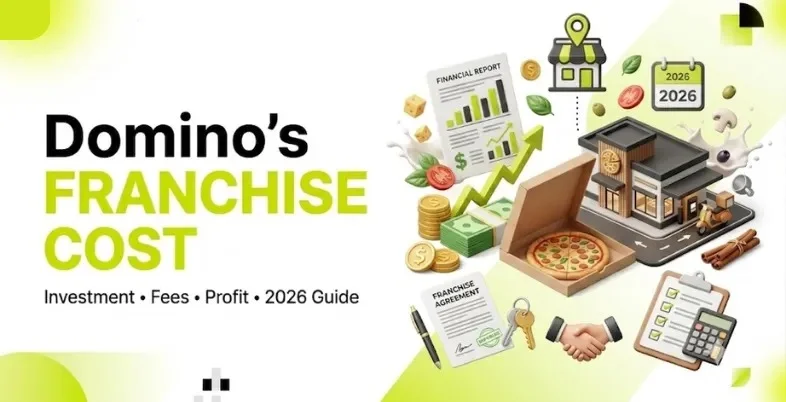
Domino’s has become one of the most recognized pizza brands in India, serving millions of customers through its extensive network of outlets and fast delivery service. Backed by Jubilant FoodWorks, the brand has built a strong presence in metro cities as well as emerging Tier 2 and Tier 3 markets, making it a popular name in the quick-service restaurant (QSR) industry.
If you’re researching Domino’s franchise cost in India, it’s important to understand how the brand operates, the estimated investment required for a similar business model, potential profit margins, return on investment (ROI), and the process of exploring business opportunities with the company. This guide covers estimated setup costs, operational expenses, profitability, eligibility, documents, and key factors that influence success. Whether you’re an experienced entrepreneur or a first-time investor evaluating food franchise opportunities, this comprehensive 2026 guide will help you make a well-informed decision.
What is Domino’s Pizza and Its Presence in India
Domino’s Pizza is one of the world’s leading quick-service restaurant (QSR) chains, known for its pizzas, sides, desserts, and fast home delivery. The brand entered the Indian market in 1996 through Jubilant FoodWorks Limited (JFL), which holds the master franchise rights for Domino’s in India, Bangladesh, Sri Lanka, and Nepal. Over the years, Jubilant FoodWorks has played a significant role in expanding the brand’s footprint and introducing technology-driven ordering and delivery services to Indian consumers.
As of 2026, Domino’s operates more than 1,900 outlets across India, serving customers in major metropolitan cities such as Delhi, Mumbai, Bengaluru, Chennai, Hyderabad, Kolkata, Pune, Ahmedabad, and Chandigarh, along with a growing presence in Tier 2 and Tier 3 cities. Its extensive delivery network, digital ordering platforms, and standardized operations have helped it become one of the country’s most trusted pizza brands.
Today, Domino’s is widely regarded as India’s largest pizza QSR chain due to its vast store network, strong brand recognition, efficient supply chain, and delivery-first business model. Continuous menu innovation, attractive value offers, and a focus on customer convenience have enabled the brand to maintain its leadership position in the highly competitive pizza market.
Why Investors Consider Domino’s Franchise in India
Even though Domino’s India primarily operates through Jubilant FoodWorks, the brand’s business model continues to attract investors and entrepreneurs because of its strong market position and consistent consumer demand. Here are the key reasons behind its appeal:
Strong Brand Recognition
Domino’s is one of the most recognized pizza brands in India, with decades of market presence and a loyal customer base. Its established reputation helps drive customer trust and reduces the time needed to build brand awareness.
High Repeat Customer Demand
Pizza remains a popular choice for families, students, and young professionals, leading to frequent repeat orders. Regular promotional offers, seasonal launches, and loyalty programs further encourage customers to order from Domino’s multiple times each month.
Delivery-First Business Model
Domino’s has built its success around a fast and efficient delivery network supported by its website and mobile app. This delivery-focused approach allows stores to generate significant revenue without relying entirely on dine-in customers.
Lower Marketing Burden
The brand invests heavily in nationwide advertising, digital campaigns, and promotional offers, creating strong visibility across India. This centralized marketing strategy helps individual outlets benefit from consistent customer awareness and brand recall.
Growing Online Food Ordering Trend
The increasing adoption of online food delivery in Tier 2 and Tier 3 cities has expanded Domino’s customer base beyond major metropolitan areas. Rising smartphone usage and digital payment adoption continue to support long-term growth in online orders.
Scalable and Standardized Operations
Domino’s follows standardized operating procedures, technology-driven order management, and an efficient supply chain to maintain consistent product quality. This structured business model enables smooth expansion while delivering a uniform customer experience across its extensive outlet network.
Types of Domino’s Franchise Models in India
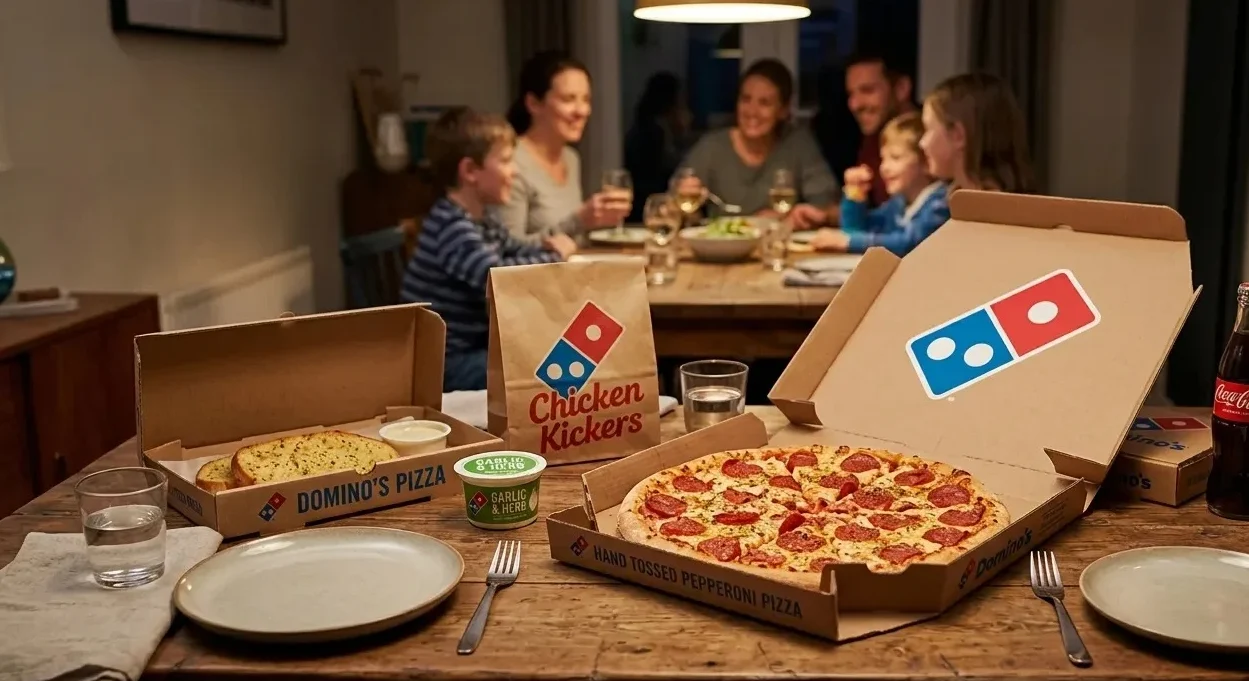
While Domino’s India is primarily operated by Jubilant FoodWorks, entrepreneurs often research the different outlet formats used by the brand to understand the estimated investment, space requirements, and business potential. The following models represent the common store formats used within Domino’s operations and the broader quick-service restaurant (QSR) industry.
Traditional Dine-In Store
A traditional dine-in outlet is the largest Domino’s store format, typically requiring 1,200 to 2,000 sq. ft. of commercial space. These stores are commonly located in shopping malls, high streets, premium commercial areas, and busy retail hubs where customer footfall is consistently high.
This format requires the highest investment because it includes dining space, kitchen equipment, interior décor, and customer seating. However, it also offers multiple revenue streams through dine-in, takeaway, and home delivery, making it suitable for high-demand urban locations with strong sales potential.
Delivery and Takeaway Outlet
Delivery and takeaway stores generally require 300 to 800 sq. ft. of space and are designed primarily for online orders and customer pickups. These outlets are commonly established in residential neighborhoods, office districts, and rapidly growing Tier 2 and Tier 3 cities where food delivery demand continues to increase.
Since these stores do not require a large dining area, the setup cost and operating expenses are comparatively lower. With reduced overhead costs and a delivery-focused model, they often have the potential to achieve a faster return on investment than larger dine-in outlets.
Non-Traditional or Kiosk Model
The non-traditional or kiosk format is the most compact option, usually requiring 150 to 400 sq. ft. of space. These outlets are typically found in airports, metro stations, colleges, multiplexes, food courts, hospitals, and other high-footfall locations where customers prefer quick service and grab-and-go meals.
Kiosks generally operate with a limited menu featuring popular pizzas, sides, and beverages, allowing for faster preparation and efficient service. Although they generate lower average order values than full-sized stores, their strategic locations and steady customer traffic can contribute to consistent daily sales.
Domino’s Franchise Cost in India 2026 (Complete Breakdown)
Domino’s stores in India are primarily operated by Jubilant FoodWorks Limited (JFL), and the company does not publicly offer a standard franchise program for individual investors. Therefore, the investment figures below are industry estimates based on comparable QSR business models and publicly available information. Always verify the latest details directly with Jubilant FoodWorks before making any investment decision.
Estimated Investment Comparison
| Store Model | Estimated Total Investment | Estimated Franchise Fee | Store Size | Estimated ROI Period |
|---|---|---|---|---|
| Traditional Dine-In Store | ₹65 Lakhs – ₹1.5 Crore | ₹10–30 Lakhs | 1,200–2,000 sq. ft. | 3–5 Years |
| Delivery & Takeaway Outlet | ₹30–50 Lakhs | ₹10–20 Lakhs | 300–800 sq. ft. | 2–4 Years |
| Non-Traditional/Kiosk | ₹20–55 Lakhs | ₹10–15 Lakhs | 150–400 sq. ft. | 2–4 Years |
*Investment figures are indicative estimates and may vary depending on location, outlet size, commercial lease costs, and company policies.
Traditional Dine-In Store Cost
A full-scale dine-in outlet requires the highest investment because it includes customer seating, premium interiors, a larger kitchen, and additional staff. These stores are usually located in malls, high streets, and busy commercial areas where customer traffic is consistently high.
| Expense Head | Estimated Cost |
|---|---|
| Franchise Fee | ₹10–30 Lakhs |
| Interior & Furniture | ₹15–30 Lakhs |
| Kitchen Equipment | ₹10–20 Lakhs |
| POS & Technology | ₹2–5 Lakhs |
| Licenses & Security Deposits | ₹5–12 Lakhs |
| Initial Working Capital | ₹12–25 Lakhs |
| Total Estimated Investment | ₹65 Lakhs – ₹1.5 Crore |
Delivery and Takeaway Outlet Cost
Delivery-focused stores require less space and lower setup costs because they primarily serve online orders and takeaway customers. This model has become increasingly popular in residential areas and Tier 2 and Tier 3 cities due to lower operating expenses.
| Expense Head | Estimated Cost |
|---|---|
| Franchise Fee | ₹10–20 Lakhs |
| Interior & Store Setup | ₹5–10 Lakhs |
| Kitchen Equipment | ₹6–12 Lakhs |
| POS & Technology | ₹1–3 Lakhs |
| Licenses & Security Deposits | ₹3–6 Lakhs |
| Initial Working Capital | ₹5–10 Lakhs |
| Total Estimated Investment | ₹30–50 Lakhs |
Non-Traditional or Kiosk Cost
The kiosk format is designed for high-footfall locations such as airports, metro stations, colleges, and food courts. With a smaller footprint and simplified operations, it generally requires the lowest investment among the three formats.
| Expense Head | Estimated Cost |
|---|---|
| Franchise Fee | ₹10–15 Lakhs |
| Interior & Kiosk Setup | ₹3–8 Lakhs |
| Kitchen Equipment | ₹4–10 Lakhs |
| POS & Technology | ₹1–2 Lakhs |
| Licenses & Security Deposits | ₹2–5 Lakhs |
| Initial Working Capital | ₹3–8 Lakhs |
| Total Estimated Investment | ₹20–55 Lakhs |
Important Note on Franchise Fee
Some online sources mention an approximate franchise fee of ₹11.8 lakhs (including 18% GST) based on historical references to Jubilant FoodWorks disclosures. However, Jubilant FoodWorks does not currently publish a standard public franchise fee for individual applicants in India, as Domino’s outlets are primarily company-operated. Investors should rely only on official communication from Jubilant FoodWorks for the latest business opportunity and investment details.
Domino’s Franchise Profit Margin and ROI in India
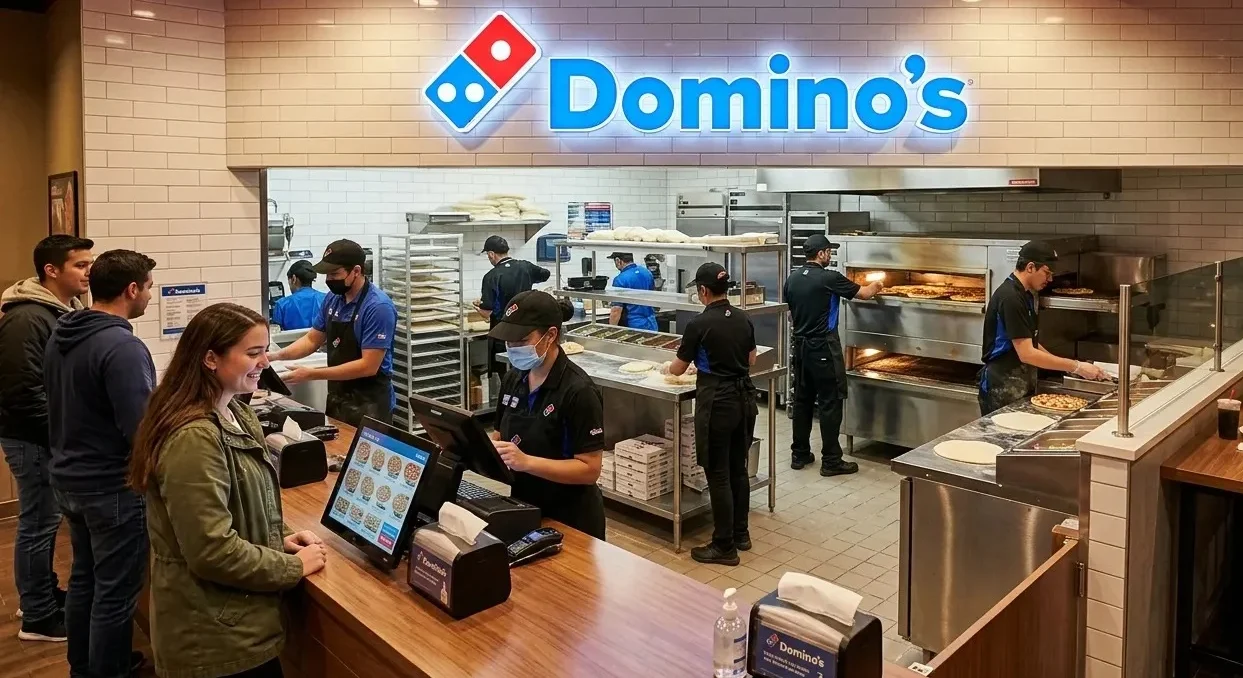
The profitability of a Domino’s outlet depends on several factors, including its location, store format, customer demand, operating efficiency, and order volume. Since Domino’s India is primarily operated by Jubilant FoodWorks, the figures below are industry estimates intended to provide a general understanding of the earning potential of similar pizza QSR outlets.
Estimated Profitability by Store Model
| Store Model | Average Monthly Revenue | Gross Profit Margin | Net Profit Margin | Estimated Monthly Net Profit | Break-even Period | Expected ROI Timeline |
|---|---|---|---|---|---|---|
| Traditional Dine-In Store | ₹18–40 Lakhs | 55–65% | 12–20% | ₹2.2–8 Lakhs | 30–48 Months | 3–5 Years |
| Delivery & Takeaway Outlet | ₹10–25 Lakhs | 55–65% | 15–25% | ₹1.5–6 Lakhs | 24–36 Months | 2–4 Years |
| Non-Traditional/Kiosk | ₹6–18 Lakhs | 55–60% | 12–22% | ₹75,000–4 Lakhs | 24–42 Months | 2–4 Years |
A Domino’s outlet’s profitability is largely influenced by its location and daily order volume. Stores situated in densely populated residential areas, commercial hubs, educational institutions, or high-footfall retail locations generally receive a higher number of orders, resulting in better revenue and improved profit margins. Rental expenses and competition in the surrounding area also play a significant role in determining overall earnings.
Another major driver of profitability is the growing share of app-based and online food orders. Domino’s mobile app, website, and partnerships with food delivery platforms help generate consistent sales throughout the day. During weekends, festivals, sporting events, and special promotional campaigns, order volumes typically increase, creating opportunities for higher monthly revenue.
Operational efficiency is equally important for maintaining healthy profit margins. Effective inventory management, minimal food wastage, well-trained staff, timely deliveries, and controlled operating costs can significantly improve net profits. In many cases, delivery and takeaway outlets recover their investment faster than traditional dine-in stores because they require lower capital investment, occupy smaller spaces, and have reduced overhead expenses while benefiting from strong online delivery demand.
Royalty Fees and Ongoing Charges
Even after the initial investment, running a pizza outlet involves several recurring operational expenses that directly affect profitability. Understanding these ongoing costs is essential for estimating cash flow and long-term returns.
| Ongoing Expense | Estimated Charges | Purpose |
|---|---|---|
| Royalty Fee* | 5–8% of monthly revenue | Covers brand usage, operational support, and business systems. |
| Marketing Contribution | 2–4% of monthly revenue | Funds national and regional advertising campaigns, digital promotions, and brand marketing. |
| Technology & POS Fees | ₹10,000–₹50,000 per month | Supports billing systems, online ordering platforms, software updates, and IT maintenance. |
| Supply Chain & Raw Material Costs | Varies by sales volume | Includes pizza ingredients, packaging materials, beverages, and logistics sourced through approved vendors. |
| Franchise Renewal Fee* | As per agreement | May apply when renewing the business agreement after the initial franchise term. |
Royalty fees and marketing contributions are recurring expenses that reduce the overall net profit of an outlet. While national advertising campaigns help increase customer demand and strengthen brand recognition, investors should include these charges when calculating expected monthly earnings and return on investment.
Technology-related costs are another important consideration. Modern pizza businesses rely heavily on POS systems, inventory management software, online ordering platforms, payment gateways, and customer relationship management tools. Regular software maintenance and platform upgrades ensure smooth operations but also add to recurring operational expenses.
Supply chain costs can fluctuate depending on sales volume, ingredient prices, and logistics expenses. Effective inventory management, minimizing food wastage, and controlling operating costs are essential for protecting profit margins. Before investing in any QSR business, entrepreneurs should prepare detailed financial projections that account for all ongoing expenses, ensuring the business remains profitable even during slower sales periods.
Eligibility Criteria for Domino’s Franchise in India
Before applying for a Domino’s franchise, applicants should ensure they meet the brand’s financial and operational expectations. Below are the key eligibility criteria typically considered for operating a successful pizza franchise.
- Minimum Investment Capacity: Applicants should have adequate funds to cover the franchise fee, store setup, equipment, interiors, working capital, and other initial expenses. A strong financial position also helps manage operational costs during the early stages of the business.
- Commercial Space in a Suitable Location: Having access to a commercial property in a high-footfall area is essential. Locations such as shopping malls, high streets, residential neighborhoods, or busy commercial zones generally offer better customer reach and delivery potential.
- Business or Management Experience: While prior experience in the food and beverage industry is beneficial, strong business management, financial planning, and customer service skills can also contribute to successfully operating a Domino’s outlet.
- Legal and Tax Compliance Readiness: Applicants should be prepared to complete all legal formalities, including business registration, GST registration, FSSAI licensing, trade licenses, and other local regulatory requirements before commencing operations.
- Commitment to Brand Standards: Franchise owners are expected to maintain the company’s standards for food quality, hygiene, customer service, store design, and operational processes. Consistency is crucial to delivering the same customer experience across all outlets.
- Human Resource Management Capability: Managing a restaurant requires hiring, training, and supervising kitchen staff, delivery executives, and customer service employees. Effective leadership and team management are important for maintaining smooth daily operations.
- Long-Term Business Commitment: A Domino’s franchise is a long-term investment that requires continuous involvement and strategic planning. Investors should focus on sustainable business growth rather than expecting quick profits in the initial months.
- Operational and Customer Service Focus: Maintaining fast order fulfillment, efficient inventory management, and excellent customer service helps improve customer satisfaction and profitability. Regular performance monitoring is essential for long-term success.
Documents Required for Domino’s Franchise
Applicants are generally required to submit the following documents during the franchise application and verification process:
- Aadhaar Card – Serves as proof of identity for the applicant.
- PAN Card – Required for tax compliance and financial verification.
- Address Proof – Documents such as a passport, voter ID, driving licence, or utility bill to verify residential address.
- Business Registration Certificate – Required if applying through a registered company, LLP, or partnership firm.
- GST Registration Certificate – Necessary for businesses involved in the sale of food and beverages.
- Bank Statements – Recent bank statements to demonstrate financial stability and funding capacity.
- Income Tax Returns (ITRs) – Previous years’ ITRs to verify income and financial credibility.
- Proof of Investment Funds – Documents showing the availability of capital, such as fixed deposits, investment statements, or loan sanction letters.
- Commercial Property Documents – Ownership papers or a valid lease/rental agreement for the proposed outlet location.
- FSSAI Food License – Mandatory license for operating a food business in India.
- Trade License – Issued by the local municipal authority permitting commercial operations.
- Fire NOC (No Objection Certificate) – Required to confirm compliance with fire safety regulations.
- Shop & Establishment Registration – Registration under the applicable state Shops and Establishments Act.
- Health Department Approval – Local health authority approval where applicable.
- Municipal or Local Authority Approvals – Any additional permissions required by the local municipal corporation or government authorities based on the outlet’s location.
Step-by-Step Process to Apply for Domino’s Franchise in India
If franchise opportunities are available, the application process typically involves multiple evaluation stages to ensure the applicant meets the brand’s operational and financial requirements.
Step 1: Visit the Official Jubilant FoodWorks Website
Start by visiting the official Jubilant FoodWorks website to check whether the company is accepting franchise or business partnership applications. Read the eligibility criteria, business requirements, and any official announcements before proceeding.
Step 2: Submit the Franchise Inquiry Form
Complete the online franchise inquiry form by providing your personal details, business experience, preferred city, investment budget, and proposed outlet location. Ensure all information is accurate to avoid delays during the review process.
Step 3: Initial Screening by the Company
After receiving your application, the company’s franchise or business development team reviews your profile. They assess your financial capability, business background, and whether your proposed location aligns with the brand’s expansion strategy.
Step 4: Location Evaluation and Site Inspection
If your application is shortlisted, the company may conduct a site visit to evaluate the proposed commercial property. Factors such as visibility, accessibility, customer footfall, parking availability, and delivery coverage are carefully assessed.
Step 5: Financial Background Verification
The company may request supporting financial documents, including bank statements, income tax returns, and proof of investment funds. This step helps verify your ability to finance the outlet and manage ongoing operational expenses.
Step 6: Franchise Agreement Signing
Once the evaluation process is successfully completed, both parties finalize the terms and conditions of the business relationship. The agreement outlines operational responsibilities, fees, compliance requirements, and other important business obligations.
Step 7: Store Setup and Staff Training
After signing the agreement, work begins on store construction, interior setup, equipment installation, and licensing. The company also provides training on food preparation, customer service, technology systems, inventory management, and daily operations.
Step 8: Official Store Launch
Following successful inspections and operational approvals, the outlet is prepared for launch. Marketing activities, staff readiness, and system testing are completed before opening the store to customers and commencing regular business operations.
Domino’s Franchise vs Other Pizza Franchises in India
Choosing the right pizza franchise depends on your investment budget, business goals, and target market. The table below compares Domino’s with some of the leading pizza franchise brands operating in India.
| Brand | Estimated Investment | Approx. Outlets in India | Brand Value | Expected ROI | Profit Potential |
|---|---|---|---|---|---|
| Domino’s | ₹30 Lakhs – ₹1.5 Crore | 1,900+ | Very High | 2–5 Years | High |
| Pizza Hut | ₹1–2 Crore | 900+ | Very High | 3–5 Years | High |
| La Pino’z Pizza | ₹30–60 Lakhs | 700+ | High | 2–3 Years | High |
| Chicago Pizza | ₹20–50 Lakhs | 100+ | Medium | 2–4 Years | Medium to High |
| US Pizza | ₹25–50 Lakhs | 100+ | Medium | 2–4 Years | Medium |
| Papa John’s | Limited Presence in India | Limited Operations | Medium | Varies | Varies |
Domino’s continues to be one of the strongest brands in India’s quick-service restaurant (QSR) industry because of its well-established delivery infrastructure, advanced digital ordering ecosystem, and extensive supply chain. The brand’s mobile app, website, and integrated delivery network enable customers to place orders quickly, helping outlets generate a significant share of their revenue through online sales. Combined with nationwide marketing campaigns and strong brand recognition, these factors contribute to consistent customer demand across major cities.
Key Challenges of Running a Domino’s Franchise
Running a Domino’s franchise can be rewarding, but it also comes with several operational and financial challenges. Understanding these factors beforehand can help investors plan better and improve long-term business performance.
- High Initial Capital Requirement: Opening a Domino’s outlet requires a significant investment in the franchise fee, store setup, interiors, kitchen equipment, technology, and working capital. This high upfront cost can be challenging for first-time entrepreneurs.
- Premium Commercial Rent: Prime business locations such as shopping malls, high streets, and commercial hubs usually have expensive rental costs. High monthly rent can reduce overall profitability if sales do not meet expectations.
- Frequent Staff Turnover: The restaurant industry often experiences high employee turnover, especially among kitchen staff and delivery executives. Regular recruitment and training require additional time and resources.
- Extreme Delivery Time Pressure: Fast and timely delivery is a key part of Domino’s customer experience. Managing deliveries efficiently during peak hours, weekends, and festivals can be demanding and directly affects customer satisfaction.
- Competition from Local Pizza Brands and Cloud Kitchens: Domino’s competes with established pizza chains as well as local restaurants and cloud kitchens that often offer competitive pricing, unique menus, and aggressive discounts.
- Mandatory Compliance with Brand Standards: Franchise owners must strictly follow the company’s operational procedures, quality standards, hygiene protocols, and store guidelines. This leaves limited flexibility for making independent business decisions.
- Fluctuating Raw Material Prices: The prices of ingredients such as cheese, vegetables, flour, meat, and packaging materials can fluctuate over time. Increasing input costs may impact profit margins if expenses are not managed efficiently.
- Dependence on Food Delivery App Commissions: While online orders generate significant revenue, commissions charged by food delivery platforms can reduce net profit margins. Encouraging direct orders through the brand’s app or website can help improve overall profitability.
Tips to Make Your Domino’s Franchise Profitable
Running a successful Domino’s franchise requires more than just a well-known brand. Focusing on efficient operations, customer satisfaction, and cost control can significantly improve long-term profitability.
- Choose the Right Location: Select a location with high residential density, strong commercial activity, and a wide delivery radius. A strategically located outlet can attract more walk-in customers while ensuring faster deliveries.
- Invest in Staff Training: Well-trained employees improve service speed, food quality, and hygiene standards. Regular training helps maintain consistency, enhances customer satisfaction, and reduces operational errors.
- Monitor Inventory and Reduce Wastage: Keep a close watch on inventory levels to avoid overstocking or shortages. Proper stock management and minimizing food wastage can significantly improve profit margins.
- Maintain High Ratings on Zomato and Swiggy: Positive customer reviews and high ratings increase visibility on food delivery platforms. Prompt service, quality food, and quick issue resolution encourage repeat orders and attract new customers.
- Use Local Social Media Marketing: Along with national brand campaigns, promote your outlet through local social media channels, community groups, and location-based offers. This helps increase brand awareness and drive more orders from nearby customers.
- Track Operating Costs Weekly: Review expenses such as rent, salaries, utilities, packaging, and raw materials on a regular basis. Identifying unnecessary costs early helps maintain healthy profit margins and improves overall financial performance.
Suggested Read:
- KFC Franchise Cost in India
- 7 Brew Franchise Cost
- Monginis Franchise Cost
- Belgian Waffle Franchise Cost
Is Domino’s Franchise Worth It in 2026?
When evaluating the Domino’s franchise cost in India, it’s important to look beyond the initial investment and consider the brand’s long-term earning potential. Domino’s remains one of the leading names in India’s quick-service restaurant (QSR) industry, supported by a strong brand reputation, a delivery-first business model, increasing urban demand, and a well-established digital ordering ecosystem. These strengths make it an attractive option for investors looking for a scalable food business.
At the same time, entrepreneurs should be prepared for challenges such as a high upfront investment, ongoing royalty and operational expenses, intense competition from pizza chains and cloud kitchens, and strict compliance with brand standards. Profitability ultimately depends on factors such as location, order volume, efficient operations, and effective cost management.
Overall, the Domino’s franchise cost in India can be worthwhile for investors with ₹50 lakhs or more to invest, relevant business or management experience, access to a suitable commercial location, and a long-term business mindset. With careful planning and consistent execution, it has the potential to generate sustainable returns in India’s growing QSR market.