
Opening a Subway outlet is an attractive opportunity for entrepreneurs looking to invest in one of the world’s most recognized quick-service restaurant (QSR) brands. If you’re researching the Subway Franchise Cost in India, you should expect a total investment of approximately ₹50 lakh to ₹1 crore, depending on the outlet format, location, and store size. Founded in 1965, Subway has built a strong global reputation for its freshly made sandwiches, wraps, salads, and healthier fast-food options. In India, the brand has been operating since 2001 and is managed by Everstone Capital through its food platform, with hundreds of outlets serving customers across major cities and emerging markets.
The growing demand for convenient yet healthier dining options, combined with Subway’s continued expansion into Tier-2 and Tier-3 cities, makes 2026 a promising time to consider this business opportunity. Along with a globally recognized brand name, franchise partners benefit from standardized operating systems, comprehensive training, national marketing support, and an established supply chain. In this guide, you’ll learn the complete investment breakdown, franchise fees, eligibility criteria, expected profit, application process, and everything else you need to know before investing in a Subway franchise in India.
About Subway in India (Brand Overview)

Founded in 1965 in Bridgeport, Connecticut, USA, Subway has grown into one of the world’s largest quick-service restaurant (QSR) chains, serving freshly made sandwiches, wraps, salads, and bowls in more than 100 countries. The brand entered the Indian market in 2001 and has since expanded its presence across major metropolitan cities as well as emerging Tier-2 and Tier-3 markets. Today, Subway operates hundreds of outlets across India, with the brand managed by Everstone Capital through its food platform under the master franchise arrangement.
Subway is widely recognized for its “Eat Fresh” philosophy, offering made-to-order meals with customizable ingredients. Unlike many global QSR chains, Subway’s core menu is prepared without deep frying, making it a popular choice among health-conscious consumers. This unique positioning, combined with a globally trusted brand name and strong operational support, has helped Subway establish a loyal customer base in India.
Types of Subway Franchise Models in India
Subway offers different outlet formats to suit varying investment budgets, customer demand, and location types. The right franchise model depends on factors such as available space, expected footfall, and your overall business goals. While traditional restaurants are designed to serve a full menu in high-traffic commercial areas, smaller non-traditional outlets focus on convenience and quick service in captive locations. Understanding the differences between these formats can help you choose the most suitable Subway franchise model for your investment.
Traditional Stores (Stand-Alone Outlets)
Traditional Subway stores are the brand’s standard full-service restaurants and are commonly located on high streets, shopping malls, commercial complexes, and busy marketplaces. These outlets generally require 800 to 1,200 sq. ft. of space and offer Subway’s complete menu, including sandwiches, wraps, salads, cookies, beverages, and other seasonal items. Although the initial investment is higher due to larger store size and infrastructure requirements, traditional outlets typically have greater revenue potential because they attract both dine-in and takeaway customers.
Non-Traditional Stores (Kiosks and Captive Locations)
Non-traditional Subway outlets are compact formats designed for locations with consistent captive audiences, such as airports, hospitals, universities, corporate campuses, metro stations, and fuel stations. These stores usually require 350 to 600 sq. ft. of space and may operate with a simplified menu focused on high-demand products for faster service. Since they require less space and lower setup costs, they are often a suitable option for first-time investors or entrepreneurs with a comparatively smaller investment budget.
| Feature | Traditional Store | Non-Traditional Store |
|---|---|---|
| Estimated Investment | ₹70 Lakh–₹95 Lakh | ₹40 Lakh–₹55 Lakh |
| Space Required | 800–1,200 sq. ft. | 350–600 sq. ft. |
| Menu | Full Menu | Limited or Customized Menu |
| Best Locations | High Streets, Malls, Commercial Complexes | Airports, Hospitals, Universities, Corporate Campuses, Fuel Stations |
| Revenue Potential | Higher | Moderate |
| Best For | Experienced investors and high-footfall markets | First-time investors and compact locations |
Subway Franchise Cost in India in 2026
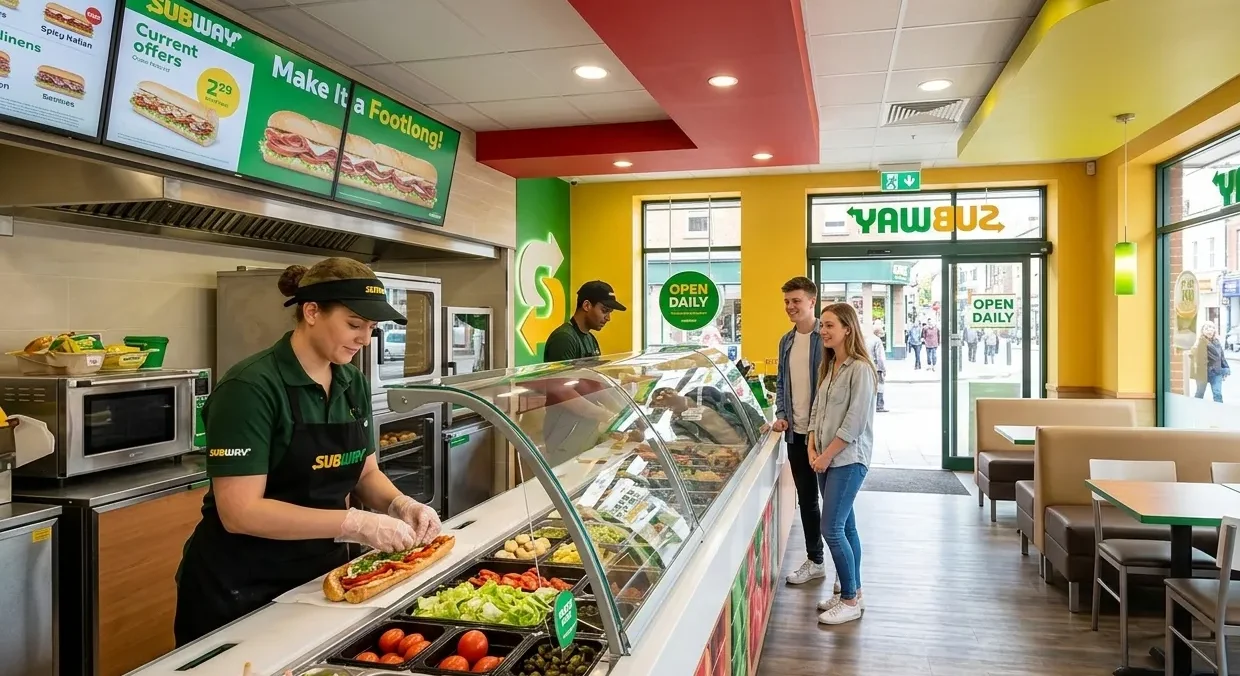
The Subway Franchise Cost in India typically ranges between ₹50 lakh and ₹1 crore, depending on factors such as the outlet format, store size, city, interior specifications, and location. In addition to the one-time setup investment, franchise owners must pay ongoing royalty and advertising fees based on weekly gross sales. The table below provides an estimated breakdown of the major investment components involved in opening a Subway outlet in India.
| Cost Component | Estimated Cost |
|---|---|
| Initial Franchise Fee | ₹6.5 Lakh–₹10 Lakh |
| Store Setup & Interior | ₹30 Lakh–₹40 Lakh |
| Kitchen Equipment | ₹15 Lakh–₹22 Lakh |
| Initial Inventory | ₹3 Lakh–₹5 Lakh |
| Working Capital Reserve | ₹5 Lakh–₹8 Lakh |
| Legal & Permit Fees | ₹50,000–₹1 Lakh |
| Royalty Fee (Ongoing) | 8% of Gross Weekly Sales |
| Advertising Fee (Ongoing) | 4.5% of Gross Weekly Sales |
| Total Estimated Investment | ₹50 Lakh–₹1 Crore |
Initial Franchise Fee
The initial franchise fee is a one-time payment that grants you the right to operate under the Subway brand. It provides access to the company’s trademarks, operating systems, training programs, and business support.
Store Setup and Interior
This is usually the largest part of the investment. It includes interior design, furniture, branding elements, flooring, lighting, signage, seating arrangements, air conditioning, and construction work completed according to Subway’s approved store specifications.
Kitchen Equipment
Kitchen equipment includes sandwich preparation counters, refrigeration units, freezers, baking ovens, food storage systems, beverage dispensers, POS systems, and other operational equipment required to run the restaurant efficiently.
Initial Inventory
Before opening, franchise owners need to purchase ingredients, packaging materials, beverages, bakery supplies, cleaning products, and other essential consumables. This investment ensures the outlet is fully stocked for the initial weeks of operation.
Working Capital Reserve
A working capital reserve helps cover operating expenses during the first few months of business. It is generally used for staff salaries, rent, utilities, inventory replenishment, marketing, and other day-to-day expenses until the outlet generates stable cash flow.
Legal and Permit Fees
Opening a Subway outlet requires several regulatory approvals, including FSSAI registration, GST registration, Shop and Establishment registration, trade licenses, fire safety approvals, and other local municipal permits. These costs may vary depending on the state and city.
Royalty Fee
Subway charges an ongoing 8% royalty fee on gross weekly sales. This payment allows franchisees to continue using the brand name, proprietary operating systems, product recipes, and ongoing business support.
Advertising Fee
In addition to the royalty fee, franchise owners contribute 4.5% of gross weekly sales toward national and regional advertising campaigns. These funds support brand promotions, digital marketing initiatives, and seasonal campaigns that help drive customer traffic.
Space and Location Requirements
Selecting the right location is one of the most important factors in the success of a Subway outlet. Even a well-managed restaurant may struggle if it is opened in an area with low customer traffic or poor visibility. Before approving a franchise, Subway evaluates factors such as available space, accessibility, lease terms, and the long-term business potential of the proposed site.
Minimum Space Needed
The space requirement depends on the type of Subway outlet you plan to open. A traditional store generally requires 800 to 1,200 sq. ft. to accommodate the full menu, customer seating, food preparation area, storage, and billing counter. In comparison, non-traditional formats such as kiosks or captive-location outlets can operate efficiently within 350 to 600 sq. ft., making them suitable for airports, hospitals, universities, and corporate campuses.
One advantage of a Subway outlet is that it does not require a large deep-frying kitchen like many other global QSR brands. This allows for a more compact kitchen layout while maintaining efficient food preparation and service.
What Makes a Good Subway Location
A successful Subway franchise typically depends on choosing a location that consistently attracts the right customers. When evaluating a site, consider the following factors:
| Location Factor | Why It Matters |
|---|---|
| High Footfall | Areas with a steady flow of customers help generate consistent daily sales. |
| Excellent Visibility | Stores that are easily visible from the road, mall entrance, or corridor attract more walk-in customers. |
| Target Audience | Locations near offices, colleges, residential areas, airports, hospitals, and metro stations provide access to Subway’s core customer base. |
| Long-Term Lease | A lease of 10–15 years provides business stability and helps recover the initial investment over time. |
Some of the best locations for a Subway franchise include high-street markets, shopping malls, metro stations, airports, railway stations, tech parks, highways, corporate campuses, hospitals, and college campuses. Choosing a location with strong visibility, easy access, and consistent customer traffic can significantly increase revenue and reduce the time to break even.
Monthly Expenses and Ongoing Costs
Apart from the initial investment, operating a Subway outlet involves several recurring monthly expenses that directly affect profitability. These costs vary based on the store’s location, sales volume, staffing requirements, and rental agreement. Understanding these expenses will help you prepare realistic financial projections before investing.
| Monthly Expense | Estimated Cost |
|---|---|
| Rent & Common Area Maintenance (CAM) | ₹1 Lakh–₹2.5 Lakh |
| Cost of Goods Sold (30–35% of Revenue) | ₹4 Lakh–₹7 Lakh |
| Staff Salaries (6–8 Employees) | ₹1.5 Lakh–₹2.2 Lakh |
| Utility Bills (Electricity, Water, Internet, Gas) | ₹40,000–₹70,000 |
| Royalty & Advertising Fees (12.5% of Sales) | ₹1.25 Lakh–₹2.5 Lakh |
These figures are indicative and may vary depending on the city, outlet format, monthly sales, and operational efficiency. Among all recurring expenses, rent is one of the most important factors affecting profitability. As a general benchmark, rent should ideally remain within 15% to 20% of your monthly sales. If rental costs consistently exceed this range, it becomes significantly more difficult to achieve healthy profit margins and reach the break-even point within the expected timeframe.
Subway Franchise Profit in India and Monthly Revenue
The earning potential of a Subway outlet depends on factors such as location, customer traffic, operating efficiency, and cost management. While no franchise can guarantee a fixed income, a well-managed Subway restaurant in a high-footfall location can generate healthy monthly revenue and achieve profitability within a reasonable period. The estimates below represent typical industry ranges and should be used as a general reference rather than guaranteed returns.
| Performance Metric | Estimated Range |
|---|---|
| Average Monthly Sales | ₹3 Lakh–₹8 Lakh* |
| Average Monthly Net Profit | ₹1.5 Lakh–₹3.5 Lakh* |
| Net Profit Margin | 15%–20%* |
| Average Customer Transaction Value | ₹200–₹400 |
| Daily Customer Footfall Target | 200–500 Customers |
| Estimated Break-even Period | 18–36 Months |
A well-performing Subway outlet can benefit from repeat customers, online food delivery orders, and effective local marketing. The expansion of Subway’s hot menu and localized product offerings has also helped many outlets increase their average order value, creating additional revenue opportunities alongside the brand’s traditional sandwich menu.
Factors That Affect Profitability
Several factors determine how profitable a Subway franchise can become over the long term:
- Location and Footfall: Outlets located in busy commercial areas, malls, airports, or near offices and colleges generally attract more customers and generate higher sales.
- Operational Efficiency: Efficient inventory management, quick service, and reduced food wastage help improve profit margins.
- Competition from Other QSR Brands: Nearby competitors such as McDonald’s, Domino’s, Burger King, and local cafés can influence customer traffic and pricing.
- Staff Training and Service Consistency: Well-trained employees ensure faster service, consistent food quality, and better customer satisfaction, encouraging repeat business.
- Presence on Zomato and Swiggy: Listing the outlet on leading food delivery platforms expands customer reach and increases sales beyond walk-in traffic.
- Ingredient Cost Control: Proper portion control, inventory planning, and minimizing food waste are essential for maintaining healthy profit margins and improving overall business performance.
Eligibility Criteria to Own a Subway Franchise in India
Before applying for a Subway franchise in India, applicants should meet certain personal, financial, and business-related requirements. While final approval depends on Subway’s evaluation process, the following criteria are generally considered important for prospective franchise partners.
Basic Requirements
- Must be 18 years of age or older.
- Should be an Indian citizen or a legal resident with valid identification.
- Must have a clean legal and financial record.
- Should be willing to actively manage the business, especially during the initial years.
- Must be committed to maintaining Subway’s operational and food quality standards.
Financial Qualifications
- Should have sufficient funds to cover the estimated investment of ₹50 lakh to ₹1 crore.
- Must have adequate working capital to manage operating expenses during the initial months.
- A good credit history can improve financing opportunities if a business loan is required.
- Applicants may be asked to provide financial documents, including bank statements and income tax returns, during the evaluation process.
Business Experience
- Prior experience in the food service, retail, hospitality, or restaurant industry is preferred but not mandatory.
- Strong leadership, people management, and customer service skills are an added advantage.
- Willingness to complete Subway’s mandatory franchise training program.
- Ability to recruit, train, and manage staff while following Subway’s standard operating procedures.
Documents Required for Subway Franchise Application
During the franchise evaluation process, Subway may request documents to verify your identity, financial capability, and business preparedness. Keeping these documents ready in advance can help speed up the application and review process.
Financial Documents
- Last 12 months’ bank statements
- Income Tax Returns (ITR) for the last 3 years
- Property valuation reports
- Investment portfolio proof
Identity and Legal Documents
- PAN Card
- Aadhaar Card
- Passport-size photographs
- Valid address proof
- Educational certificates
Business Plan Documents
- Proposed location analysis
- Three to five-year financial projections
- Staffing plan
- Marketing strategy
Step-by-Step Process to Apply for a Subway Franchise in India
If you’re planning to invest in a Subway outlet, following the official application process can help ensure a smoother approval and onboarding experience. While timelines may vary depending on the proposed location and document verification, the overall process generally includes the following steps.
Step 1: Research the Franchise Opportunity
Review the estimated investment, franchise model, space requirements, and ongoing costs to determine whether a Subway franchise aligns with your budget and business goals.
Step 2: Submit the Online Application
Visit the official Subway franchise website and complete the franchise inquiry form with your personal, financial, and location details.
Step 3: Application & Financial Review
The Subway franchise development team reviews your application, financial capability, and overall suitability to become a franchise partner.
Step 4: Site Evaluation
If your application moves forward, Subway representatives evaluate your proposed location by assessing factors such as visibility, footfall, accessibility, demographics, and market potential.
Step 5: Franchise Approval & Agreement
After successful evaluation, you’ll receive the franchise offer and agreement documents. Carefully review the terms and conditions before signing and paying the applicable franchise fee and other required deposits.
Step 6: Complete the Training Program
Attend Subway’s mandatory franchise training program, where you’ll learn about food preparation, customer service, store operations, inventory management, and quality standards.
Step 7: Store Setup
Set up your outlet according to Subway’s approved design guidelines, install the required kitchen equipment, and source inventory through authorized suppliers.
Step 8: Final Inspection
Before opening, Subway conducts final inspections to ensure the outlet meets operational, branding, food safety, and quality standards.
Step 9: Grand Opening
Once all approvals are complete, launch your Subway outlet with support from the brand’s marketing and operations team to help create awareness and attract customers.
Training and Support Provided by Subway
One of the key advantages of investing in a Subway franchise is the comprehensive training and ongoing operational support provided to franchise partners. Whether you are an experienced entrepreneur or entering the food service industry for the first time, Subway’s training program is designed to help you understand its operating standards, maintain consistent quality, and manage your outlet efficiently.
Initial Training Program (3 Weeks)
Subway provides a structured training program before the outlet opens, helping franchise owners and key staff become familiar with the brand’s operating procedures.
| Training Week | Focus Areas |
|---|---|
| Week 1 | Brand history, company values, food safety standards, hygiene practices, customer service, and operational policies. |
| Week 2 | Hands-on training in an operational Subway restaurant, including sandwich preparation, baking procedures, inventory handling, and day-to-day store operations. |
| Week 3 | POS system training, staff recruitment and management, financial reporting, inventory control, local marketing strategies, and store performance management. |
Ongoing Support After Opening
Even after the restaurant begins operations, Subway continues to provide support to help franchisees maintain quality standards and improve business performance.
- Operational Support: Assistance with day-to-day business operations and troubleshooting.
- Field Consultant Visits: Regular visits from Subway representatives to review performance and provide operational guidance.
- Quality Audits: Periodic inspections to ensure compliance with food safety, hygiene, and brand standards.
- Marketing Support: National advertising campaigns, promotional materials, and seasonal marketing initiatives.
- Supply Chain Assistance: Access to approved suppliers, inventory planning, and procurement support.
- Business Performance Guidance: Recommendations on improving efficiency, customer service, and sales performance.
The combination of structured training and continuous operational support helps franchise owners maintain consistent service quality, streamline operations, and build a successful Subway business over the long term.
Subway vs Other Franchises in India (Comparison Table)
If you’re planning to invest in a global quick-service restaurant (QSR) brand, comparing the investment requirements and operational needs can help you make an informed decision. The table below provides an estimated comparison of Subway with other popular international food franchises in India.
| Brand | Total Investment* | Space Required | Staff Required | Kitchen Type | Approx. Break-even |
|---|---|---|---|---|---|
| Subway | ₹50 Lakh–₹1 Crore | 350–1,200 sq. ft. | 6–8 | Fresh preparation, baking, no deep frying | 18–36 Months |
| McDonald’s | ₹6 Crore–₹14 Crore | 2,500–4,500 sq. ft. | 30–50 | Full commercial kitchen | 4–6 Years |
| Domino’s | ₹50 Lakh–₹1 Crore+ | 1,000–1,500 sq. ft. | 8–15 | Pizza preparation & baking | 2–4 Years |
| Burger King | ₹3 Crore–₹5 Crore+ | 1,500–3,000 sq. ft. | 20–30 | Full commercial kitchen with frying | 3–5 Years |
Compared with many other global QSR brands, Subway offers one of the most accessible entry points for first-time franchise investors. Its relatively lower investment, flexible store formats, smaller space requirements, and simplified kitchen operations make it easier to establish and manage than larger fast-food chains. Combined with strong brand recognition, growing demand for healthier meal options, and comprehensive franchise support, Subway can be an attractive option for entrepreneurs seeking a globally recognized food business in India.
Challenges to Consider Before Investing
Before investing in a Subway franchise, it’s important to understand the potential challenges that may affect your business performance. Being aware of these factors can help you prepare better and make informed investment decisions.
- Sensitivity to Economic Slowdowns: Economic downturns, inflation, and reduced consumer spending can impact customer footfall and overall sales. Effective cost management and operational efficiency become increasingly important during such periods.
- Intense Competition in the QSR Industry: India’s quick-service restaurant (QSR) market is highly competitive, with brands such as McDonald’s, Domino’s, Burger King, KFC, Pizza Hut, and numerous local café chains competing for the same customer base. Maintaining consistent food quality, customer service, and operational efficiency is essential to stay competitive.
- Location Dependency: The success of a Subway outlet largely depends on choosing the right location. Stores in high-footfall areas such as malls, commercial hubs, airports, metro stations, and college campuses generally perform better than outlets in low-traffic locations.
- Food Licensing and Regulatory Compliance: Franchise owners must obtain and maintain several licenses and approvals, including FSSAI registration, GST registration, Fire NOC, Shop and Establishment registration, trade license, and local municipal approvals, before commencing operations.
- Staff Management and Employee Attrition: Recruiting, training, and retaining skilled employees can be challenging due to the high attrition rate in the food service industry. Consistent staff training is essential to maintain Subway’s service and quality standards.
- Menu Customization Within Brand Standards: While Subway offers menu options tailored to Indian tastes, franchise owners must strictly follow the brand’s approved recipes, operating procedures, and quality guidelines to ensure consistency across all outlets.
Suggested Read:
- KFC Franchise Cost in India
- 7 Brew Franchise Cost
- Monginis Franchise Cost
- Belgian Waffle Franchise Cost
Final Verdict: Is a Subway Franchise Worth It in India in 2026?
Considering its global brand recognition, proven business model, and growing presence in Tier-2 and Tier-3 cities, the Subway Franchise Cost in India can be a worthwhile investment for entrepreneurs with the required capital and a strategically selected location. Although the investment of approximately ₹50 lakh to ₹1 crore is significant, a well-managed outlet has the potential to generate sustainable returns through dine-in, takeaway, and online delivery platforms such as Zomato and Swiggy.
Subway also benefits from increasing demand for healthier fast-food options, making it well-positioned to serve India’s growing health-conscious consumer base. However, success is not guaranteed. Factors such as location selection, operational efficiency, staff management, and cost control play a major role in determining profitability. For investors willing to follow Subway’s operational standards and manage the business effectively, a Subway franchise can be a strong long-term business opportunity in 2026.