
Starting an Amul franchise is one of the most popular business opportunities for entrepreneurs who want to invest in a trusted and well-established dairy brand. Backed by the Gujarat Cooperative Milk Marketing Federation (GCMMF), Amul has built a strong reputation across India with its extensive range of milk, butter, cheese, ice cream, beverages, and other dairy products. Its widespread customer base, affordable investment requirements, and strong distribution network make it an attractive option for both first-time business owners and experienced investors.
One of the biggest advantages of choosing an Amul franchise is that the company does not charge a royalty fee, allowing franchisees to retain the full product margin. Amul also offers multiple franchise formats, including Preferred Outlets, Ice Cream Scooping Parlours, Kiosks, and Cafés, making it easier to select a model based on your budget and location.
In this guide, you’ll learn everything about the Amul Franchise Cost in India, including the latest investment estimates, franchise models, profit margins, eligibility criteria, documents required, application process, location requirements, and the advantages and challenges of owning an Amul franchise in 2026.
About Amul: India’s Largest Dairy Brand

Founded in 1946, Amul is India’s largest dairy brand and is owned and marketed by the Gujarat Cooperative Milk Marketing Federation (GCMMF), the country’s largest dairy cooperative. The cooperative movement was led by Tribhuvandas Patel, while Dr. Verghese Kurien, known as the Father of the White Revolution, played a pivotal role in transforming Amul into a globally recognized dairy brand.
Today, GCMMF connects over 3.6 million milk producers through thousands of village dairy cooperative societies, ensuring a strong and reliable supply chain. Amul offers a wide range of products, including milk, butter, cheese, ice cream, beverages, chocolates, and other dairy products. With an annual turnover exceeding ₹90,000 crore in recent years, the brand continues to dominate the Indian dairy market. Its iconic tagline, “The Taste of India,” reflects the trust and quality that have made Amul a household name across the country.
Types of Amul Franchise Models
Amul offers several franchise models to suit different investment budgets, business goals, and location requirements. Whether you’re looking to start a small retail outlet or a larger ice cream parlour, you can choose a format based on your available space, target customers, and expected investment. Each model has its own product range, setup requirements, and earning potential, making it easier for entrepreneurs to select the option that best fits their business plan.
1. Amul Preferred Outlet (APO)
The Amul Preferred Outlet (APO) is the most common and popular franchise model. It offers a complete range of Amul products, including milk, butter, cheese, paneer, ice cream, chocolates, beverages, curd, and other dairy items. This model is ideal for residential areas, busy markets, and commercial locations with consistent footfall. Generally, it requires 100–300 sq. ft. of space and a relatively low initial investment.
2. Amul Ice Cream Scooping Parlour
The Amul Ice Cream Scooping Parlour focuses on freshly scooped ice creams, sundaes, shakes, desserts, and frozen treats along with selected dairy products. This model is best suited for malls, food courts, shopping complexes, tourist destinations, and entertainment zones where customer traffic is high. It typically requires 300–500 sq. ft. of space and has higher earning potential due to better profit margins on ice cream products.
3. Amul Kiosk
The Amul Kiosk is a compact franchise format designed for locations with limited space. It primarily sells fast-moving products such as packaged milk, flavored milk, beverages, ice cream, chocolates, and snacks. Kiosks are commonly found in airports, railway stations, metro stations, colleges, hospitals, and office complexes. This model generally requires 100–150 sq. ft. of space and is suitable for entrepreneurs with a smaller investment budget.
4. Amul Railway Parlour
The Amul Railway Parlour is a specialized franchise format established at selected railway stations in collaboration with Indian Railways. It serves passengers with a range of dairy products, packaged foods, beverages, and ice cream. Since these outlets are available only at approved railway locations, franchise opportunities are limited and subject to railway and Amul approvals.
5. Amul Cafe
The Amul Cafe is a premium franchise model that serves ready-to-eat food and beverages prepared using Amul products. Customers can enjoy items such as pizzas, sandwiches, burgers, coffee, milkshakes, and desserts made with Amul dairy ingredients. This format is mainly targeted at metro cities, shopping malls, and high-footfall commercial areas. Although it requires a higher investment than other models, it also offers greater revenue potential through an expanded food menu and higher customer spending.
Amul Franchise Cost Breakdown in 2026
The Amul Franchise Cost in India depends on the franchise model you choose, the location of your outlet, and the size of the store. Compared to many food and retail franchises, Amul requires a relatively low investment and does not charge any royalty fee, making it an attractive option for entrepreneurs. However, the total setup cost can vary based on interior work, equipment, and local commercial rental rates. The investment estimates below are based on publicly available information and may vary depending on your business requirements.
| Franchise Model | Estimated Investment | Security Deposit | Space Required |
|---|---|---|---|
| Amul Preferred Outlet / Kiosk | ₹2 lakh – ₹6 lakh | ₹25,000 (Refundable) | 100–300 sq. ft. |
| Amul Ice Cream Scooping Parlour | ₹5 lakh – ₹10 lakh | ₹50,000 (Refundable) | 300–500 sq. ft. |
| Full Amul Parlour / Cafe | ₹6 lakh – ₹10 lakh | Varies | 300+ sq. ft. |
What Is Included in the Investment?
The initial investment for an Amul franchise covers most of the essential requirements needed to start operations. This typically includes the interior setup, branding materials, refrigeration equipment, display counters, deep freezers, billing or POS equipment, and the initial stock of Amul products. Depending on the franchise model, you may also need additional furniture, lighting, signage, and electrical fittings to meet Amul’s outlet standards. Since property rent or purchase costs are excluded, entrepreneurs should budget separately for commercial space and any location-specific expenses before applying for the franchise.
Amul Franchise Cost by City in India
The Amul Franchise Cost in India can vary significantly depending on the city where you plan to open your outlet. While Amul’s security deposit and franchise requirements remain largely consistent, the overall investment is influenced by factors such as commercial rent, property prices, interior setup costs, labor charges, and local infrastructure expenses. Metro cities generally require a higher investment due to premium retail locations, whereas Tier-2 cities may have lower setup costs.
| City | Estimated Investment |
|---|---|
| Mumbai | ₹4 lakh – ₹10 lakh |
| Delhi | ₹3.5 lakh – ₹9 lakh |
| Bangalore | ₹3.5 lakh – ₹9 lakh |
| Hyderabad | ₹3 lakh – ₹8 lakh |
| Chennai | ₹3 lakh – ₹8.5 lakh |
| Kolkata | ₹2.5 lakh – ₹7 lakh |
| Ahmedabad | ₹2 lakh – ₹6.5 lakh |
| Pune | ₹3 lakh – ₹8 lakh |
Why Does the Franchise Cost Vary by City?
The investment required to start an Amul franchise differs from one city to another primarily because of commercial rental rates, property prices, and store setup costs. Cities like Mumbai, Delhi, and Bangalore usually require a larger budget due to higher rents and premium retail locations. On the other hand, cities such as Ahmedabad and Kolkata often offer lower setup costs, making them more affordable for new entrepreneurs. Expenses for interior design, electrical work, refrigeration equipment installation, and local labor charges can also influence the total investment. Before finalizing your location, it’s advisable to estimate all city-specific costs to determine the overall budget accurately.
Amul Franchise Profit Margin and Monthly Earnings
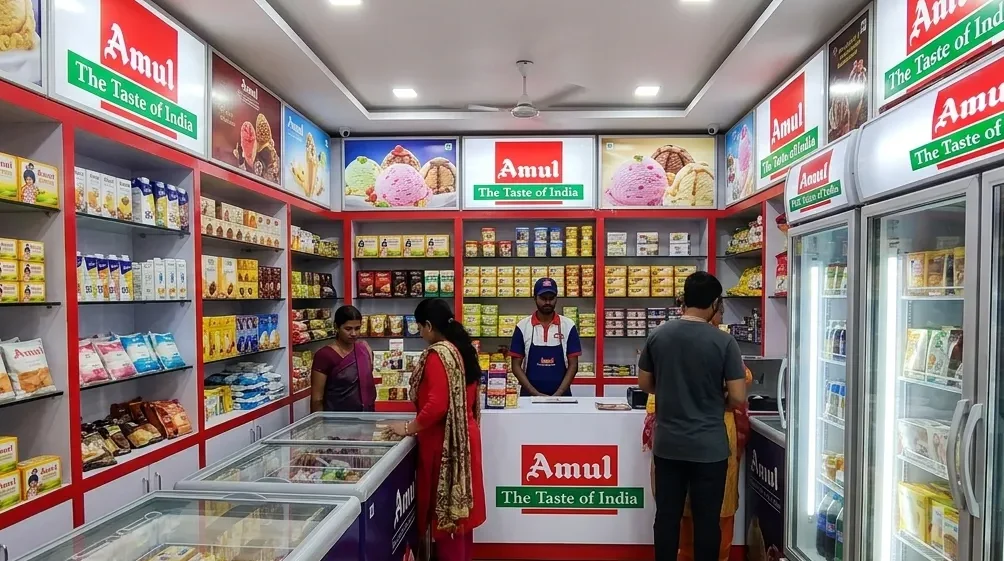
One of the biggest reasons entrepreneurs invest in an Amul franchise is its earning potential. While profit depends on factors such as the franchise model, outlet location, daily customer footfall, and product mix, Amul offers competitive margins across its product categories. Since the company does not charge any royalty fee, franchise owners retain 100% of the product margins, making it easier to improve profitability through higher sales volumes and better product selection.
Estimated Profit Margins and Earnings
| Category | Estimated Margin / Earnings |
|---|---|
| Milk | Around 2.5% |
| Butter & Cheese | Around 10% |
| Ice Cream | 20%–50% |
| Average Monthly Revenue | ₹1.5 lakh – ₹10 lakh |
| Average Monthly Profit | ₹15,000 – ₹2.5 lakh |
| Break-even Period (Preferred Outlet/APO) | 6–18 months |
| Break-even Period (Ice Cream Parlour) | 1–3 years |
Among all franchise formats, Amul Ice Cream Scooping Parlours generally offer the highest profit potential because freshly scooped ice cream, sundaes, shakes, and desserts can generate margins of up to 50%. In contrast, essential dairy products like milk have relatively lower margins but benefit from consistent year-round demand and repeat customers.
Overall, an Amul franchise can become a profitable business when operated in a high-footfall location with an effective product mix. Outlets that balance everyday dairy products with higher-margin items such as ice cream, chocolates, beverages, and value-added dairy products often achieve better monthly earnings and recover their investment faster.
Space and Location Requirements
Choosing the right space and location is one of the most important factors for the success of an Amul franchise. The space requirement varies depending on the franchise model you select. While smaller formats like kiosks require limited space, larger models such as Ice Cream Scooping Parlours and Amul Cafés need more room to accommodate seating, equipment, and a wider product range.
| Franchise Model | Minimum Space Required | Recommended Location |
|---|---|---|
| Amul Preferred Outlet (APO) | 100–300 sq. ft. | Residential areas, local markets, commercial complexes |
| Amul Kiosk | 100–150 sq. ft. | Airports, railway stations, colleges, hospitals, office complexes |
| Amul Ice Cream Scooping Parlour | 300–500 sq. ft. | Shopping malls, food courts, high streets, entertainment zones |
| Amul Railway Parlour | As per railway guidelines | Approved railway stations |
| Amul Cafe | 300–800 sq. ft. | Metro cities, malls, premium commercial areas |
The exact space requirement may vary depending on the outlet format and local site conditions. Before final approval, Amul may inspect the proposed location to ensure it meets the company’s operational and branding standards.
How to Choose the Right Location for Your Amul Franchise
Selecting the right location can significantly impact the sales and profitability of your Amul franchise. A shop with high customer visibility and regular footfall has a much better chance of generating consistent revenue than one located in a low-traffic area.
When choosing a location, consider the following factors:
- High footfall: Prefer busy markets, shopping areas, residential neighborhoods, or commercial zones with a steady flow of customers.
- Good visibility: Choose a shop that is easily visible from the main road and has clear signage to attract walk-in customers.
- Nearby schools, offices, and markets: Locations close to educational institutions, office buildings, parks, and shopping centers can increase daily sales.
- Parking availability: Easy parking or convenient access encourages more customers to visit your outlet.
- Reliable electricity supply: Continuous power is essential because refrigerators and deep freezers must operate 24/7 to maintain product quality.
- Location approval by Amul: Before granting the franchise, Amul’s regional team evaluates the proposed site based on factors such as accessibility, market demand, customer potential, and compliance with the company’s outlet standards.
Choosing the right location from the beginning can improve customer traffic, boost sales, and help you recover your investment faster.
Eligibility Criteria for Amul Franchise
Before applying for an Amul franchise, applicants must meet certain basic eligibility requirements set by the company. These criteria help ensure that franchise owners have the necessary resources, business understanding, and suitable location to operate an authorized Amul outlet successfully. While prior experience in the food or dairy industry is not mandatory, having retail or business knowledge can be an advantage.
The general eligibility requirements for starting an Amul franchise include:
- Indian Citizenship: The applicant should be an Indian citizen and legally eligible to start a business in India.
- Minimum Age Requirement: The applicant should be at least 18 years old to apply for an Amul franchise.
- Shop Ownership or Lease Agreement: The applicant should have ownership of a suitable commercial space or a valid lease agreement for the proposed outlet location.
- Financial Capability: Applicants should have sufficient funds to cover the franchise investment, store setup, equipment, and operational expenses.
- Retail Business Understanding: Basic knowledge of customer handling, inventory management, billing, and daily retail operations is preferred.
- Food Industry Experience: Previous experience in the food, dairy, or retail sector is not compulsory but can be beneficial.
- Clean Background: Applicants should not have any criminal record or legal issues that may affect business operations.
Meeting these eligibility requirements increases the chances of approval, but the final decision depends on Amul’s evaluation of the applicant, proposed location, and overall business feasibility.
Documents Required for Amul Franchise
Before starting the application process for an Amul franchise, applicants need to prepare certain documents for identity verification, business registration, and outlet approval. These documents help Amul evaluate the applicant’s eligibility, financial capability, and proposed store location. The exact requirements may vary depending on the franchise model, location, and local regulations.
The commonly required documents for an Amul franchise include:
- PAN Card: Required for identity verification and financial transactions.
- Aadhaar Card or Government ID Proof: Used to verify the applicant’s identity.
- Address Proof: Documents such as a Voter ID, Passport, driving license, or utility bill may be required as proof of residential address.
- Passport-Size Photographs: Recent photographs of the applicant for application and verification purposes.
- GST Registration Certificate (if applicable): Required if the business meets the applicable GST registration criteria.
- Shop Ownership Proof or Lease Agreement: Documents showing ownership of the outlet space or a valid rental agreement for the shop location.
- No Objection Certificate (NOC) from Property Owner: Required if the outlet is being operated from a rented property.
- Cancelled Cheque and Bank Details: Needed for financial verification and business transactions.
- FSSAI Registration (if required locally): Food business registration may be required depending on the products sold and local regulations.
Keeping all required documents ready can help speed up the Amul franchise approval process and avoid delays during application and verification.
How to Apply for Amul Franchise Online (Step-by-Step Guide)
Applying for an Amul franchise involves submitting your details, selecting the suitable outlet format, and getting approval from the company after location and business feasibility evaluation. Amul follows a structured process to ensure that franchise outlets meet its quality, branding, and operational standards.
Follow these steps to apply for an Amul franchise:
- Step 1: Visit the Official Amul Website: Start by visiting the official Amul website and navigating to the franchise or business opportunity section. Always use official sources to avoid fraudulent franchise offers.
- Step 2: Select Your Preferred Franchise Model: Choose the outlet format that matches your investment budget, available space, and business goals. Options may include Amul Preferred Outlet, Ice Cream Scooping Parlour, Kiosk, or other available formats.
- Step 3: Fill Out the Franchise Application Form: Provide basic details such as your name, contact information, city, proposed outlet location, preferred franchise model, and other required information.
- Step 4: Submit Required Documents: Upload or submit the necessary documents, including identity proof, address proof, shop details, and other documents required for verification.
- Step 5: Location Evaluation by Amul Team: After reviewing your application, Amul’s regional team evaluates the proposed outlet location based on factors such as customer demand, footfall, accessibility, and market potential.
- Step 6: Approval and Agreement Process: If the location and application meet Amul’s requirements, the company provides approval and completes the required franchise agreement formalities.
- Step 7: Pay Security Deposit and Complete Setup: The applicant needs to pay the applicable refundable security deposit and complete outlet setup according to Amul’s branding and operational guidelines.
- Step 8: Store Setup and Product Supply: After approval, the outlet is prepared with required equipment, branding materials, refrigeration facilities, and initial inventory. Amul provides support to ensure the store follows its quality standards.
- Step 9: Start Operations: Once the setup is complete and all requirements are fulfilled, the Amul franchise outlet can begin operations and start serving customers.
Before applying, always verify the latest franchise details through Amul’s official channels, as investment requirements and application procedures may change over time.
Training and Support Provided by Amul
Amul provides franchise partners with the necessary guidance and support to help them operate their outlets efficiently and maintain the brand’s quality standards. Since Amul has a well-established retail network across India, franchise owners benefit from the company’s experience, operational guidelines, and strong supply chain system.
The key support provided by Amul includes:
- Store Layout and Setup Guidance: Amul provides guidelines for outlet design, product placement, display arrangements, and store setup to ensure consistency across franchise locations.
- Branding Materials and Signage Support: Franchise owners receive support with Amul branding elements, including approved signage, promotional displays, and marketing materials that help create a recognizable brand presence.
- Product Handling and Refrigeration Training: Amul provides guidance on proper storage, handling, and display of dairy products. Training related to refrigeration and maintaining the cold chain helps ensure product quality and freshness.
- POS System and Billing Support: Franchise partners receive assistance with billing procedures, inventory management, and basic operational practices to manage daily transactions smoothly.
- Supply Chain and Logistics Support: Amul’s strong distribution network ensures regular product availability through an efficient supply chain. Franchise outlets receive timely stock replenishment to meet customer demand.
- Marketing and Promotional Support: Franchise owners benefit from Amul’s national-level advertising campaigns, seasonal promotions, and brand awareness activities that help attract customers to local outlets.
With established operational support and a trusted brand reputation, Amul helps franchise owners reduce initial challenges and run their outlets more effectively.
Amul Franchise vs Other Dairy Franchise Options
Before investing in a dairy franchise, it is important to compare different brands based on factors such as brand reputation, investment requirements, product variety, profit potential, and business risk. Amul stands out as one of India’s most recognized dairy brands, but other options like Mother Dairy, Kwality Walls, and local dairy brands also attract entrepreneurs.
| Brand | Brand Recognition | Investment | Product Range | Profit Margin | ROI Period | Risk Level |
|---|---|---|---|---|---|---|
| Amul | Very High – One of India’s most trusted dairy brands with nationwide presence | Low to Moderate | Wide range of dairy products including milk, butter, cheese, ice cream, beverages, and chocolates | Moderate to High (higher on ice cream and value-added products) | Around 6 months – 3 years depending on model and location | Low |
| Mother Dairy | High – Strong presence in North India and metro cities | Moderate | Milk, dairy products, fruits, vegetables, and frozen products | Moderate | Around 1–3 years | Low to Moderate |
| Kwality Walls | High – Popular ice cream brand under Hindustan Unilever | Moderate | Mainly ice creams, frozen desserts, and related products | High on ice cream products | Around 1–3 years | Moderate |
| Local Dairy Brands | Depends on regional popularity and customer trust | Low to Moderate | Limited products based on local demand | Varies widely | Depends on sales and location | Medium to High |
Advantages of Starting an Amul Franchise
Starting an Amul franchise offers several benefits for entrepreneurs looking to enter the dairy retail business with a trusted and established brand. With decades of market presence, strong customer loyalty, and a wide product portfolio, Amul provides franchise owners with a reliable business model and operational support.
The major advantages of owning an Amul franchise include:
- Trusted National Brand: Amul is one of India’s most recognized dairy brands, which reduces the need for extensive marketing efforts. Customers already trust the brand, making it easier for new outlets to attract buyers.
- No Royalty or Profit-Sharing Fee: Amul does not charge any royalty fee from franchise owners, allowing them to retain their earnings from product margins.
- Low Investment with Good Return Potential: Compared to many food franchise opportunities, Amul requires relatively lower investment while offering steady income potential through daily-demand products.
- Consistent Year-Round Demand: Dairy products are essential household items, ensuring regular customer demand throughout the year.
- Strong Supply Chain Network: Amul’s established distribution system helps franchise outlets receive regular product supplies and maintain inventory availability.
- Multiple Franchise Formats: Entrepreneurs can choose from different models such as Preferred Outlets, Kiosks, Ice Cream Scooping Parlours, and Cafés based on their budget and available space.
- Branding and Promotional Support: Amul provides franchise partners with branding materials, store guidelines, and marketing support to maintain a consistent brand identity.
- Growing Demand for Value-Added Products: Increasing demand for ice cream, beverages, cheese, chocolates, and other value-added dairy products creates additional revenue opportunities for franchise owners.
With its strong brand reputation, flexible investment options, and continuous customer demand, an Amul franchise can be a profitable opportunity for entrepreneurs seeking a stable retail business.
Suggested read:
- List of Government Franchises in India
- Mio Amore Franchise Cost in India
- Lenskart Franchise Cost
- McDonald’s Franchise Cost in India
Challenges of Running an Amul Franchise
While an Amul franchise offers a strong business opportunity with a trusted brand name, entrepreneurs should also understand the operational challenges involved. Like any retail business, success depends on factors such as location, sales volume, cost management, and daily operations. Being aware of these challenges can help franchise owners prepare better strategies and improve profitability.
The key challenges of running an Amul franchise include:
- Low Margins on Some Products: Essential dairy products like milk generally offer lower margins of around 2.5%, which means franchise owners need higher sales volumes to generate significant profits. Focusing on higher-margin products such as ice cream, chocolates, beverages, and value-added dairy items can improve overall earnings.
- High Electricity Costs: Refrigerators and deep freezers need to operate continuously to maintain product quality and prevent spoilage. This results in higher electricity expenses, especially in areas with expensive power tariffs.
- Location Dependency: The success of an Amul outlet largely depends on its location. A shop with low customer traffic or poor visibility may struggle to generate enough sales despite the brand’s popularity.
- Competition from Other Retail Channels: Amul franchise outlets face competition from supermarkets, local dairy stores, grocery apps, and online delivery platforms that offer similar products with convenient purchasing options.
- Maintaining Product Freshness and Hygiene: Dairy products require proper storage, temperature control, and hygiene practices. Franchise owners must maintain the cold chain, follow handling guidelines, and regularly monitor inventory to ensure product quality.
Understanding these challenges allows entrepreneurs to plan better, choose the right location, manage costs effectively, and maximize the long-term success of their Amul franchise.
Conclusion
Starting an Amul franchise can be a profitable opportunity for entrepreneurs who want to enter India’s dairy retail sector with the support of a trusted and established brand. With multiple franchise models, low investment requirements, no royalty fee, and a strong supply chain network, Amul provides a flexible business option for investors with different budgets and goals.
The total Amul Franchise Cost in India depends on factors such as the outlet format, location, store size, and setup expenses. While challenges like location selection, competition, electricity costs, and inventory management need careful planning, the brand’s strong customer trust and year-round demand for dairy products create significant growth opportunities.
Before applying, entrepreneurs should evaluate their investment capacity, choose the right franchise model, and ensure their outlet location meets Amul’s requirements. With proper planning, effective operations, and a focus on high-margin products, an Amul franchise can become a stable and rewarding long-term business venture.
FAQs
1. What Is The Minimum Investment Required For An Amul Franchise?
The minimum investment required for an Amul franchise is approximately ₹2 lakh to ₹6 lakh for models like an Amul Preferred Outlet or Kiosk. The total cost may vary depending on location, store size, interiors, and equipment requirements.
2. Does Amul Charge Any Royalty Fee From Franchise Owners?
No, Amul does not charge any royalty fee from its franchise partners. Franchise owners earn through product margins on the sale of Amul products.
3. How Much Profit Can I Earn From An Amul Franchise Per Month?
The monthly profit from an Amul franchise can range from around ₹15,000 to ₹2.5 lakh, depending on factors such as outlet location, customer footfall, franchise model, and product sales volume.
4. Which Amul Franchise Model Is Most Profitable?
The Amul Ice Cream Scooping Parlour generally has higher profit potential because ice cream, desserts, and beverages offer better margins compared to basic dairy products like milk.
5. What Documents Are Required To Apply For An Amul Franchise?
Common documents required for an Amul franchise include a PAN Card, Aadhaar Card or government ID, address proof, passport-size photographs, shop ownership proof or lease agreement, bank details, and GST/FSSAI registration if applicable.