
India’s quick-service restaurant (QSR) industry continues to grow rapidly, driven by rising disposable incomes, changing lifestyles, and increasing demand for convenient dining options. Among the leading global fast-food brands, Burger King has established a strong presence in the Indian market with its flame-grilled burgers, affordable menu, and expanding network of outlets across major cities. As the brand continues its expansion, many entrepreneurs are interested in understanding the Burger King franchise cost in India and whether investing in the brand is a profitable business opportunity.
This guide covers everything you need to know before making an investment, including the estimated franchise cost, financial eligibility requirements, ongoing royalty fees, profit potential, return on investment (ROI), and the application process. You’ll also learn about Burger King’s franchise model in India, available partnership opportunities, and the key factors that influence profitability. Whether you’re an experienced investor or simply exploring premium food franchise opportunities, this article will help you make an informed decision with the latest 2026 information.
What Is Burger King and Why Is It a Big Brand in India
Burger King is one of the world’s largest quick-service restaurant (QSR) chains, best known for its signature flame-grilled burgers and value-driven menu. Founded in 1954 in Miami, Florida, USA, the brand has grown into a global fast-food giant with more than 18,000 restaurants across over 100 countries and territories. Its focus on quality ingredients, consistent customer experience, and menu innovation has made it one of the most recognized restaurant brands worldwide.
Burger King entered the Indian market in 2014 through Restaurant Brands Asia Limited (formerly Burger King India Limited), backed by Everstone Capital, which holds the master franchise rights for India. Since its launch, the company has expanded rapidly and, as of late 2025, operates 577+ restaurants across more than 140 cities, making it one of the fastest-growing international QSR brands in the country.
One of the biggest reasons for Burger King’s success in India is its ability to adapt to local tastes while maintaining its global identity. Alongside its famous flame-grilled Whopper burgers, the menu includes a wide range of vegetarian burgers, spicy Indian-inspired recipes, wraps, sides, beverages, and desserts designed specifically for Indian consumers. The brand also caters to different budgets, with menu prices typically ranging from around ₹55 to ₹833, making it accessible to students, families, and working professionals alike.
Its combination of strong brand recognition, continuous expansion, localized offerings, and affordable pricing has positioned Burger King as a leading player in India’s rapidly growing QSR market, attracting both loyal customers and entrepreneurs interested in the brand’s business opportunities.
Is Burger King Franchise Open for Individual Investors in India?
One of the most common questions entrepreneurs ask is whether they can purchase a Burger King franchise in India as an individual investor. The answer is not in the traditional sense.
Burger King’s operations in India are managed by Restaurant Brands Asia Limited (RBA), formerly known as Burger King India Limited. The company holds the master franchise rights for Burger King in India and is responsible for developing, operating, and expanding the brand across the country. Unlike many food franchises that offer single-unit or multi-unit franchise opportunities to independent investors, Burger King India primarily expands through its own corporate network and approved strategic partnerships.
As a result, there is no publicly available program that allows individual investors to directly purchase and operate a single Burger King outlet in India. If you’re searching online, you may come across websites or advertisements claiming to offer a Burger King franchise for as little as ₹2–₹5 lakh. These offers are not supported by official Burger King or Restaurant Brands Asia communications and should be treated with caution. Always verify any opportunity through the company’s official channels before sharing documents or making payments.
If you’re interested in partnering with Burger King in India, there are two legitimate options:
1. Become a Property Partner
If you own a well-located commercial property, you may be able to lease it to Burger King for a new outlet. Restaurant Brands Asia periodically evaluates retail spaces in malls, high streets, commercial hubs, and drive-through locations as part of its expansion strategy. Suitable properties may be considered based on factors such as location, visibility, frontage, accessibility, and surrounding footfall.
2. Strategic or Large-Scale Investment Opportunities
Burger King’s expansion in India is generally handled through Restaurant Brands Asia, and any strategic investment or development opportunities typically involve substantial financial resources, business experience, and discussions with the company. Such opportunities are not offered through a standard retail franchise application process and are assessed on a case-by-case basis.
Before pursuing any business opportunity, visit the official Restaurant Brands Asia website and rely only on information published by the company. This helps you avoid fraudulent franchise claims and ensures you’re following the correct process.
Burger King Franchise Cost in India 2026 — Complete Breakdown
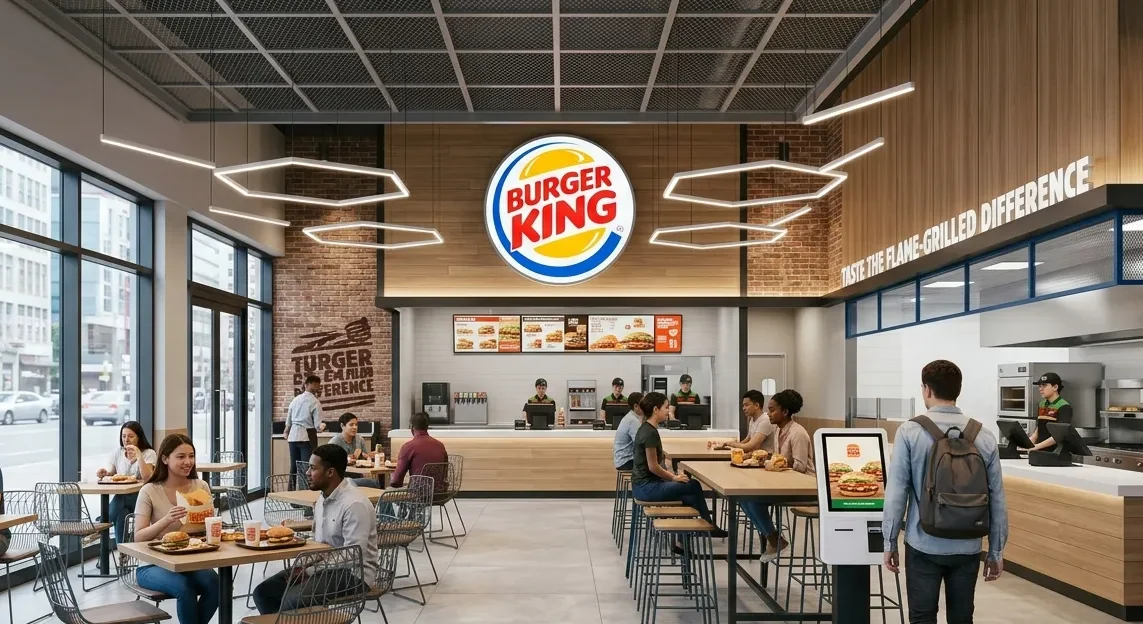
Although Burger King does not publicly disclose a standard franchise package for individual investors in India, various industry estimates suggest that establishing a Burger King outlet requires a significant capital investment. The overall cost depends on factors such as the store format, location, city, and operational requirements.
| Cost Component | Estimated Cost |
|---|---|
| Initial Franchise Fee* | ₹20 lakh – ₹41+ lakh |
| Outlet Setup & Interior Fit-Out | ₹2 crore – ₹4 crore |
| Kitchen Equipment & Furniture | ₹50 lakh – ₹1 crore |
| Working Capital | ₹20 lakh – ₹67 lakh |
| Insurance Fees | ₹6 lakh – ₹18 lakh |
| Business Licenses & Legal Costs | ₹4 lakh – ₹22 lakh |
| Total Estimated Investment | ₹3.5 crore – ₹10 crore |
*Note: The estimated franchise fee varies across industry sources because Burger King India does not publicly publish a fixed fee for individual franchise opportunities.
The wide investment range is mainly influenced by the city, store format, and outlet size. A high-street outlet in a metro city generally requires a different investment than a food court location in a shopping mall or a standalone drive-thru restaurant. Rental costs, interior specifications, local construction expenses, and the total square footage also play a significant role in determining the final investment.
Financial Eligibility Requirements
While Burger King India has not publicly released official financial eligibility criteria for individual franchise applicants, industry sources suggest that prospective large-scale partners are generally expected to meet the following requirements:
- Minimum Net Worth: ₹7.5 crore to ₹12.5 crore
- Minimum Liquid Assets: ₹4.15 crore to ₹4.2 crore
- Business Experience: Prior experience in business ownership, retail management, or the food and beverage (F&B) industry is preferred.
- Operational Capability: Ability to manage large-scale restaurant operations while adhering to Burger King’s operational, hygiene, and customer service standards.
- Long-Term Investment Commitment: Financial capacity to support outlet development, working capital, expansion plans, and ongoing business operations.
- Multi-Unit Development Preference: Burger King generally favors investors capable of developing and operating multiple outlets rather than a single restaurant.
Meeting these financial and operational expectations can improve the likelihood of being considered for strategic partnership opportunities with Restaurant Brands Asia Limited (RBA), subject to the company’s expansion plans and approval process.
Ongoing Fees and Monthly Expenses
Beyond the initial investment, operating a Burger King restaurant involves several recurring expenses that affect monthly profitability. While the exact costs may vary depending on the outlet’s size, location, and agreement terms, the following are the most common ongoing expenses.
| Expense | Estimated Cost |
|---|---|
| Royalty Fee | 4%–6% of monthly gross sales |
| Marketing & Advertising Contribution | Around 4% of monthly gross sales |
| Staff Salaries | Varies based on team size and location |
| Ingredient Procurement | Purchase from approved suppliers |
| Lease/Rent | Depends on the outlet location and property agreement |
| Utilities | Electricity, water, internet, and gas charges |
| POS & Technology | Software licensing, maintenance, and support |
| Repairs & Maintenance | Routine equipment and outlet maintenance |
Example Monthly Cost Calculation
Suppose a Burger King outlet generates ₹25 lakh in monthly gross revenue.
- Royalty Fee (4%): ₹1,00,000
- Marketing Contribution (4%): ₹1,00,000
- Total Royalty + Marketing Fees: ₹2,00,000 per month
Apart from these fees, the franchise operator must also budget for employee salaries, rent, inventory purchases, utilities, technology subscriptions, maintenance, and other day-to-day operating expenses. Managing these recurring costs efficiently is essential for maintaining healthy profit margins and achieving a faster return on investment (ROI).
Burger King Franchise Profit Margin and ROI in India
The earning potential of a Burger King outlet depends on factors such as its location, customer footfall, operating efficiency, and overall market demand. While actual figures vary by store format and city, industry estimates provide a general idea of the returns a well-managed outlet can generate.
| Metric | Estimated Figures |
|---|---|
| Estimated Monthly Revenue | ₹15 lakh – ₹35 lakh |
| Average Monthly Profit | ₹3 lakh – ₹4 lakh |
| Annual Revenue Potential | ₹3 crore – ₹6 crore |
| Net Profit Margin | 10% – 20% |
| Estimated Break-Even Period | 3 – 5 years |
Factors That Affect Profitability
Several factors influence the profitability and return on investment (ROI) of a Burger King outlet, including:
- Location Quality: Outlets in malls, commercial hubs, and high-footfall areas generally generate higher sales.
- Customer Footfall: Consistent customer traffic directly impacts monthly revenue and profitability.
- Operational Efficiency: Effective inventory management, staff productivity, and cost control help improve profit margins.
- Local Marketing: Promotional campaigns, digital marketing, and delivery partnerships can significantly boost sales.
- Store Format: Drive-thru outlets, mall food courts, and high-street restaurants may have different revenue potential and operating costs.
Despite reporting a net loss at the corporate level, Restaurant Brands Asia Limited (RBA)—the master franchisee for Burger King in India—recorded approximately 16.5% year-over-year revenue growth in Q3 FY26. This reflects continued expansion, increasing customer demand, and the company’s long-term growth strategy. While corporate financial performance does not guarantee the profitability of an individual outlet, it indicates that Burger King continues to strengthen its presence in India’s growing quick-service restaurant (QSR) market.
How to Partner with Burger King India as a Property Owner
For individuals who cannot directly apply for a Burger King franchise, becoming a property partner can be a practical opportunity. Burger King India, operated by Restaurant Brands Asia Limited (RBA), regularly evaluates premium commercial locations for new outlets as part of its expansion strategy. Property owners with suitable spaces can approach the company to lease their commercial property for a Burger King restaurant.
The ideal property requirements generally include:
| Requirement | Preferred Criteria |
|---|---|
| High Street or Mall Outlet Space | 1,500 – 2,000 sq. ft. ground floor area |
| Drive-Thru Outlet Space | 3,000 – 4,000 sq. ft. with highway or main road frontage |
| Frontage Visibility | Minimum 30 – 40 feet |
| Power Requirement | Approximately 100 KW |
| Lease Duration | Around 9 – 15 years |
| Interior Setup | Burger King generally manages outlet design and fit-out as per brand standards |
Prime locations may offer attractive commercial arrangements, including a fixed monthly rental model combined with a revenue-sharing structure of around 6%–9% in selected high-potential locations. The final agreement terms depend on factors such as city, location quality, footfall potential, property size, and business viability.
How to Submit Your Property for Burger King Consideration
Property owners interested in partnering with Burger King can follow these steps:
- Visit the official Restaurant Brands Asia Limited website.
- Navigate to the Real Estate or Partner With Us section.
- Submit property details through the inquiry form.
- Provide important information such as:
- Property dimensions
- Exact location and PIN code
- Frontage details
- Nearby landmarks
- Photographs of the property
- Availability and lease details
- Wait for the company’s evaluation team to review the opportunity.
Having a strategically located property with strong visibility, easy accessibility, and high customer traffic can increase the chances of being considered for a Burger King outlet.
Ideal Location Strategy for a Burger King Franchise
Location plays a crucial role in determining the success and profitability of a Burger King outlet. Since QSR businesses depend heavily on customer visibility, convenience, and repeat visits, selecting the right location can directly impact sales, footfall, and long-term ROI.
Some of the most suitable locations for Burger King outlets include:
- Shopping Malls and Multiplexes: These locations attract high footfall from young adults, families, and entertainment-focused customers. Food courts and retail zones inside malls provide strong visibility and consistent customer traffic.
- Metro Stations and Transit Hubs: High-traffic transportation areas offer opportunities to capture customers looking for quick meals during daily commutes.
- High Streets and Commercial Corridors: Busy streets with strong pedestrian movement, retail stores, and offices can generate steady customer demand throughout the day.
- Business Districts: Corporate areas and commercial zones are ideal for attracting weekday lunch customers, office employees, and professionals seeking convenient dining options.
- College Areas and Residential Townships: Locations near educational institutions and growing residential communities can create a strong customer base among students, families, and local residents.
- Tier-2 Cities: Growing cities such as Pune, Indore, Lucknow, Jaipur, and Chandigarh are witnessing increasing demand for international QSR brands due to rising disposable income and changing food preferences.
Burger King’s expansion strategy has increasingly focused on strengthening its presence beyond major metropolitan cities. Under its Cornerstones 2026 plan, the brand has emphasized expansion into tier-2 and tier-3 cities, wider market penetration, and building a larger restaurant network across India. This approach highlights the growing opportunity for QSR brands in emerging markets where consumer demand for branded dining experiences continues to increase.
Eligibility Criteria and Requirements to Apply
Burger King India does not currently provide a direct single-unit franchise option for individual investors. However, potential partners are generally expected to meet certain financial and operational requirements to be considered for business opportunities with Restaurant Brands Asia Limited (RBA).
Key eligibility requirements include:
- Financial Capability: Strong financial resources with sufficient net worth and liquid assets to support outlet development and operations.
- Business Experience: Previous experience in business, retail, or the food and beverage industry is preferred.
- Operational Skills: Ability to manage restaurant operations while maintaining Burger King’s quality, hygiene, and service standards.
- Long-Term Commitment: Willingness to invest in brand growth and follow Burger King’s operational guidelines.
- Training & Support: Completion of required training programs before managing restaurant operations.
- Legal Compliance: Ability to obtain required licenses, registrations, and approvals for running a QSR business.
Burger King typically looks for partners who have the financial strength, operational capability, and commitment required to maintain the brand’s standards and support long-term expansion.
Step-by-Step Application Process for Burger King Franchise in India
Since Burger King India operates through Restaurant Brands Asia Limited (RBA) and does not currently offer a standard individual franchise model, the application process mainly applies to potential strategic partners and property owners interested in working with the brand.
The general process includes:
- Visit the Official Website: Go to the Restaurant Brands Asia website and check available partnership or real estate opportunities.
- Submit an Inquiry Form: Provide details such as your business background, location, property details (if applicable), and contact information.
- Initial Screening: The company reviews the submitted information to evaluate financial capability, location suitability, and partnership potential.
- Business Discussion: Selected applicants may be contacted for further discussions regarding investment plans, location details, and operational expectations.
- Submit Required Documents: Provide financial documents, identity proofs, business details, and property-related documents if required.
- Location Evaluation: For property-based opportunities, the company assesses factors such as visibility, accessibility, footfall, and market potential.
- Approval and Agreement: Once approved, both parties finalize the partnership terms, agreement conditions, and operational requirements.
- Training and Preparation: Approved partners receive guidance on Burger King’s operational standards, technology systems, supply chain, and brand requirements.
- Outlet Development: The store setup, interiors, equipment installation, and compliance requirements are completed according to Burger King’s guidelines.
- Launch and Marketing Support: The outlet is prepared for opening with promotional support and operational assistance to attract customers.
Applicants should always verify opportunities through official Restaurant Brands Asia channels and avoid third-party websites claiming to sell Burger King franchises without authorization.
Legal and Regulatory Requirements
Before starting a Burger King outlet in India, investors or business partners must complete several legal registrations and obtain necessary approvals to ensure smooth restaurant operations. These requirements help maintain food safety, tax compliance, workplace regulations, and local business standards.
Key legal requirements include:
- FSSAI License: A Food Safety and Standards Authority of India (FSSAI) license is mandatory for operating a food business. A central license may be required for businesses operating across multiple states or meeting specific turnover criteria.
- GST Registration: Restaurants must obtain GST registration and complete regular GST return filings as per government regulations.
- Shop and Establishment Registration: This registration is required under state-specific labour laws and covers business operations, working hours, employee conditions, and workplace regulations.
- Health Trade License: Many municipal authorities require restaurants to obtain a health trade license to ensure compliance with hygiene and sanitation standards.
- Fire Safety Certificate: Outlets must meet fire safety requirements and obtain approval from the local fire department before opening.
- Signage and Advertising Permits: Permission may be required from local municipal authorities for displaying brand signage, boards, and outdoor advertisements.
Important Franchise Agreement Clauses to Review
Before signing any partnership or franchise-related agreement, investors should carefully review key terms, including:
- Royalty Structure: Understand applicable fees, payment terms, and how they impact profitability.
- Brand Usage Rights: Check rules regarding trademarks, branding, menu standards, and operational guidelines.
- Exit and Termination Conditions: Review conditions for ending the agreement, renewal terms, and obligations after termination.
- Jurisdiction and Legal Terms: Understand dispute resolution procedures and the applicable legal jurisdiction.
Completing all required registrations and carefully reviewing agreement terms helps ensure compliance while protecting the long-term interests of the business owner.
Burger King vs. Competitors — Which QSR Franchise Is Better in India
Choosing the right QSR franchise depends on factors such as investment capacity, brand strength, business model, and franchise availability. While Burger King has built a strong position in India’s fast-food market, brands like McDonald’s, KFC, Subway, and Domino’s also offer established franchise opportunities with different investment requirements.
| Brand | Estimated Total Investment | Franchise Fee | Royalty Fee | Break-Even Period | Individual Franchise Availability |
|---|---|---|---|---|---|
| Burger King | ₹3.5 crore – ₹10 crore | ₹20 lakh – ₹41+ lakh (estimated) | Around 4%–6% | 3–5 years | Not available through a standard individual franchise model in India |
| McDonald’s | ₹2 crore – ₹5 crore+ | Varies by agreement | Around 4%–5% | 3–5 years | Available through approved franchise partnerships |
| KFC | ₹1 crore – ₹2.5 crore+ | Varies by location and agreement | Around 5% | 3–5 years | Available through franchise partners |
| Subway | ₹50 lakh – ₹1.5 crore+ | ₹5 lakh – ₹10 lakh (approx.) | Around 8% | 2–4 years | Available through individual franchise applications |
| Domino’s | ₹50 lakh – ₹1.5 crore+ | Varies by agreement | Varies by market | 2–4 years | Available through approved partners |
Investment figures and fees are approximate estimates and may vary depending on location, outlet format, agreement terms, and brand policies.
Which Investors Should Consider Burger King?
Burger King is better suited for high-net-worth investors, experienced business operators, and property owners looking for a premium QSR opportunity with a globally recognized brand. Since the brand operates in India through Restaurant Brands Asia Limited and does not currently offer a typical single-unit franchise model, it is more suitable for investors interested in large-scale partnerships or multi-unit expansion opportunities.
Entrepreneurs with a smaller investment budget may find brands like Subway, Domino’s, or other QSR franchises more accessible. However, investors seeking a strong international brand presence, long-term growth potential, and participation in India’s expanding QSR market may find Burger King an attractive opportunity.
Risks to Consider Before Investing
Investing in a globally recognized QSR brand like Burger King can offer growth opportunities, but potential investors should also understand the challenges involved. Evaluating these risks before making a decision helps create realistic expectations about investment, operations, and profitability.
Key risks to consider include:
- High Initial Investment: Setting up a Burger King outlet requires significant capital compared to many other food franchise options, making it suitable mainly for well-funded investors.
- Limited Franchise Availability: Burger King India operates through Restaurant Brands Asia Limited, and individual investors may not have access to a standard single-unit franchise model.
- High Competition: The Indian QSR market has strong competition from brands like McDonald’s, KFC, Domino’s, Subway, and emerging local food chains.
- Food Cost and Inflation Impact: Rising costs of ingredients, employee wages, rent, and utilities can affect overall profit margins.
- Location Dependency: Sales performance heavily depends on selecting the right location with strong visibility, accessibility, and customer footfall.
- Operational Challenges: Maintaining consistent food quality, hygiene standards, staff performance, and customer experience requires effective management.
- Regulatory Compliance: Restaurants must regularly manage licenses, food safety requirements, tax filings, and local authority regulations.
- Dependence on Brand Strategy: Franchise or partnership opportunities are influenced by Burger King’s expansion plans, policies, and decisions made by Restaurant Brands Asia Limited.
Understanding these challenges allows investors to evaluate whether Burger King aligns with their financial capacity, business goals, and long-term investment strategy.
Explore more franchise options
Conclusion
The Burger King franchise cost in India is estimated to require a significant investment, with overall costs depending on factors such as outlet format, location, setup expenses, and operational requirements. Since Burger King India operates through Restaurant Brands Asia Limited (RBA) and does not currently offer a standard individual franchise model, investors should explore official partnership opportunities rather than relying on unofficial franchise claims.
For high-net-worth investors, experienced business operators, and commercial property owners, Burger King can be an attractive opportunity due to its global reputation and long-term growth potential in India’s expanding QSR sector. Understanding profitability factors, ongoing expenses, and operational challenges can help investors make a well-informed decision before pursuing a partnership with the brand.
FAQs
What is the Burger King Franchise Cost in India in 2026?
The estimated investment required for a Burger King outlet in India can range from around ₹3.5 crore to ₹10 crore, depending on factors such as outlet format, location, size, setup cost, equipment, and working capital requirements.
Can I Open a Single Burger King Outlet in India?
Currently, Burger King India does not offer a standard single-unit franchise model for individual investors. The brand operates through Restaurant Brands Asia Limited (RBA), which manages Burger King’s expansion in India. Interested investors may explore strategic partnership opportunities or property partnerships.
Who Manages Burger King in India?
Burger King in India is managed by Restaurant Brands Asia Limited (RBA), formerly known as Burger King India Limited. The company holds the master franchise rights for Burger King in India and is responsible for brand expansion and operations.
What is The Royalty Fee for Burger King India?
The estimated royalty fee for Burger King is around 4% to 6% of monthly gross sales, along with a marketing contribution that is generally around 4% of sales. The exact terms depend on the agreement structure.
How Much Profit Can a Burger King Franchise Make Per Month?
A well-managed Burger King outlet may generate an estimated monthly profit of around ₹3 lakh to ₹4 lakh, depending on factors such as location, sales volume, operating costs, and management efficiency.
How Long Does it Take to Break Even?
The estimated break-even period for a Burger King outlet is around 3 to 5 years. The actual timeline depends on investment size, revenue growth, location performance, and control over operational expenses.