

Creating content today is no longer just about writing well – it’s about writing strategically. With millions of pages competing for attention on search engines, even high-quality content can struggle to rank without proper optimization. Keywords, search intent, semantic relevance, structure, and competitor insights all play a crucial role in determining whether your content gets discovered or buried beneath the competition. In an environment where algorithms evolve constantly, guesswork simply isn’t enough.
This is where content optimization tools become game-changers. Designed to analyze top-ranking pages, uncover keyword opportunities, and provide real-time improvement suggestions, these platforms help writers and marketers create content that performs. From semantic SEO guidance to AI-powered scoring and competitor gap analysis, the right tool can transform ordinary articles into high-ranking assets.
What is Content Optimization Software and How Do They Work?
Content optimization tools are digital platforms designed to improve the quality, relevance, and search engine performance of online content. These tools analyze different elements of a webpage or blog post—such as keywords, readability, structure, and metadata to ensure the content meets SEO best practices. By comparing your content with top-ranking pages, they provide data-driven suggestions that help writers and marketers create more engaging and search-friendly material. Many modern tools also use artificial intelligence and natural language processing to recommend keyword placement, optimize headings, and enhance overall readability. As a result, businesses can publish content that is more likely to rank higher in search engine results and attract organic traffic.
How They Work:
- Analyze keywords and search intent for better targeting
- Evaluate readability and sentence structure
- Suggest improvements for headings and content structure
- Compare content with top-ranking competitor pages
- Provide SEO recommendations, like meta tags and keyword density
- Offer real-time optimization scores and improvement tips
Why Content Optimization Software Is Essential for SEO Success
- Enhanced Search Performance: Optimize keywords, structure and relevance to match the content with ranking variables, which would enhance visibility and placement in the search engine results pages.
- Improved Keyword Targeting: Find primary and secondary keywords, make sure that placements are balanced and there is a semantic coverage, without being over-optimized or engaging in unnatural keyword-stuffing activities.
- Improved Content Relevance: Compete page analysis and search purpose to make the content all-encompassing to satisfy user queries and expectations.
- Greater Topical Authority: Endorse topic clustering and internal connectivity approaches that create subject authority and assist websites to rank regularly on similar keywords.
- Increased Organic Traffic: Search engine optimization will also boost the targeted traffic to the site in terms of regular organic traffic without necessarily over-relying on paid search engine advertising.
- Better User Experience: Increase readability, structure, formatting, and user interaction indicators, boosting the length of dwell time and the bounce rates by a significant margin.
- Data-Driven Content Decisions: Present action-oriented insights based on competitor analysis, performance measurements, and optimization ratings to implement asset-based strategic content changes.
- Scalable Content Expansion: Automate research, writing and optimization processes such that the teams are able to create quality, SEO friendly content at scale.
How Content Optimization Tools Improve Search Rankings
- Keyword Optimization: Have primary and secondary keywords placed strategically as this enhances relevance signals which the search engines employ to place content higher.
- Search Intent Alignment: Process SERP data to ensure that the intent of the user is correctly aligned to maximize likelihood of being ranked on information, transactional or navigational searches.
- Competitor Gap Analysis: Find a gap in content and key words to competitor pages, which can be used to design better and more competitive pages.
- Improvement of the content structure: Suggest better headings, subheadings and formatting, which would increase the crawlability and understanding of the content by the search engines.
- Semantic SEO Enhancement: Recommend related entities and NLP words, which enhances topical depth and assists the algorithms to understand relevance of larger subjects.
- Readability Optimization: Enhance readability, sentence structure and formatting to increase user engagement that has an indirect effect on search ranking in a positive way.
- On-Page SEO Refinement: Improve meta tags, internal links, and schema mark up, improve technical indications that can be used to drive high visibility in organic search.
- Performance Tracking Insights: Track movement of key words and content scores so that optimization can be achieved continuously such that rankings can be maintained and improved with time.
List of 15 Best Content Optimization Tools
1. Surfer SEO

Surfer SEO is a full-fledged content optimization software that assists creators to order their content with the highest search results by evaluating hundreds of ranking criteria. It is a hybrid of real-time content scoring and keyword use, NLP term recommendations, and competitor data that lead writers to greater search visibility.
Surfer can be integrated to Google Docs or WordPress, which makes the process of optimizing the writing process simple. The content editor puts an emphasis on the keywords that are missing, the optimal content length, and the gaps in the structure of the tool in comparison with the top-ranking articles.
Its intuitive nature would be of use to those in SEO teams, content marketers, and individual creators who would need to enhance the overall on-page SEO performance.
Website: https://surferseo.com/
Key Features:
- Real-time content editor with SEO scoring
- NLP-based keyword suggestions
- SERP analyzer with competitor comparison
- Content planner with topic clustering
- Google Docs & WordPress integration
- AI content outline generation
Pros:
- Accurate on-page SEO guidance
- Easy integration with writing tools
- Strong competitor data analysis
- Helpful content structure recommendations
- Scalable for agencies
Cons:
- Can be expensive for beginners
- Learning curve for advanced features
- Occasional keyword over-optimization risk
Pricing:
- Pro- 219USD per month
- Standard- 119USD per month
- Peace of Mind- 359USD per month
2. Clearscope

Clearscope is a high-end content optimization platform focused on increasing semantic relevance and depth. It uses advanced natural language processing (NLP) to analyze top-ranking pages for a target keyword and build an insightful term list that writers should include for better topical coverage.
Clearscope’s grading system assigns scores like A+ through F based on how well content matches search intent, making it easy to see improvement opportunities.
Its integration options, including Google Docs and WordPress, streamline optimization within familiar writing environments. Known for accurate suggestions and clean UI, Clearscope is often preferred by enterprise teams and content strategists aiming for authoritative, comprehensive SEO content.
Website: https://www.clearscope.io/
Key Features:
- NLP-driven term recommendations
- Letter-grade content scoring system
- Google Docs integration
- Competitor Analysis tool
- Readability tracking
- Detailed content reports
Pros:
- Highly accurate semantic suggestions
- Clean and simple interface
- Enterprise-grade reliability
- Excellent for authority content
- Strong reporting features
Cons:
- Premium pricing
- Limited keyword research tools
- Not ideal for small budgets
Pricing:
- Essentials- $129/month
- Business- $399/month
3. MarketMuse

MarketMuse uses artificial intelligence to assist content teams in planning, examining voids, and producing content at scale. As one of the advanced Content Optimization Tools, it goes further than mere keyword suggestions and provides topic modeling, content clustering, and competitive analysis to demonstrate where your content inventory is weak or strong.
The planner and inventory of this tool assist teams in determining what they should create next and how they will organize content to improve its authority and relevance.
The sophisticated features comprise recommended subtopics, available internal links, and keyword research that is specific to your niche. MarketMuse is best suited to major sites and editorial staffs that place significant emphasis on strategic planning of content and are keen on the integration of deep SEO.
Website: https://www.marketmuse.com/
Key Features:
- AI-powered topic modeling
- Content inventory analysis
- Competitive gap identification
- Content brief generator
- Authority scoring
- Internal linking insights
Pros:
- Strong strategic planning tools
- Excellent for large websites
- Deep topical authority insights
- Data-driven recommendations
- Ideal for enterprise teams
Cons:
- High cost
- Complex dashboard for beginners
- Overkill for small blogs
Pricing:
Contact sales
4. Frase
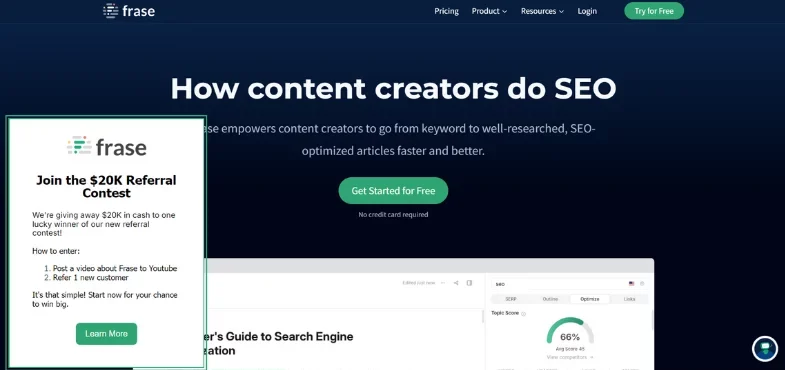
Frase distinguishes itself as a tool optimized for early-stage content research and optimization. It automatically analyzes top-ranking pages to generate SERP-driven content briefs and suggested FAQs that align with user search intent.
Writers use Frase to quickly build structured outlines covering key topics, important questions, and related terms that competitors include. It also incorporates real-time SEO guidance and keyword optimization as part of its research workflows.
Because it emphasizes matching audience intent and key content signals, Frase is valuable for bloggers, freelancers, and content marketers who want to ensure their articles are comprehensive and aligned with what search engines prioritize.
Website: https://www.frase.io/
Key Features:
- SERP-based content briefs
- AI outline generator
- Question research tools
- Real-time optimization scoring
- Answer-focused suggestions
- Content analytics tracking
Pros:
- Excellent for intent-based content
- Saves research time
- User-friendly interface
- Helpful FAQ extraction
- Affordable plans available
Cons:
- Limited advanced competitor metrics
- AI drafts may need heavy editing
- Fewer integrations than competitors
Pricing:
- Starter- $49/mo
- Professional- $129/mo
- Scale- $299/mo
5. SEMrush SEO Writing Assistant
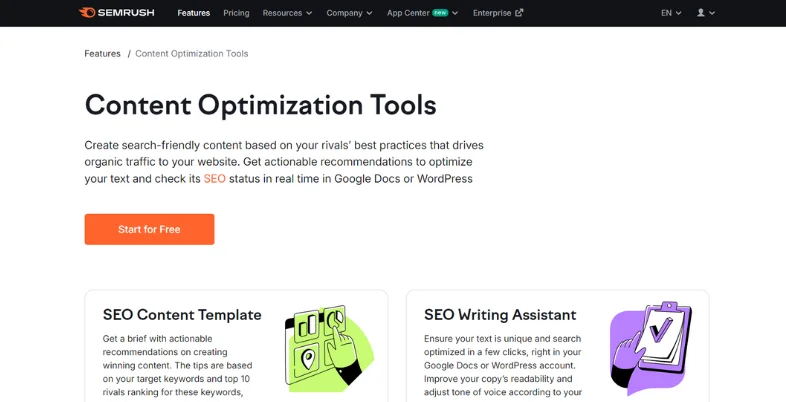
The SEMrush SEO Writing Assistant blends SEO best practices with content optimization directly within writing tools like Google Docs and WordPress.
It evaluates readability, tone of voice, originality, and keyword usage to ensure the content is both engaging and optimized for search rankings. It’s part of the larger SEMrush suite, which means users benefit from deep analytics, competitor insights, and keyword data.
Writers can check suggestions in real time, adjust content based on scoring feedback, and even test multiple optimization angles before publishing. This tool is particularly effective when paired with broader SEMrush campaigns that track performance and keyword opportunities over time.
Website: https://www.semrush.com/
Key Features:
- SEO Writing Assistant tool
- Readability and tone analysis
- Plagiarism checker tool
- Keyword optimization scoring
- Integration with Docs & WordPress
- Competitive keyword data
Pros:
- Part of full SEO suite
- Strong keyword research support
- Accurate optimization suggestions
- Plagiarism detection included
- Trusted global brand
Cons:
- Requires subscription plan
- Interface can feel crowded
- Limited AI writing features
Pricing:
- Pro- $139.95/mo
- Guru- $249.95/mo
- Business- $499.95/mo
6. Yoast SEO
Yoast SEO is one of the most popular plugins for WordPress, offering content optimization features focused on readability, metadata, schema markup, and on-page keyword usage.
Its real-time feedback helps users improve factors like sentence length, passive voice, and keyword distribution as they write. Beyond SEO checks, Yoast supports internal linking suggestions and structured data implementation to boost how content appears in search results.
It remains a go-to choice for bloggers, small businesses, and developers who want an easy-to-use plugin that ensures every page meets basic SEO and accessibility standards. Its ongoing updates keep it aligned with modern search engine expectations.
Website: https://yoast.com/
Key Features:
- On-page SEO analysis
- Readability checker
- Schema markup support
- Meta tag optimization
- Internal linking suggestions
- XML sitemap generation
Pros:
- Beginner-friendly
- Strong WordPress integration
- Reliable SEO basics
- Frequent updates
- Large community support
Cons:
- Limited outside WordPress
- Basic compared to premium tools
- Advanced features behind a paywall
Pricing:
- Yoast SEO Premium- $9.90 / month
7. Rank Math
Rank Math is an all-in-one SEO plugin for WordPress that brings advanced on-page optimization features commonly found in Content Optimization Tools within easy reach. It offers features like schema markup, keyword tracking, SEO scoring, and content suggestions that help writers optimize posts and pages without relying on multiple external platforms.
Rank Math’s automation simplifies tasks such as adding meta descriptions, optimizing images, and suggesting internal links. It also integrates with analytics tools to show how SEO improvements affect website traffic and search rankings.
With flexible configuration options and AI-based content recommendations, Rank Math is especially useful for businesses and content teams managing multiple WordPress sites that need powerful SEO capabilities without the complexity of larger platforms.
Website: https://rankmath.com/
Key Features:
- Advanced schema generator
- AI content suggestions
- Multiple keyword optimization
- Rank tracking integration
- Automated SEO audits
- Google Analytics connection
Pros:
- Powerful free version
- Advanced customization
- Lightweight performance
- Built-in analytics
- Good value pricing
Cons:
- Can feel feature-heavy
- Occasional update conflicts
- Requires SEO knowledge for full use
Pricing:
- Agency- $54.99 / month
- Business- $24.99 / month
- PRO- $7.99 / month
8. NeuronWriter
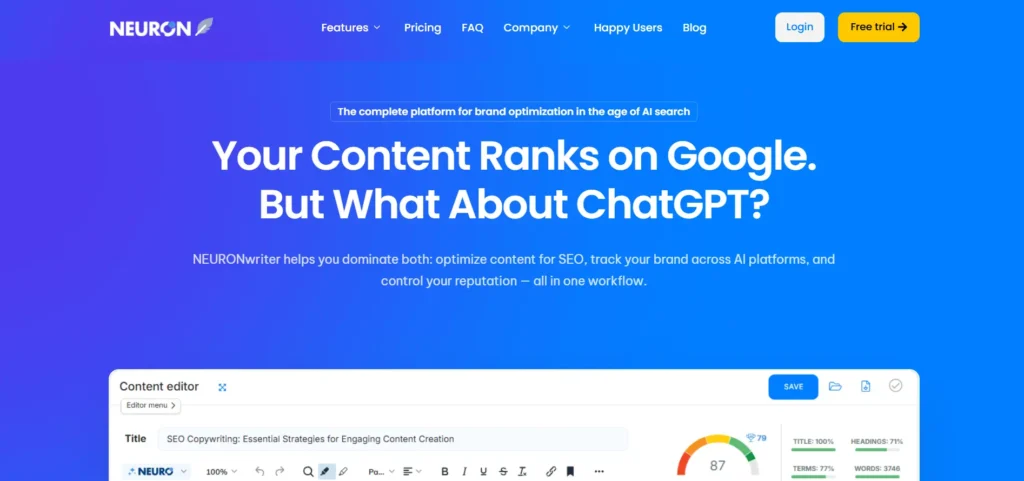
NeuronWriter uses semantic SEO and NLP analysis to help writers improve topic coverage and match search intent. It compares your content against top-ranking pages, suggesting relevant keywords, entities, and structure improvements that might be missing.
The tool supports multilingual optimization, making it helpful for international content teams targeting multiple regions. Its strength lies in semantic depth and competitor insights, guiding users how to expand or refine content for better relevance rather than just surface-level keyword metrics.
With friendly pricing and robust NLP support, NeuronWriter appeals to both small businesses and growing SEO teams focused on data-driven content enhancement.
Website: https://neuronwriter.com/
Key Features:
- NLP-based content scoring
- Competitor comparison engine
- Semantic keyword suggestions
- Multilingual optimization
- Content planning tools
- SERP analysis reports
Pros:
- Affordable pricing
- Strong semantic depth
- Good competitor insights
- Clean dashboard
- Useful for international SEO
Cons:
- Limited integrations
- UI could be improved
- AI writing features basic
Pricing:
- Bronze plan- $ 23 / Monthly
- Silver plan- $ 45 / Monthly
- Gold plan- $ 69 / Monthly
- Platinum plan- $ 93 / Monthly
- Diamond plan- $ 117 / Monthly
9. Outranking
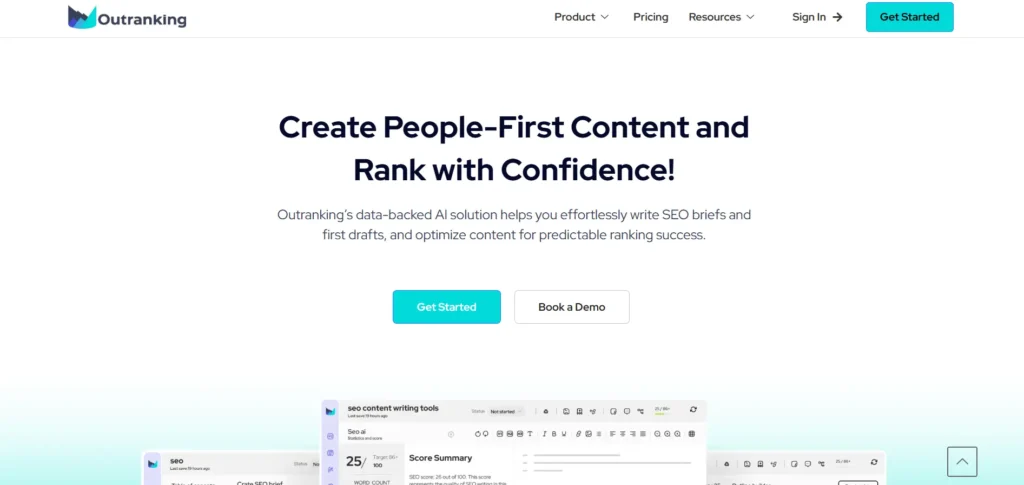
Outranking combines content optimization with workflow management and strategic guidance. It provides step-by-step outlines, internal linking suggestions, and AI-powered recommendations to help writers produce content aligned with search intent.
By analyzing competitor pages, it highlights topic gaps and shows exactly where content can improve, including snippet optimization and related keyword integration.
Outranking also supports team collaboration and iterative improvement cycles, enabling content strategists to refine articles based on real performance data. Its detailed guidance makes it well-suited for SEO writers and teams who want both optimization insights and a structured writing process from start to finish.
Website: https://www.outranking.io/
Key Features:
- AI content brief builder
- SERP data analysis
- Internal linking suggestions
- Snippet optimization tools
- Workflow management
- Automated content scoring
Pros:
- Structured content workflows
- Strong outline guidance
- Good team collaboration
- Competitive gap insights
- Snippet-focused optimization
Cons:
- Higher pricing tiers
- Requires setup time
- Interface learning curve
Pricing:
- Starter- $ 19 /mo billed
- SEO Writer- $ 79 /mo billed
- SEO Wizard- $ 159 /mo billed
10. Scalenut

Scalenut blends AI content creation with SEO optimization features, helping teams produce well-optimized drafts quickly. As one of the growing Content Optimization Tools, it combines AI writing assistance with data-driven SEO insights to support efficient content creation.
Its “Cruise Mode” allows users to generate content that already incorporates keyword suggestions and structural cues aligned with SEO best practices. Scalenut also provides keyword planning, topic clustering, and real-time SEO scoring to help refine existing drafts.
The platform is designed for content teams and agencies that produce high volumes of content, with workflows that streamline research, drafting, and optimization in one place. Its balance of AI drafting and SEO insights makes it a strong choice for marketers looking to scale content output without sacrificing quality.
Website: https://www.scalenut.com/
Key Features:
- Cruise Mode AI writer
- Keyword planner
- SEO content scoring
- Topic cluster builder
- Competitor analysis
- Performance tracking
Pros:
- Combines AI + SEO
- Good for scaling content
- Competitive pricing
- Fast draft creation
- All-in-one workflow
Cons:
- AI drafts require editing
- Limited deep SEO metrics
- Occasional output repetition
Pricing:
- Starter- $59/month
- Plus- $89/month
- Professional- $199/month
11. PageOptimizer Pro
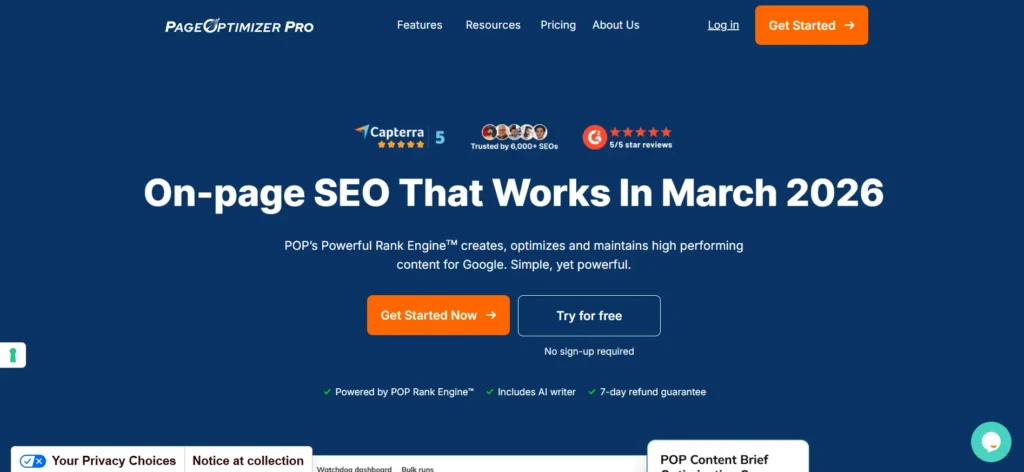
PageOptimizer Pro focuses on detailed on-page SEO recommendations, helping users fine-tune existing content to better meet search engine criteria.
It analyzes a page against top competitors and suggests exact keyword placements, heading optimization, and structural improvements that could influence rankings. The tool’s granular recommendations extend to meta tags, keyword variations, and keyword density guidance that match proven ranking patterns.
PageOptimizer Pro is particularly useful for SEO professionals and consultants who want precise, data-backed tweaks rather than broad content suggestions. Its emphasis on real-world ranking factors helps users comply with nuanced on-page best practices and improve performance over time.
Website: https://pageoptimizer.pro/
Key Features:
- Precise on-page SEO scoring
- Heading structure analysis
- Keyword density guidance
- Competitor data comparison
- Content audit reports
- Schema suggestions
Pros:
- Highly data-driven
- Detailed ranking insights
- Great for SEO consultants
- Clear optimization instructions
- Lightweight interface
Cons:
- Less beginner-friendly
- No built-in AI writer
- Narrow feature focus
Pricing:
- Basic- $40/mo
- Unlimited- $72/mo
- Teams- $143/mo
- White Glove- $ 275
12. Dashword
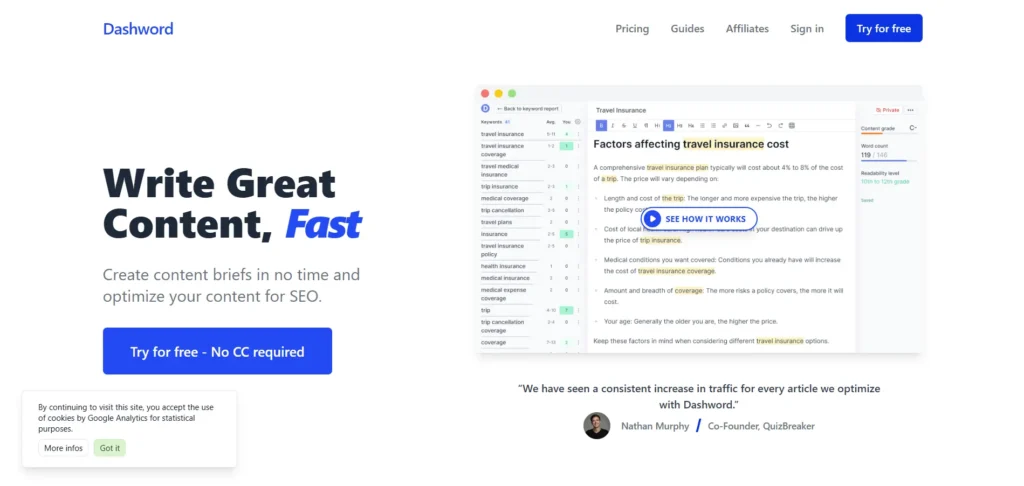
Dashword provides an easy-to-use content scoring system that evaluates how well content aligns with SEO best practices. It highlights missing semantic terms and suggests improvements that help writers cover key topics and questions that audiences expect.
Dashword’s optimization reports and keyword usage checklists help teams refine content before publishing, while performance monitoring alerts users when updates could improve search visibility.
Its straightforward design makes it accessible for small teams and individual creators who want actionable feedback without overwhelming data. Dashword helps ensure content meets basic SEO standards and improves rankings through incremental, data-driven edits.
Website: https://www.dashword.com/
Key Features:
- Content scoring dashboard
- Keyword coverage tracker
- SERP comparison tool
- Topic suggestion engine
- Optimization reports
- Performance monitoring alerts
Pros:
- Simple and intuitive
- Affordable plans
- Clear keyword guidance
- Quick content audits
- Ideal for small teams
Cons:
- Limited advanced analytics
- Basic AI functionality
- Fewer integrations
Pricing:
- Startup- $99/mo
- Business- $349/mo
13. Content Harmony
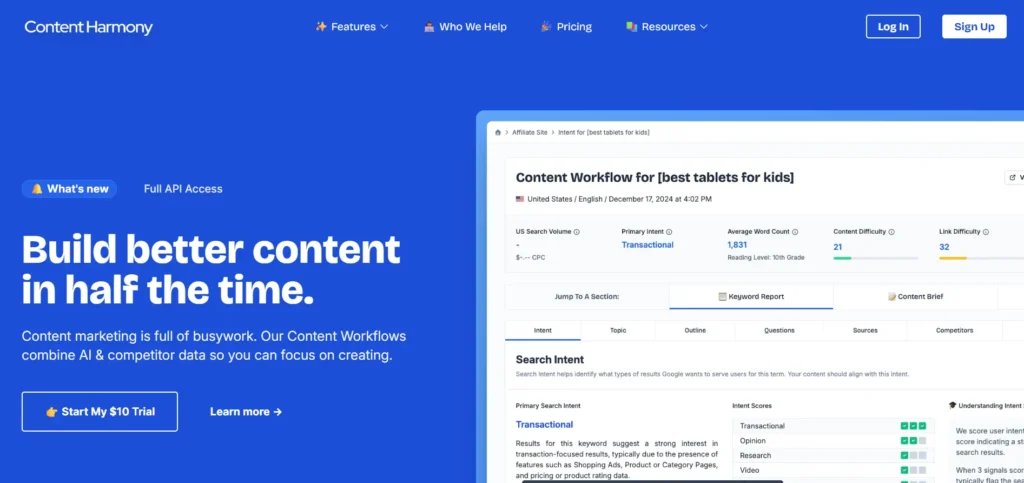
Content Harmony excels at building structured content briefs and optimizing writer workflows. As one of the specialized Content Optimization Tools, it combines keyword difficulty analysis, search intent signals, and competitive insights to help users understand what topics and subtopics a piece of content should cover.
Teams use it to align their editorial strategy with search expectations, improve topic coverage, and streamline SEO planning. Content Harmony’s collaboration features make it ideal for larger teams managing editorial calendars and optimization tasks simultaneously.
Its emphasis on data-driven briefs ensures that content writers produce articles with comprehensive topic coverage and better alignment with what searchers are looking for.
Website: https://www.contentharmony.com/
Key Features:
- Data-driven content briefs
- Search intent mapping
- Keyword difficulty scoring
- Competitor research reports
- Workflow collaboration tools
- SERP feature tracking
Pros:
- Excellent for content planning
- Strong research capabilities
- Team-friendly workflows
- Clear search intent focus
- Detailed brief generation
Cons:
- Not a full AI writer
- Premium pricing tiers
- Limited post-publication tracking
Pricing:
$10 per workflow
14. WriterZen
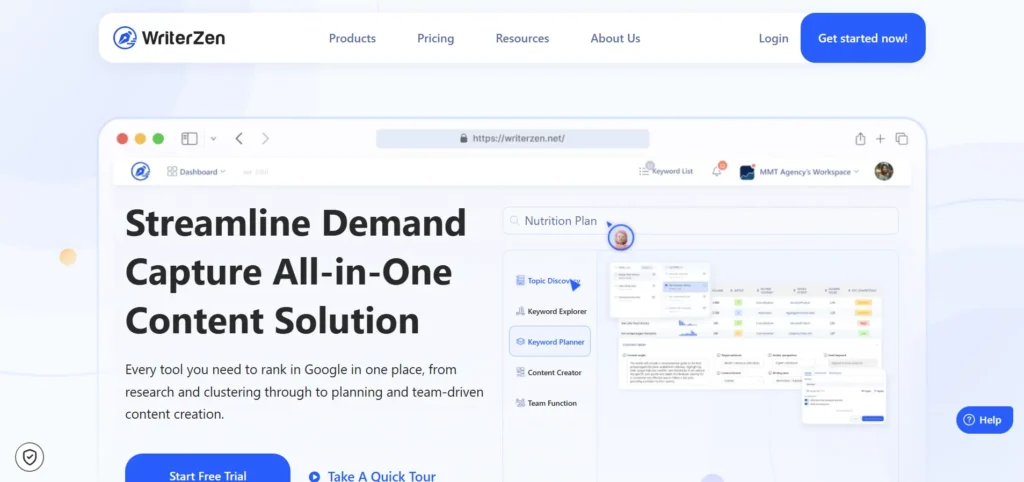
WriterZen combines keyword clustering and topic research with content optimization features. It helps users discover keyword groups that reveal content gaps and opportunities, then suggests ways to build content that covers them effectively.
WriterZen’s keyword explorer and clustering engine make it easier to plan a content strategy rooted in topical relevance rather than random keyword lists.
Its integration of SEO scoring and optimization insights allows users to refine article drafts for better performance. WriterZen appeals to marketers and SEO strategists who want both ideation and optimization capabilities in the same platform, enhancing workflow efficiency.
Website: https://writerzen.net/
Key Features:
- Keyword clustering engine
- Topic discovery tool
- Content creator editor
- SEO scoring dashboard
- Plagiarism checker
- SERP keyword explorer
Pros:
- Strong keyword organization
- Good value pricing
- Helpful ideation features
- Beginner-friendly
- All-in-one SEO toolkit
Cons:
- Smaller database vs giants
- Limited integrations
- UI feels basic
Pricing:
- Keyword Research- $75
- All-In-One Basic- $150
- All-In-One Advanced- $225
15. Writesonic
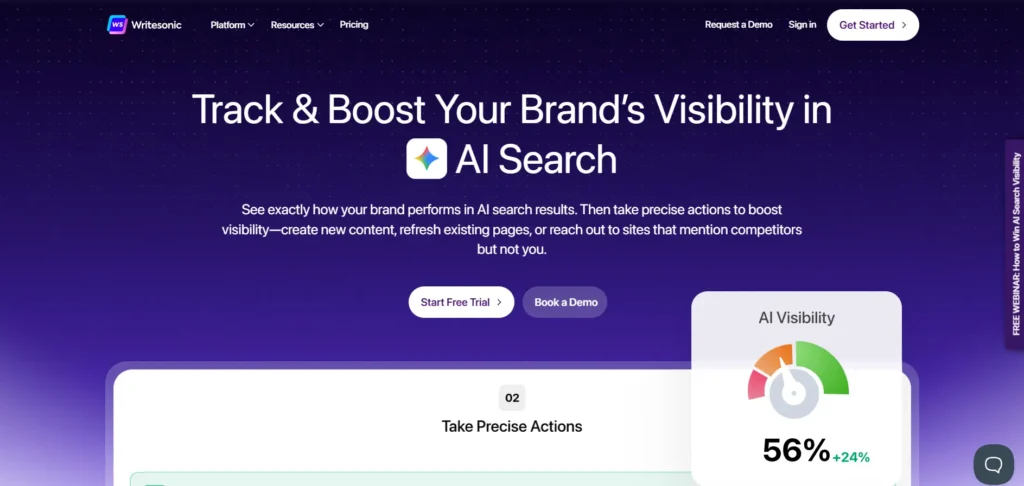
Writesonic is an AI-driven content creation and optimization platform designed to help marketers, agencies, and businesses produce SEO-friendly content at scale.
It combines generative AI writing with built-in optimization features that suggest keyword use, content structure improvements, and search intent alignment to improve search engine relevance and real-world engagement. Writesonic supports workflows for blogs, landing pages, social content, and ads, with tools for internal linking, topic clustering, and competitor analysis.
With integrations to analytics tools and real-time scoring, users can refine existing content and plan new pieces optimized for both user intent and SEO performance. Its intuitive interface and regularly updated AI models make it accessible to teams of all sizes.
Website: https://writesonic.com/
Key Features:
- AI-powered content creation and optimization
- Generative Engine Optimization (GEO) insights
- Integrated keyword research tools
- Content structure and internal linking suggestions
- SEO strategy automation
- Real-time competitor content analysis
Pros:
- Combines SEO and generative AI
- Helps optimize brand visibility in AI search results
- Integrates with tools like Google Search Console
- Scalable for agencies and brands
- Constantly evolving AI features
Cons:
- Interface can be overwhelming for beginners
- Some SEO metrics are dependent on external integrations
- Requires editing after AI generation
Pricing:
- Lite- $39/month
- Standard- $79/month
- Professional- $199/month
- Advanced- $399/month
Quick Comparison: Content Optimization Tools
| Name | Ease of Use | Integrations | AI Capabilities | Pricing |
| Surfer SEO | Moderate | Google Docs, WordPress, Jasper, Chrome extension | Strong NLP suggestions, AI outlines, content planner | Starts at $119/month |
| Clearscope | Very Easy | Google Docs, WordPress | Advanced NLP semantic analysis, content grading | Starts at $129/month |
| MarketMuse | Moderate to Complex | Limited direct CMS integrations | Deep AI topic modeling, authority scoring | Custom pricing |
| Frase | Easy | Google Docs, WordPress | AI brief generator, FAQ extraction, real-time scoring | Starts at $49/month |
| SEMrush | Moderate | Google Docs, WordPress, full SEMrush ecosystem | AI writing assistant, readability & tone analysis | Starts at $139.95/month |
| Yoast | Very Easy | WordPress native integration | Basic AI features (premium), readability analysis | Starts at $9.90/month |
| Rank Math | Easy | WordPress, Google Analytics | AI content suggestions, schema automation | Starts at $7.99/month |
| NeuronWriter | Easy | Limited third-party integrations | Strong NLP & semantic optimization | Starts at $23/month |
| Outranking | Moderate | Google Docs, WordPress | AI brief builder, SERP-driven optimization | Starts at $19/month |
| Scalenut | Easy | WordPress, SEO tools | AI drafting + SEO scoring combo | Starts at $59/month |
| PageOptimizer Pro | Moderate | Limited integrations | Precise on-page SEO AI recommendations | Starts at $40/month |
| Dashword | Very Easy | Basic CMS exports | Basic AI keyword & topic suggestions | Starts at $99/month |
| Content Harmony | Moderate | Limited CMS integrations | AI-powered search intent & brief generation | $10 per workflow |
| WriterZen | Easy | Limited direct integrations | AI clustering & content scoring | Starts at $75 (one-time packages available) |
| Writesonic | Easy | Google Search Console, WordPress, Zapier | Advanced generative AI + SEO optimization | Starts at $39/month |
Ending Thoughts
Content optimization tools have become indispensable for businesses and creators aiming to succeed in competitive search landscapes. They go beyond simple keyword placement by offering data-driven insights into search intent, competitor strategies, semantic relevance, and content structure. By guiding writers with real-time recommendations, these tools help produce comprehensive, engaging, and search-friendly content that aligns with modern algorithm expectations.
They also streamline workflows, making it easier to scale content production without sacrificing quality. From improving on-page SEO elements to strengthening topical authority, content optimization platforms play a critical role in achieving sustainable organic growth. Ultimately, leveraging these tools strategically enables brands to enhance visibility, attract qualified traffic, and maintain consistent search rankings in an increasingly dynamic digital environment.
FAQs
What Is Content Optimization Software?
Content optimization tools are software platforms that help improve content for better search engine rankings and user engagement.
Does Content Optimization Software Guarantee Rankings?
No tool guarantees rankings, but they significantly improve chances by aligning content with SEO best practices and search intent.
Are These Tools Suitable For Beginners?
Yes, many tools offer user-friendly interfaces and guided recommendations suitable for beginners and small businesses.
Can Content Optimization Tools Replace SEO Experts?
They support SEO efforts but do not replace strategic thinking, technical expertise, and human creativity.
How Often Should Content Be Optimized?
Content should be reviewed and optimized regularly, especially when rankings drop or competitors update their pages.