

Consider the marketing analytics platforms as your marketing compass. These platforms, just like GPS, can guide you to the best route to reach your destination, which is your customers, and expand your business. They monitor everything you do in terms of marketing, social media, emails, websites, and adverts, and demonstrate to you what is successful and what is not.
Regardless of whether you are the owner of a small business or an employee of a big company, you must know marketing analytics platforms in 2025. These are more user-friendly, cheaper, and powerful than ever before. This article will cover all the details you need to know about these platforms, and the best 10 platforms that are available in the market today.
What are Marketing Analytics Platforms?
Marketing analytics platforms refer to software applications that assist companies in gathering, quantifying, and examining data in their marketing operations. To put it simply, they are intelligent assistants that observe all your actions in the marketing sphere and inform you whether it is effective or not.
Consider that you have a lemonade booth. You would like to know which taste is selling the most, what time of the day is the busiest, and which signs will get the most customers. This is precisely what a marketing analytics platform does for your business marketing. It follows your posts in social media, email campaigns, visitors to your webpage, and advertisements, and then parades all this data in a simple-to-understand form.
Why Look for Marketing Analytics Platforms?
- Better Decision Making: The Marketing Analytics Platforms can substitute guesswork and help you make smart decisions using real facts and not emotions and assumptions.
- Save Time and Money: Rather than paying money to market to people who are not responsive, these platforms can tell you the precise location where you can put your budget to achieve the best results.
- Understand Your Customers: It is with these tools that you can know what your customers like, when they shop, and how they interact with your business, and serve them better.
- Monitor all Things Under a Single Roof: Instead of using various tools and websites and switching between them, Marketing Analytics Platforms will integrate all of your marketing data into a single dashboard.
- Stay Ahead of Competitors: By using predictive Marketing Analytics Platforms, you can spot trends early and take action before your competitors do, giving you a competitive advantage.
Top 10 Marketing Analytics Platforms
1. Google Analytics 4
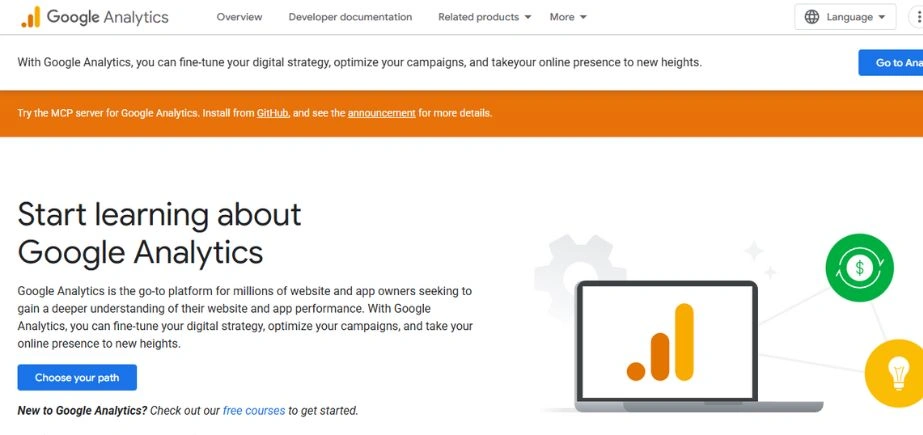
The most popular in the world is Google Analytics 4, a nd millions of businesses with big all sizes use it. It is the most recent release of their analytics tool by Google that is fully redesigned to monitor the current customer experience across websites and mobile applications. This is a great platform to know how visitors behave on your website, their origin, and what they do. Google Analytics 4 is powered by advanced machine learning to help automatically point out key insights and predict the future behavior of customers.
Key Features
- Inter-platform monitoring on devices.
- Artificial intelligence learns on its own.
- Free forever for everyone
Pros
- Completely free to use
- Integrity with Google products.
- Huge community support within the masses.
Cons
- High initial steep learning curve.
- A complicated interface for users.
- Minimal migration of historical information.
Best For: Beginners
Pricing: Free
Website: https://developers.google.com/analytics
2. HubSpot Marketing Hub
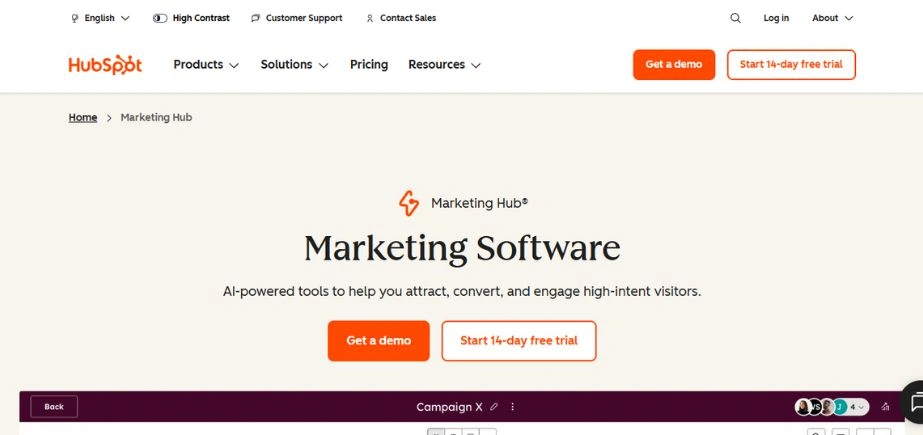
HubSpot Marketing Hub is a Marketing Analytics Platforms that integrates analytics and effective marketing solutions. It is meant to be used by those businesses that are in need of everything under one roof, including email marketing, social media management, landing pages, and detailed analytics. HubSpot is the best at following the full customer lifecycle, from the initial visit to the webpage to a paying client. The site has a reputation for having a clear and user-friendly interface that simplifies the interpretation of complicated data.
Key Features
- Total marketing automation was involved.
- Visual customer journeys monitoring.
- CRM integration is intrinsically embedded.
Pros
- Extremely user-friendly interface.
- Good educational materials are on hand.
- The free version is permanent and available.
Cons
- Costly to get sophisticated functionality.
- It can become complex quickly.
- There is a lack of customization choices.
Best For: Small businesses
Pricing: Free plan available; Paid plans start at $800/month
Website: https://www.hubspot.com
3. Adobe Analytics
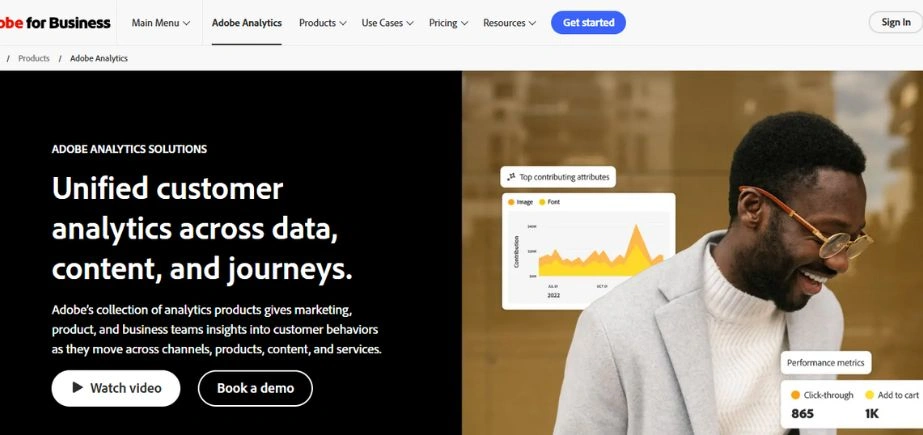
Adobe Analytics is a marketing analytics solution that is targeted at large enterprises that have complicated analytics requirements. It is an extremely powerful tool that belongs to Adobe Experience Cloud and has impressively powerful data analysis abilities. Adobe Analytics is very efficient in processing huge quantities of data and offers complex segmentation possibilities. The platform offers real-time marketing insights that help large teams make quick decisions across multiple markets and channels.
Key Features
- Instead, sophisticated AI-driven insights are automatically calculated.
- Endless customization facilities.
- Deals with large volumes of data.
Pros
- Very powerful analytical abilities.
- Very good with enterprise requirements.
- Strong AI and automation
Cons
- Highly costly model of pricing.
- Needs technical skills greatly.
- Dominating small teams.
Best For: Enterprises
Pricing: Custom pricing (typically $100,000+ annually)
Website: https://business.adobe.com/products/analytics/adobe-analytics.html
4. Mixpanel
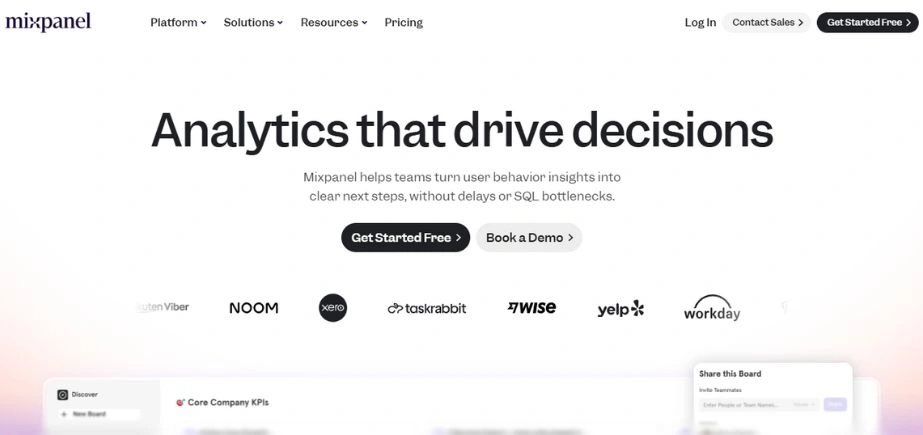
Mixpanel is a product-based marketing analytics platform that specializes in user behavior and engagement. Also, unlike the old-fashioned analytics tools that pay attention to page views, Mixpanel monitors certain actions that users perform in your product or web page. It is ideal in SaaS businesses, mobile applications, and online products. The platform provides excellent predictive marketing analytics that help you understand which users are likely to convert or churn.
Key Features
- In a tracking system, an event-based tracking system is accurate.
- The sophisticated cohort analysis tools.
- In-built user retention analytics.
Pros
- Excellent for product teams
- Modern and clean interface design.
- Excellent retention analysis skills.
Cons
- It can be expensive quickly
- Poor marketing channel integration.
- Learning curve for setup
Best For: SaaS products
Pricing: Free plan available; Paid plans start at $20/month
Website: https://mixpanel.com
5. Tableau
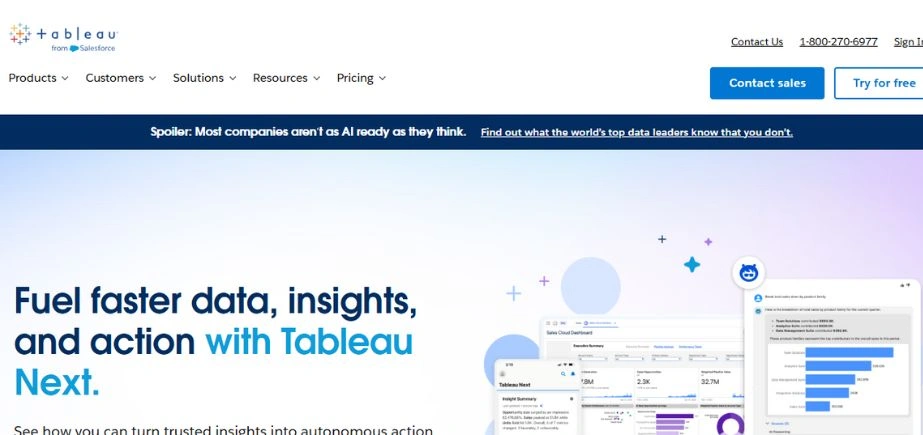
Tableau is a popular data visualization and marketing analytics solution that converts unwieldy data into lively and beautiful dashboards. While not exclusively a marketing tool, Tableau is widely used by marketing teams to create stunning marketing performance dashboards. The platform has the potential to be connected to any data source, whether it is spreadsheets or databases, cloud services, or other marketing tools. Tableau’s visual interface is applicable through and drag-and-drop nature that allows one to build professional visualizations regardless of coding skills. The platform is outstanding in processing massive data and designing interactive reports that can be self-explored by the stakeholders.
Key Features
- Superior data visualization functions.
- Connects to any data source
- Exploration interactive dashboards.
Pros
- The visual presentations produced are amazing.
- Very strong and very adaptable.
- Major community support system.
Cons
- Expensive licensing costs annually
- Steep learning curve initially
- Requires data preparation skills
Best For: Visualization
Pricing: Starts at $70/user/month
Website: https://www.tableau.com
6. Salesforce Marketing Cloud Intelligence
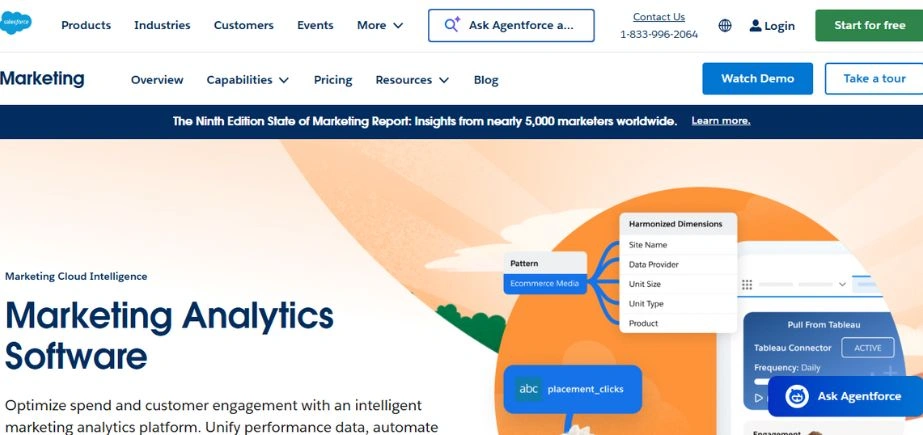
Salesforce Marketing Cloud Intelligence (previously Datorama) is a full-fledged marketing analytics solution designed to help businesses with numerous marketing options and initiatives. It is the platform that focuses on marketing data integration and pulls the information on hundreds of marketing tools and platforms under one single perspective. It provides powerful data-driven marketing software capabilities with AI-powered insights and automated reporting. The platform has a strong attribute in terms of attributing marketing efforts, and you are able to get a sense of the marketing activities that actually result in sales and revenues.
Key Features
- There are hundreds of ready-made integrations.
- Intelligent generation of insights is automatic.
- Attributes, marketing, and modeling are involved.
Pros
- Extensive data integration solutions.
- Strong AI functionalities encompassed
- Superior Salesforce ecosystem integration.
Cons
- Organizations find them very costly.
- A complicated implementation procedure is necessary.
- Probably needs a special administrator.
Best For: Multi-channel-marketing
Pricing: Custom pricing (typically $30,000+ annually)
Website: https://www.salesforce.com/products/marketing-cloud/marketing-intelligence/
7. Kissmetrics
Kissmetrics is a customer-centric marketing analytics software that monitors the individual behavior of the customer throughout the lifecycle. Contrary to the tools that track anonymous sessions, Kissmetrics tracks real people, providing detailed information on the journeys of individual customers. It is a great platform when it comes to e-commerce companies and subscriptions that must know about customer retention and lifetime value. Kissmetrics will give you actionable reports that will reveal where customers fall in your sales funnel. The platform will also have powerful tools in cohort analysis and segmentation that will reveal your most valuable customer groups.
Key Features
- Across device person tracking.
- Attribution and tracking of revenue.
- Tools of behavioral cohort analysis.
Pros
- Active transparent reports delivered.
- Very good with e-commerce in particular.
- Good revenue tracking functions.
Cons
- Costlier compared to others.
- Lack of variety in terms of integration.
- A smaller user base, comparatively.
Best For: E-commerce
Pricing: Starts at $299/month
Website: https://www.kissmetrics.io
8. Segment
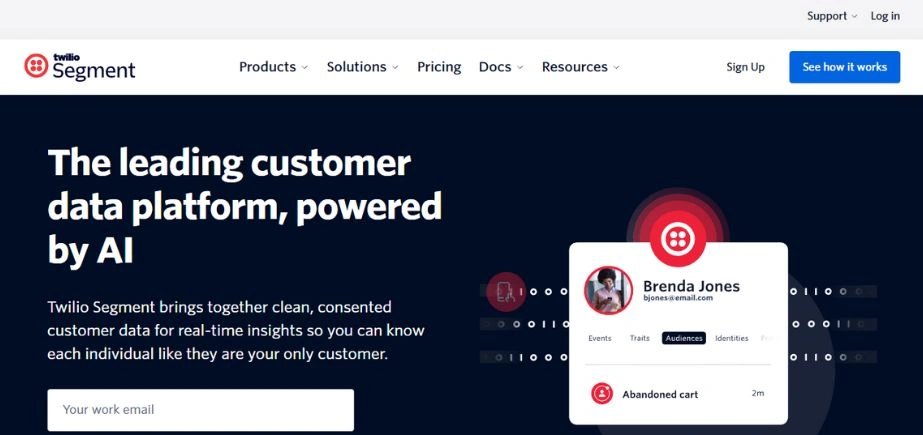
Segment is an exclusive marketing analysis platform that is a customer data infrastructure tool. Segment does not analyze data, but instead gathers it and sends it to all your other marketing tools. Imagine it as a major node that pulls information in one place and distributes it anywhere that you require. This does not require the individual integration of each marketing tool with your app or website. Segment unites customer interactions and activities and delivers them to your analytics software, email service, ad system, etc.
Key Features
- Central data collection hub
- Integrations of 300 or more tools.
- In-built data quality validation.
Pros
- Makes data integration very simple.
- Maintains consistency of data all over
- Powerful privacy compliance functions.
Cons
- Expensive at scale quickly
- Did not give he analysis itself.
- Can be complex initially
Best For: Data infrastructure
Pricing: Free plan available; Paid plans start at $120/month
Website: https://segment.com
9. Supermetrics
Supermetrics is a dedicated marketing analytics tool that is oriented towards data integration and reporting. It addresses a widespread issue, which is to import the data spanning multiple marketing platforms to such tools as Google Sheets, Excel, Data Studio, and business intelligence tools. Supermetrics is linked with more than 100 marketing applications, such as Google Ads, Facebook Ads, Instagram, LinkedIn, etc. The sites automatically extract information from these sites and deliver it to the destination of your choice on a schedule that you decide. This makes creating marketing performance dashboards much easier because all your data arrives in one place automatically.
Key Features
- Connectors to more than a hundred marketing platforms.
- Automated delivery of data schedules.
- No coding required ever.
Pros
- Extremely low-cost pricing model.
- Quick and easy setup
- Credible automated data delivery.
Cons
- Poor data transformation ability.
- None of the visualization tools were built in.
- Needs a destination tool distinctly.
Best For: Data integration
Pricing: Starts at $19/month
Website: https://supermetrics.com
10. Klipfolio
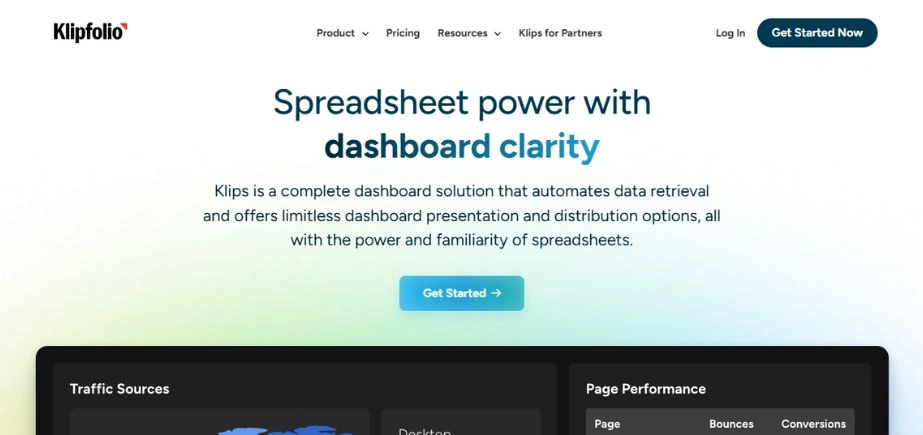
Klipfolio is a marketing analytics tool that is cloud-based and focuses on generating customizable, real-time dashboards. The platform is linked to hundreds of data sources and lets you create precisely the dashboards that you require without any technical skills. Klipfolio also targets teams that would like to display their marketing metrics on office screens, or share dashboards with their clients, or constantly monitor their performance. The platform has pre-made dashboard templates for the most common marketing use cases that will get you up and going.
Key Features
- Live dashboard creation systems.
- Ready-made templates that are immediately ready.
- Very customizable, each aspect.
Pros
- Affordable for small teams
- Highly adjustable customization capabilities.
- Great for client reporting
Cons
- IC and demand formula knowledge.
- Less developed advanced analytics.
- Intermittent learning curve hitches.
Best For: Dashboards
Pricing: Starts at $99/month
Website: https://www.klipfolio.com
Common Mistakes to Avoid
- The Bases of the Choice on the Features Alone: It is common to find that many businesses will pick marketing analytics systems with a list of features that are most often never utilized; get what you need now and not what you may need in the future.
- Disregarding User Adoption Problems: The best platform could be useless when your team does not want to use it; the ease of use and availability of training should be given priority to actually implement and use the platform.
- Failure to monitor Data Quality Setup: Marketing analytics applications can only deliver useful findings when fed with the right data; take time to get the implementation and tracking setup well in advance.
- Failure to consider Integration Requirements: Not ensuring that a platform has been integrated with your current marketing devices generates data vaults and human effort that nullify the automation objective.
- Neglecting the Requirement of Scalability: Select marketing analytics solutions that are capable of being expanded to meet your business needs instead of picking tools that you can soon outgrow and need to move to new tools.
Conclusion
Marketing analytics platforms are now the tools that both large and small businesses cannot do without in the data-driven world. These platforms convert unprocessed marketing data into actionable information to enable you to make better decisions, enhance customer experiences, and generate more marketing ROI. There are a myriad of free analytics tools, such as Google Analytics 4, and full enterprise solutions, such as Adobe Analytics and Salesforce Marketing Cloud Intelligence, meaning that there is a marketing analytics tool that fits any business requirement and financial ability.
The trick is to select a platform that fits your present needs and, at the same time, provides some space to expand. Begin with objectives for what you want to accomplish with your marketing analytics. You should think about the technical capabilities of your team, your financial capacity, and what marketing channels are of the most interest to your business. Keep in mind that the most effective source of marketing analytics will be the one that your team will utilize regularly.
Frequently Asked Questions
1. What is the distinction between marketing analytics systems and traditional analytics systems?
The analytics platforms of marketing have been specifically crafted to monitor and analyze marketing efforts across various platforms, such as social media, email, and advertising, whereas the normal analytics platforms may only track website traffic.
2. Will the marketing analytics platforms require any technical expertise?
The majority of contemporary marketing analytics tools have been made to suit non-technical marketers. User-friendly systems such as HubSpot and Google Analytics 4 have simple user interfaces and numerous tutorials.
3. What should a small business spend on a marketing analytics tool?
Free marketing analytics tools, such as Google Analytics 4 or free HubSpot, can be used by small enterprises. When you require additional features, consider spending between $20-300 per month on tools such as Mixpanel, Supermetrics, or Klipfolio.
4. Are the marketing analytics platforms able to monitor the offline marketing efforts?
Yes, a large number of marketing analytics systems can follow offline activities in numerous ways. Individual phone numbers, QR code, promotional code, or offline imports can be used.
5. What is the duration of time it takes to obtain results with a marketing analytics platform?
Within days of configuration, you can begin to observe very simple insights provided by marketing analytics applications; meaningful patterns will manifest themselves after 30-90 days of data capture.
Secondary Keywords: Data-driven marketing software, Marketing performance dashboards, Real-time marketing insights, Predictive marketing analytics