

In 2026, the solar energy sector in India is shining brighter than ever, presenting lucrative Solar Power Business Ideas in India for entrepreneurs and investors. With India targeting 500 GW of renewable energy by 2030 and solar technology costs dropping by over 70% in the last decade, the market offers multiple opportunities across installation, manufacturing, distribution, and services. Supported by favorable government policies, subsidies, and financing schemes, even small home-based projects can be profitable, while utility-scale plants contribute to national energy security and environmental sustainability.
In this blog, we explain the top 10 Solar Power Business Ideas in India, covering opportunities for startups, investors, and businesses looking to enter the booming renewable energy market with strong growth potential and proven profitability metrics.
Overview of India’s Solar & Renewable Energy Growth
India is among the leading solar markets in the world, with a current installed capacity of more than 90 GW and projected to reach 2026. The government has made substantial investments in solar infrastructure, with 500 GW of renewable capacity targeted by 2030. Rooftop constructions are also increasing at a high rate, as well as utility-scale.
State-level incentive programs, PM-KUSUM, and manufacturing efforts under PLI have accelerated domestic production. The potential presented by this growth is enormous business opportunities in the entire solar value chain.
Is Solar Business Profitable in India in 2026?
Solar business will continue to be very lucrative in India with margin prospects of 8-40 percent based on the model of the business. High government backing, an increase in power prices and corporate sustainability obligations guarantee stabilized demand.
The installation and EPC businesses have a predictable 12-18% margin whereas the product distribution and dealerships give 10-25% returns. Specialty services and manufacturing are highly priced. The profitability of the sector is increasing as maturity in technology and market growth.
Most Profitable Solar & Renewable Energy Business Models
| Segment | Key Details | Profit / Revenue |
|---|---|---|
| Rooftop Solar | Residential & commercial installations | 15–20% margins; recurring maintenance income; govt subsidies boost conversions |
| EPC Projects | Industrial & institutional projects | 12–18% margins; turnkey solutions; recurring O&M contracts |
| Solar Products Distribution | Sale of panels, inverters, batteries, accessories | 10–25% margins; sales, referrals, financing commissions; brand support |
| Utility-Scale Plants | Large solar farms (5 MW+) | 10–15% equity returns; tax credits & RECs; stable long-term cash flows |
Top 10 Best Solar Power Business Ideas in India (2026)
1. Solar Panel Dealership Business

Solar panel dealership – This will be the dealership to sell solar panels, inverters, batteries, and balance-of-system components to installers, contractors, and ultimate customers as an authorized distributor or dealer of known manufacturers of solar equipment. Among various Solar Power Business Ideas, this dealership model stands out because the dealers make margins on the sale of the products and they offer technical support, warranty services, and after-sales services.
The business will capitalize on the reputation of the brand and the backing of the manufacturers and will have moderately high capital requirements in terms of inventory and showroom preparation but will have consistent returns in the form of bulk purchase.
- Examples: The authorized dealerships of the brands such as Tata Power Solar, Adani Solar, Vikram Solar, Waaree Energies, or Luminous Power Technologies.
- Investment: The start-ups will be at 5- 20 lakhs of initial capital that will be used to cover inventory, showroom rent, branding materials, and working capital requirement.
- Profit Margin: The average gross margins are 12-25 on equipment sales, and the company also gets extra profit on installation referrals and services.
- Conditions: Authorization contract with manufacturers, sales space where technical details are provided, qualified sales personnel and logistical organization that ensures that the product is delivered on time.
- Best Use: This would be excellent in cases where the entrepreneur already has networks of electrical or hardware retail outlets to expand to the renewable energy products distribution channels.
2. Solar EPC & Installation Business
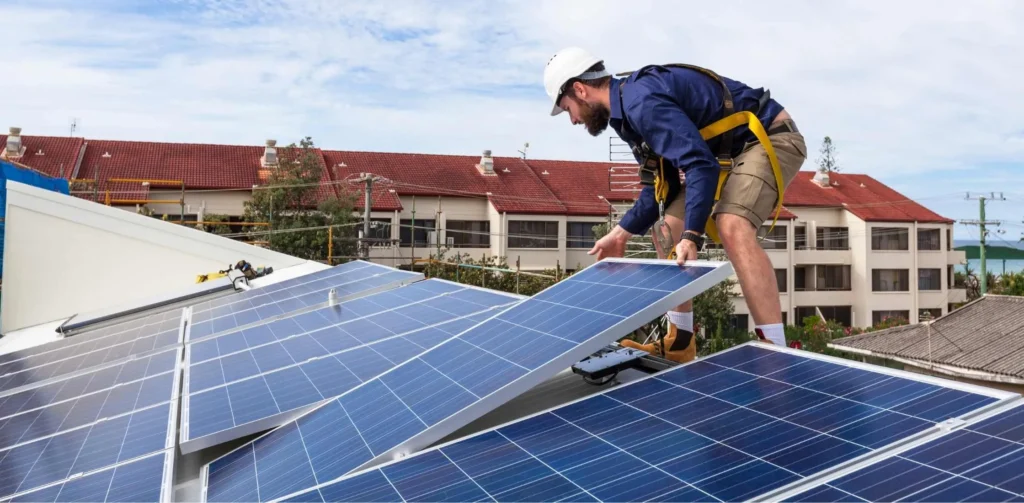
The Solar EPC (Engineering, Procurement, Construction) companies offer turnkey solutions to residential, commercial, and industrial solar systems. Among popular Solar Power Business Ideas, EPC companies stand out as they handle the full cycle of projects, such as site evaluation, system design, procurement, installation, commissioning, and grid interconnection.
These stakeholders include equipment suppliers, civil contractors, electrical teams, and utility companies, all coordinated by EPC contractors. The technical knowledge and skills in project management, along with good relations with vendors, are key factors that ensure the successful delivery of quality installations within the promised budget and timeline.
- Examples: Residential rooftop systems, commercial building projects, industrial captive Power plants, agricultural solar pumping systems and institutional installations.
- Investment: The amount required to initiate the business is 10-50 lakh of money that will be necessary to purchase the equipment, hire the workforce, and provide the tools and vehicles, license fees, and working capital of the project.
- Profit Margin: Project margin varies according to project size, complexity and competition; usually between 15 and 22 percent of total contract value.
- Prerequisites: Technical certification, empanelled to government schemes, competent installation team, project management systems as well as full insurance coverage.
- Best For: Electrical contractors, civil engineers or technical entrepreneurs with experience in the execution of project with high-growth renewable energy opportunities.
3. Solar Franchise Business

A solar franchise provides the entrepreneur with the opportunity to work under well-established brand names with tested business models, training, and operational support. Among innovative Solar Power Business Ideas, the franchise model stands out because local ownership allows franchisees to benefit from brand recognition, standardized processes, marketing materials, and central procurement advantages.
Typical features of a franchise include territory exclusivity, comprehensive training, CRM systems, and continuous technical support. This makes it an attractive choice for first-time solar entrepreneurs, as it lowers business risk and enables faster market entry compared to starting independently.
- Examples: Tata Power Solar franchise opportunities, Luminosity Solar franchise opportunities, Jakson Group franchise opportunities, Goldi Solar franchise opportunities, or local solar opportunities with partnership programs.
- Investment: The initial fee and setup cost of the franchise are between 30 lakh and 8 lakh by the positioning of the brand, area coverage, and the scope of the business model.
- Profit Margin: Franchise business venture is normally attracting net margin of 12-20% after paying royalty fees and additional income through value added services.
- Qualifications: Franchise compliance, minimum infrastructure standards, trained employees, marketing fund contributions and compliance to quality protocols.
- Best suited: Business individuals who desire already established brand value, systems and less market entry risks within the competitive solar industry.
4. Small-Scale Solar Business Ideas
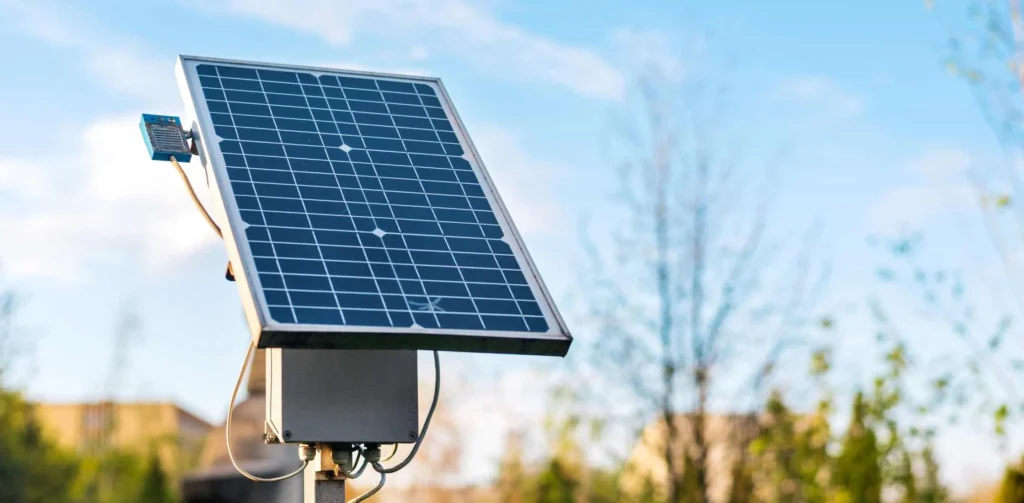
Small-scale solar companies specialize in niche services and products that do not demand high capital requirements or large systems. Among practical solar power business ideas are solar lighting solutions, portable solar devices, solar water heaters, solar cookers, and small-scale consulting.
The business model focuses on specialized knowledge in particular product categories or customer groups, enabling entrepreneurs to start with lower capital and expand over time. Competitive pricing is achieved through low overhead costs and a targeted market strategy, maintaining healthy margins due to close interaction with customers, making it the best small-town business.
- Examples: Solar lanterns, solar water heaters, solar lighting systems in the home, solar mobile charging kiosk, and solar pump dealerships.
- Investment: The initial capital requirement will be between 50,000 to 5 lakhs which will consist of initial inventory, basic tools, marketing materials and working capital.
- Profit Margin: Product specific margins are 15-35 percent with a higher payoff on both installation service, maintenance contracts, and tailored solutions.
- Requirements: Product knowledge, local market knowledge, vendor relationships, simple technology skills, and customer service ability and no need of heavy infrastructure.
- Best Suited: The first-time business persons, the rural market operators, women entrepreneurs and those who need to venture into part time or some additional income.
5. Solar Power Business Ideas from Home

The digital models of service and business, where physical facilities such as showrooms or warehouses are not required, are leveraged by home-based solar businesses. Among modern solar power business ideas are solar consultancy services, online product sales, project documentation support, energy auditing, solar design services, and lead generation for large-scale installers.
Remote entrepreneurs can use websites, social media marketing, and networking to connect with customers and earn commissions or consulting fees. This model is very flexible and operates with minimal overhead costs.
- Examples: Online solar consultancy, solar company digital marketing services, freelance solar project design, solar loans facilitation and comparison websites.
- Investment: Requirement of low startup capital of 20,000-2 lakhs, which can be used primarily in the development of the website, the digital marketing tools, software subscription, and certification courses.
- Profit Margin: Service-based margins vary between 20-40 percent on consulting fees, referral commissions are normally 2-8 percent of the project value, and subscription incomes.
- Skills needed: Digital marketing, industry experience, professional website, networking skills, a laptop with a design program, and a related certification that adds credibility.
- Best Fit: Consultants, engineers, digital marketers, homemakers, students, or any professional who is interested in solar power business ideas in India that are flexible and are not location-dependent.
6. Solar Product Manufacturing (Micro Scale)
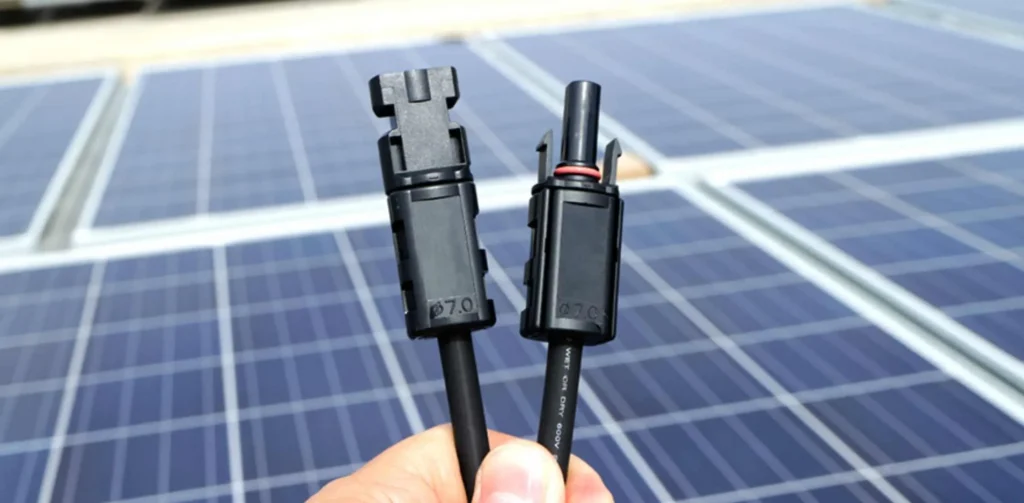
Micro-scale solar manufacturing is concerned with designing and producing individual components or accessories such as mounting structures, junction boxes, DC cables, connectors, earthing material, or assembling small-scale solar products. This type of solar component manufacturing allows micro manufacturers to supply local markets with customized products, rapid turnaround times, and competitive prices, unlike large-scale panel manufacturing, which requires massive investments.
Both technical expertise and quality control systems are essential, as well as adherence to industry standards, which is an advantage in a niche market with reduced competition for specialized parts. Due to its low level of competition, it is considered a small-scale manufacturing business opportunity.
- Examples: Solar mounting structure manufacture, junction box manufacture, MC4 connector manufacture, aluminum panel framing, and the manufacture of solar lantern assembly units.
- Investment: The manufacturing setup cost is 10-40 lakhs, including the equipment cost, raw materials stock, facility rental, test equipment, and certification cost.
- Profit Margin: The manufacturing margins are normally around 18-30 percent in relation to product complexity, volumes, level of automation, and market positioning strategies.
- Requirements: Production plant and sufficient space, qualified labor, quality testing devices, sources of raw materials, BIS certifications, and working capital.
- Best When: The manufacturing entrepreneur has technical skills and may have current facilities to do fabrication, or when the investor is seeking underserved component markets to grow the opportunities.
7. Solar O&M (Operations & Maintenance) Business
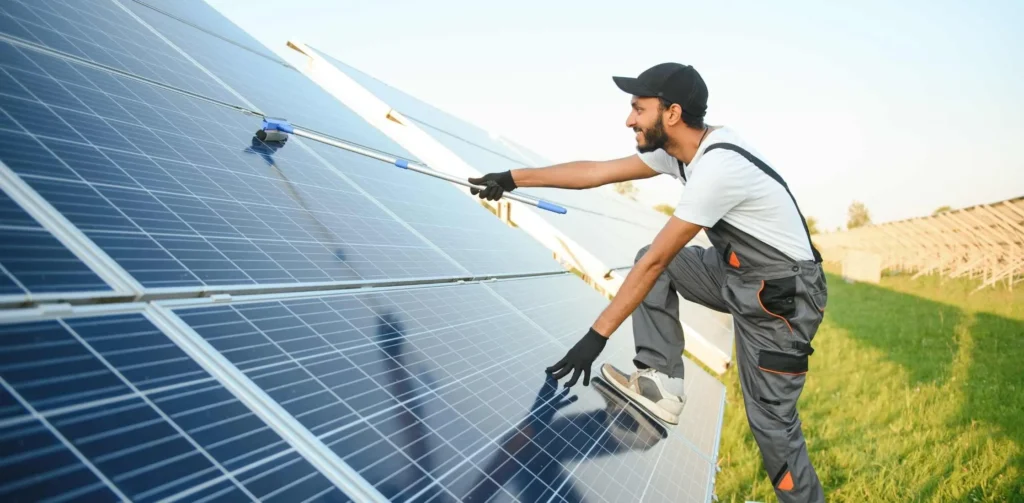
Solar O&M companies offer regular maintenance, monitoring, cleaning, repair, and performance optimization services to installed solar plants. With the solar capacity in India increasing rapidly, thousands of installations require professional maintenance to perform optimally and last longer.
Preventive maintenance, breakdown repairs, performance monitoring through IoT systems, cleaning schedules, and compliance reporting are all part of solar operations and maintenance services. This recurring-revenue model provides a stable income with comparatively lower capital requirements than installation businesses.
- Examples: Residential rooftop maintenance contract, commercial O&M service of plants, remote monitoring service, cleaning service, inverter services, trouble shooting and repair of inverters.
- Investment: The initial investment is 3-15 lakh in the form of service vehicles, testing equipment, cleaning instruments, monitoring software subscription, and salaries of skilled technicians.
- Profit Margin: The O&M contracts will yield 25-40% profits, where the annual maintenance contracts will produce consistent recurring revenue lines and customer retention.
- Needs: Electrical-skilled technicians, engineering certifications, service vans, measuring tools, insurance, and the ability to respond to emergencies.
- Best: Electrical service providers, and technicians who have experience in solar installation, or companies that want stable recurring revenue business models.
8. Solar EV Charging Station Business
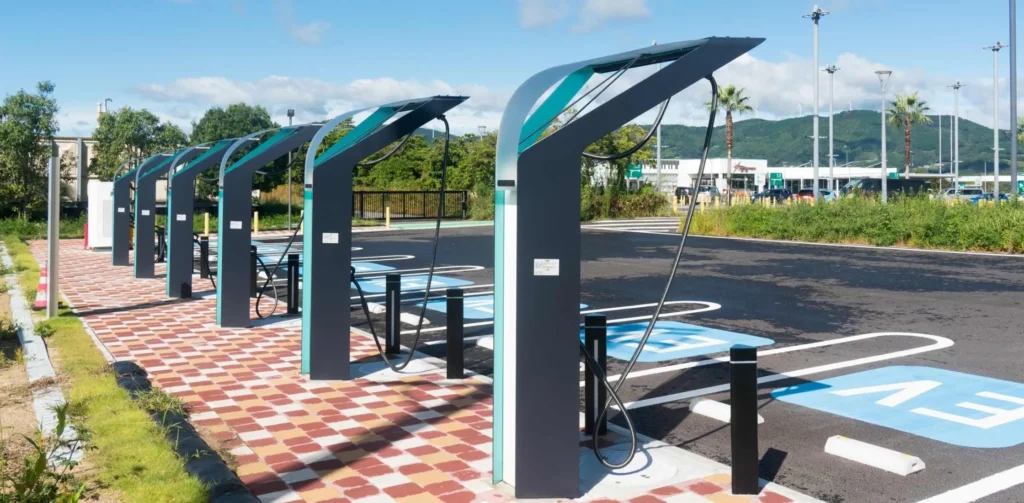
Solar-charging EV stations represent a convergence of two emerging sectors—renewable energy and electric mobility—providing sustainable charging infrastructure for electric vehicles. The business installs solar canopies or ground-mounted systems linked to EV chargers, which supply clean energy for vehicle charging and, potentially, feed surplus energy back to the grid.
Strategic locations such as highways, commercial complexes, parking lots, and residential communities ensure high utilization. Government subsidies for both solar and EV infrastructure further enhance the feasibility and profitability of solar-powered EV charging stations.
- Examples: Highway solar charging plazas, commercial building charging locations, residential society installations, fleet operator charging hubs, and public parking locations.
- Investment: The cost of setup is 15-60 lakhs with respect to the capacity including solar panels, EV chargers, grid, civil works and payment systems.
- Profit Margin: 15-25 percent returns are realized on revenue obtained through charging fees and sales of solar power with a payback period of 4-6 years.
- Prerequisites: Property lease or ownership, solar installation skills, EV charger skills, grid connection licenses, payment facilities, and DISCOM liaison.
- Best For:: Petrol pump owners, parking lots operators, and real estate developers, or those who are interested in the intersection of the solar and the EV market.
9. Utility-Scale Solar Power Plant Business
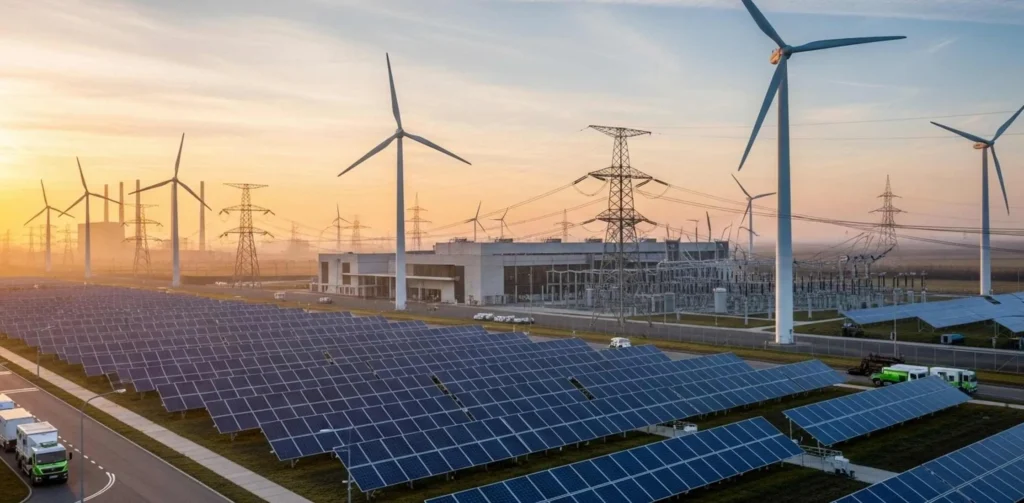
Utility-scale solar facilities are large ground-mounted installations (usually 5 MW or larger) that generate electricity to be sold to distribution companies or commercial customers through long-term power purchase agreements (PPAs). Among Solar Power Business Ideas, these large-scale projects require significant capital investment but offer predictable, consistent returns under 25-year PPAs with government utilities or corporate purchasers. Economies of scale, lower tariffs, and government incentives such as accelerated depreciation and renewable energy certificates further enhance overall profitability.
- Examples: Open solar plants which are open to industrial consumers, solar farms contracted by DISCOs, solar parks in special areas, captive power plants by corporations.
- Investment: The capital requirements will be between 3.5-4 crores per MW of land acquisition, equipment, EPC, grid connectivity and pre-operative costs.
- Profit Margin: The Equity IRR is usually 12-16% based on stable cash flows due to the PPA tariffs, debt servicing due to project revenues.
- Eligibility: Significant capital or debt funding, land that has high levels of solar irradiation, infrastructure of a grid connection, PPA, environmental approval, technical skills.
- Best For: The large investors, infrastructure funds, developers with the capability to finance their projects or consortiums in need of long-term renewable energy investments.
10. Solar Training & Skill Development Business
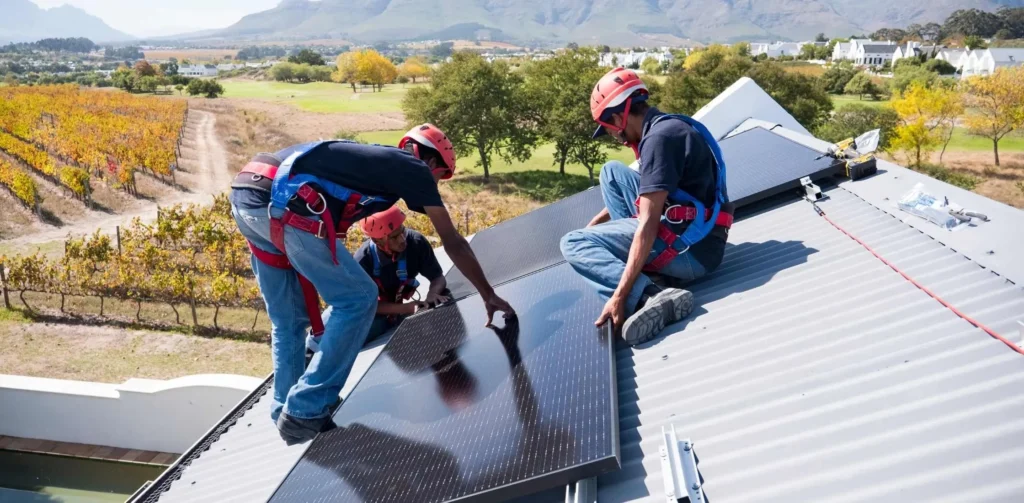
By providing technical training, certification, and practical programs, solar training businesses are addressing the significant shortage of skilled workforce in India’s rapidly growing solar industry. Among Solar Power Business Ideas, these ventures offer services such as installer training, design and engineering courses, O&M technician certification, sales and marketing programs, and entrepreneurship development.
Training institutes often collaborate with government programs like PMKVY, industry bodies, and solar companies to provide standardized certifications. The business model typically relies on course fees, corporate training contracts, and government-funded programs.
- Examples: Solar professional certification classes, photovoltaic system design course, technical diploma courses, entrepreneurial workshops, solar professional online learning sites.
- Investment: The cost of the training center includes the setting of the training center which takes 5-20 lakhs including the classroom space, demonstration equipment, training modules, certifications, faculty expenses, and marketing expenses.
- Profit Margin: The profit margins of training programs are 30-45 percent of course fees and supplementary revenues of corporate tie-ups, consultation, and placement.
- Their requirements include: Experienced faculty who are also industry trained, approved curriculum, practical training facility, industry certification such as NABCEP or NSDC, and placement networks.
- Best For: In educational entrepreneurs, professional experts in the solar business, training programs in technical institutions, which need to broaden their scope into renewable energy, or even those corporate training services.
Top 50 Solar Power Business Ideas (Detailed List for 2026)
| Sr No | Business Idea | Profit Potential | Investment Needed | Scope of Success | Time to Revenue |
|---|---|---|---|---|---|
| 1 | Residential Rooftop Solar Installation | Medium‑High (15–25%) | ₹20 L–₹60 L | Very strong urban & rural growth | 3–6 mo |
| 2 | Commercial Rooftop Installations | Medium‑High | ₹30 L–₹1Cr | High (business cost savings) | 3–9 mo |
| 3 | Installation + After‑Sales Maintenance | High (recurring) | ₹5 L–₹20 L | Excellent recurring revenue | 1–3 mo |
| 4 | Solar Monitoring & Performance Analytics | High | ₹10 L–₹30 L | Growing demand for IoT optimization | 4–8 mo |
| 5 | Solar Cleaning & O&M Services | Medium | ₹2 L–₹10 L | Consistent demand | 1–3 mo |
| 6 | Solar Energy Auditing | High | ₹1 L–₹5 L | High in commercial zones | 1–2 mo |
| 7 | Net‑Metering Advisory Service | Medium | ₹1 L–₹5 L | Helps customers optimize returns | 2–4 mo |
| 8 | Solar Rooftop Financing Brokerage | Very High | ₹10 L–₹30 L | Increasing rooftop financing needs | 3–6 mo |
| 9 | Solar Installation Partner Platform | High | ₹5 L–₹25 L | Network model expands fast | 4–8 mo |
| 10 | Solar Trade Lead Generation Service | Medium | ₹3 L–₹15 L | Scalable B2B opportunity | 3–6 mo |
| 11 | Solar EPC Turnkey Contractor | High (12–25%) | ₹50 L–₹5Cr+ | Very strong industrial demand | 6–12 mo |
| 12 | Solar Design & Engineering Consultancy | High | ₹5 L–₹25 L | Strategic edge in technical market | 3–6 mo |
| 13 | Solar Project Management Services | Medium‑High | ₹5 L–₹20 L | Required for large installs | 4–7 mo |
| 14 | Solar Quality Inspection & Certification | Medium | ₹2 L–₹10 L | Safety & compliance driven | 2–5 mo |
| 15 | EPC Sub‑contracting & Labour Services | Medium | ₹10 L–₹50 L | Works across multiple EPCs | 4–8 mo |
| 16 | Solar Tracker Installation Services | High | ₹10 L–₹40 L | Efficiency enhancement niche | 6–10 mo |
| 17 | Solar Engineering Software Tools | High | ₹10 L–₹1Cr | Tech‑driven scalable model | 6–12 mo |
| 18 | Solar Commissioning & Testing Services | Medium | ₹5 L–₹15 L | Mandatory before go‑live | 2–4 mo |
| 19 | Solar Safety Training for EPC Workers | Medium | ₹3 L–₹12 L | Industry compliance need | 3–6 mo |
| 20 | EPC Bid & Tender Support Services | Medium‑High | ₹5 L–₹20 L | Helps win government contracts | 4–9 mo |
| 21 | Solar Panel Dealership | Medium (10–25%) | ₹10 L–₹50 L | Steady demand from installers | 2–4 mo |
| 22 | Solar Inverter & Battery Distribution | Medium‑High | ₹20 L–₹80 L | High recurring upgrade demand | 3–5 mo |
| 23 | Solar Accessory Retail Store | Medium | ₹5 L–₹20 L | Multiple product lines | 2–3 mo |
| 24 | Solar Component Manufacturing | High | ₹50 L–₹20Cr | Long‑term scale opportunity | 12–24 mo |
| 25 | Mounting & Racking Production | High | ₹30 L–₹2Cr | Local supply niche | 8–16 mo |
| 26 | Solar Battery Refurbishment | High | ₹10 L–₹50 L | Circular economy growth | 6–12 mo |
| 27 | Solar Recycling & Waste Management | High | ₹50 L–₹1Cr | Regulatory support strengthening | 10–18 mo |
| 28 | Solar Gadget E‑Commerce Platform | Medium | ₹5 L–₹15 L | Consumer direct sales | 3–6 mo |
| 29 | B2B Solar Wholesale Marketplace | High | ₹20 L–₹60 L | Distributor network expansion | 4–8 mo |
| 30 | Solar Component Import/Export Business | Medium | ₹20 L–₹80 L | Tied to global supply chain | 5–9 mo |
| 31 | Utility‑Scale Solar Farm Developer | High (10–15% long term) | ₹5Cr+ | Very strong pipeline growth | 18–36 mo |
| 32 | Solar PPA Operator | High | ₹1Cr+ | Long‑term stable revenue | 12–24 mo |
| 33 | Solar EV Charging Station Network | High | ₹20 L–₹1Cr | EV adoption synergy | 6–12 mo |
| 34 | Solar Microgrid Solutions | High | ₹30 L–₹1Cr | Off‑grid & community energy | 12–18 mo |
| 35 | Floating Solar Deployment | High | ₹1Cr+ | Large water surface installations | 18–24 mo |
| 36 | Hybrid Solar + Battery Storage Projects | Very High | ₹1Cr+ | Peak shaving & grid support | 18–24 mo |
| 37 | Virtual Power Plant Aggregator | Very High | ₹50 L–₹2Cr | Distributed solar services | 12–18 mo |
| 38 | Solar Power Investment Fund | High | ₹5Cr+ | Pooled capital returns | 12–24 mo |
| 39 | Renewable Energy Certificate Trading | Medium‑High | ₹10 L–₹50 L | Market‑linked income | 3–6 mo |
| 40 | Carbon Credit Brokerage for Solar Projects | Medium | ₹5 L–₹20 L | Adds revenue on REC basis | 3–6 mo |
| 41 | Solar Training & Certification Institute | High | ₹10 L–₹40 L | Urgent industry skill gap | 3–6 mo |
| 42 | Solar Consultancy & Design Services | High | ₹1 L–₹5 L | Advises EPCs & end users | 2–4 mo |
| 43 | Solar Sales & Marketing Agency | Medium | ₹3 L–₹10 L | Helps vendors grow demand | 3–5 mo |
| 44 | Solar Tech Startup (AI/Monitoring) | Very High | ₹10 L–₹1Cr | Innovation leverage | 6–12 mo |
| 45 | Solar Education Content & Blogging | Medium | ₹0–₹5 L | Passive income stream | 1–3 mo |
| 46 | Solar NFT/Energy Data Platforms | High | ₹10 L–₹50 L | Future tech monetization | 6–12 mo |
| 47 | Solar Energy Research & IP Licensing | High | ₹20 L–₹1Cr | Tech commercialization | 12–24 mo |
| 48 | Solar Drone Survey & Inspection | Medium‑High | ₹10 L–₹30 L | Faster site assessments | 3–6 mo |
| 49 | Solar CRM & Lead Management SaaS | High | ₹15 L–₹50 L | Helps streamline sales | 4–9 mo |
| 50 | Solar Subscription Marketplace | High | ₹20 L–₹80 L | Recurring platform fees | 6–12 mo |
Business Type – Approximate Investment Range
- Micro Businesses (₹50,000-5 lakhs): Home based consultancy, online sales, small product dealerships, solar accessories, internet marketing services.
- Small (₹5- 20 lakhs): Solar panel dealership, small installation companies, training centers, O and M, franchising.
- Medium Scale (₹20 -1 crore): Full-fledged EPC companies, multi-location dealerships, manufacturing units, solar EV charging stations, regional distributorships
- Large Scale (₹1-₹10 crores): Utility-scale power generating plants (1-3 MW), large manufacturing plants, multi-state-wide networks of distribution, and multi-state integrated solar companies.
- Mega Projects (₹10 crores+): Utility-scale solar farms (5 MW+), solar parks, large scale manufacturing facilities, portfolio EPC.
What Is the Cost of a 1 Acre Solar Plant in India?
In India (about 500-600 kW), a one-acre solar plant would cost ₹2.5-3 crores all inclusive of land development, solar panels, inverters, mounting structures, electrical infrastructure and grid connection. The cost of land acquisition is an addition of 10-50 lakhs based on the location. Accessible cost of the complete project is 4-5 lakhs on average per kW of installed capacity. Effective investment can be lowered by 20-30 by the government providing incentives, accelerated depreciation and concessional financing which enhances the viability of the project and the payback period.
What Business Can I Start with ₹50,000 in Solar?
Start a home-based solar consulting firm with capital of 50000 which will provide online services like energy audit and system design. Open a solar product affiliate marketing website that will sell panels and accessories to earn commissions. Start small inventory solar lantern/lighting distribution in the rural regions. Provide freelance services with the purpose of solar project documentation to the installers. Offer online marketing services to the solar companies. Begin solar awareness programs in society at small fees without developing trust.
Step-by-Step: How to Start a Business in Solar Energy
- Market Research and Business Planning: Determine target customer groups, local competition, the demand trend, investment capacity to be available.
- Select Business Model: Choose either installation, dealership, manufacturing, or services based on skills, access to capital, market opportunities and extent of scalability.
- Get Certifications, and licences: Get required MNRE empanelment, trade licenses, GST registration, technical certifications, and vendor approvals, and insurance.
- Building Infrastructure: Find office building, acquire equipment and tools, recruit trained staff, develop vendor contacts, build working systems.
- Marketing & Customer Acquisition: Build online and physical presence, take part in tenders, create referral systems, take advantage of government programs, create awareness programs.
Government Policies, Subsidies & Schemes (2026)
- PM-KUSUM Scheme: It gives 30 percent subsidy to farmers who install solar pumps, grid-connected solar plants and to solarize their existing pumps.
- Rooftop Solar Subsidy: Central government will provide subsidy of 40 percent on up to 3-kW and 20 percent on 3-10 kW residential installations.
- Production Linked incentive (PLI): 24,000 crore program that rewards the manufacturing of solar in the country at the value chain and provides incentives that are performance based.
- Accelerated Depreciation: Commercial solar installations have 40 percent benefit of depreciation in the first year lowering effective tax burden and increasing returns.
- Net Metering Policies: Policies of the state of the ability to sell excess power to the grid, credit to the solar owners, increase returns.
Challenges & Risks in Solar Business
- Large start-up Capital Minimum: Large initial capital requirements and long payback periods that pose cash flow problems to business starters.
- Crucible Competition and Price Pressure: Saturated market with intense pricing, Chinese imports, established competitors forcing new entrants out of the market.
- Policy/Regulatory: There have been regular changes in subsidies, net metering regulations and tariff designs that have led to uncertainty in business planning.
- Technical Expertise Conditions: Qualified engineers, installers, designers are required whilst skilled workforce shortage remains a problem throughout the solar industry.
- Delay in payments and credit risk: Long payment turnover by customers, especially governmental projects, which affect the business sustainability and working capital.
Conclusion
The solar market in India has a wide range of entrepreneurial opportunities spanning the value chain and having different investment requirements and profitability characteristics. The solar power business ideas in India range from micro home-based businesses to utility-scale power plants with different capital profiles and competencies to fill the market. The subsidies, good policies, and high targets of renewables guaranteed by the government guarantee its continued growth and demand. To be successful one must be well informed of the market, technically skilled, capitalized well and have a customer centered execution in facing the obstacles of competition, regulatory and technological adjustments.
FAQs
1. Is it profitable to develop a solar panel business in India?
Yes, solar enterprises have 10-40 profit margins based on the model. With government support guaranteeing long term demand and market expansion, installation and EPC make 15-22% margins, dealerships make 12-25% margins and O&M services make 25-40% margins.
2. What is the cost associated with opening a solar panel dealership?
The project is expected to cost 5-20 lakhs to start up a solar panel dealership including inventory and purchase of the showroom, branding, working capital and initial marketing bottle neck. Successful operations require authorization of manufacturers and trained sales personnel.
3. What are the government subsidies on solar companies in 2026?
Government has rooftop solar subsidies (40% up to 3 kW), PM-KUSUM scheme incentives, PLI incentives to manufacture, accelerated depreciation and net metering incentives. There are state-specific plans that include more capital subsidies and concessions.
4. Would I be able to work at home to start a low investment solar business?
Brotherly, home-based solar consultancy, online sales of products, freelance placement of designs, online marketing and affiliate marketing only necessitate 20,000-2 lakhs. Such companies take advantage of an online mechanism, without physical facilities or warehouses.