

Libraries generate money and funding through a combination of government support, grants, donations, memberships, fees, fundraising, and income from services or facilities. Understanding how do libraries make money helps explain how public libraries often depend heavily on local government funding, while academic and private libraries may receive support from universities, institutions, foundations, and donors.
Some libraries also raise additional funds through used-book sales, facility rentals, cafés, bookstores, special events, and partnerships. The exact funding model varies according to the library’s type, location, ownership, and community.
Understanding these revenue sources helps explain how libraries pay for staff, books, digital resources, technology, buildings, programs, and other services while continuing to provide access to information.
Public Libraries vs Private/Academic Libraries: Funding Differs
Libraries use different funding models depending on their ownership, purpose, and the communities they serve. Public libraries are generally supported through government funding and may receive additional money from grants, donations, fundraising, and service-related activities.
Academic libraries, including those operated by universities and colleges, commonly receive funding from their parent institutions, government sources, grants, and research-related programs. Private or specialised libraries may depend more heavily on their owners, membership fees, donations, subscriptions, or institutional budgets.
| Funding Source | Public Libraries | Private/Academic Libraries |
| Government Funding | Often an important source of operating support | May receive government funding depending on institution and program |
| Institutional Funding | Usually limited compared with academic libraries | Universities and private organisations may provide dedicated budgets |
| Grants | May receive government, foundation, or community grants | Research, educational, and specialised grants can be significant |
| Donations | Individuals, businesses, and foundations may contribute | Alumni, foundations, corporations, and private donors may provide support |
| Membership Fees | Often free or low-cost for eligible residents | Academic or private libraries may charge certain users or organisations |
| Fundraising | Friends-of-the-library groups, book sales, and community events | Alumni campaigns, institutional fundraising, and special events |
| Facility Income | May rent meeting rooms or other spaces | Private or academic facilities may generate limited rental or service income |
| Primary Purpose | Public access, education, information, and community services | Academic research, teaching, specialised information, or institutional needs |
How Do Libraries Make Money? A List of Key Revenue Sources
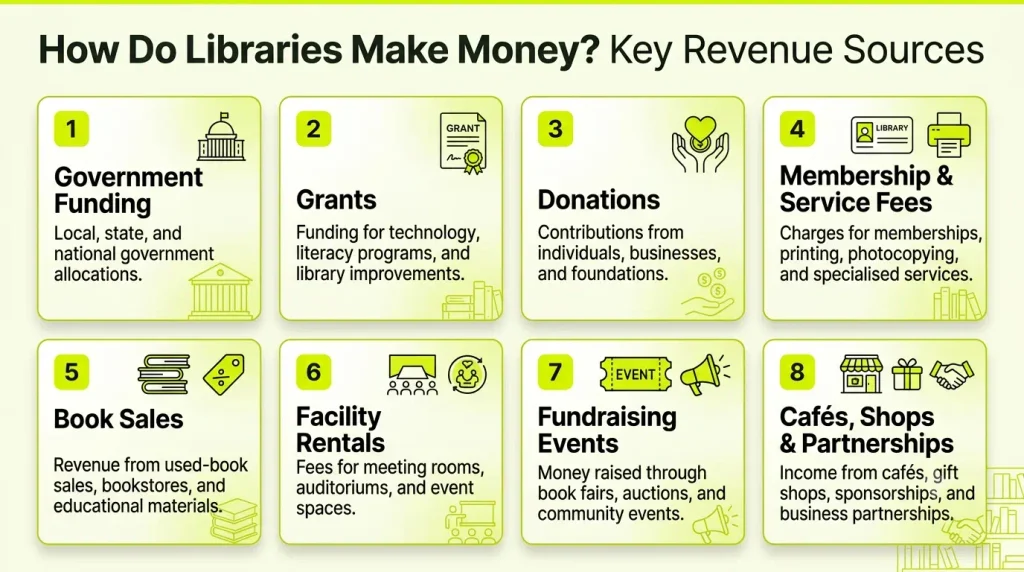
Libraries use several funding and revenue sources to maintain their collections, employ staff, operate buildings, provide technology, and deliver educational and community services to readers and visitors.
1. Government Funding
Public libraries commonly receive funding from local, state, or national governments. This support helps cover essential operating expenses and maintain public access to library services.
- Local Funding: Municipal or local government allocations may support salaries, utilities, maintenance, and library programs.
- State or National Funding: Government grants and allocations can provide additional financial support for specific programs or library development.
2. Grants
Libraries can apply for grants from government agencies, foundations, nonprofit organisations, and other institutions to finance specific projects or improvements.
- Technology Grants: Funding may help libraries purchase computers, software, internet equipment, and digital resources.
- Program Grants: Grants can support literacy programs, educational activities, community events, or specialised collections.
3. Donations
Individual supporters, businesses, foundations, and community organisations can contribute money or resources to help libraries maintain and expand their services.
- Individual Donations: Library users and community members may make one-time or recurring contributions.
- Corporate Donations: Companies may provide financial support, technology, books, or other resources through community initiatives.
4. Membership & Service Fees
Although many public libraries provide free basic access, some libraries charge fees for specific services, memberships, specialized resources, or facilities.
- Membership Fees: Private, specialized, or non-resident users may sometimes pay for library membership.
- Service Charges: Libraries may charge for printing, photocopying, specialised research services, equipment use, or other optional services.
5. Book Sales & Used-Book Sales
Libraries can raise additional money by selling donated, duplicate, withdrawn, or surplus books through bookstores, sales events, or online channels.
- Used-Book Sales: Friends-of-the-library groups often organise sales where visitors purchase books at discounted prices.
- Library Bookstores: Some larger libraries operate small retail spaces selling books, publications, merchandise, and educational materials.
6. Facility Rentals
Libraries with meeting rooms, auditoriums, classrooms, conference spaces, or event areas may generate revenue by renting these facilities to organisations or individuals.
- Meeting Rooms: Community groups and organisations may pay to use library rooms for meetings, workshops, or presentations.
- Event Spaces: Larger facilities may be rented for conferences, exhibitions, educational programs, or community events.
7. Fundraising Events
Libraries and supporting organisations may organise fundraising activities to generate additional money for collections, programs, technology, or building improvements.
- Community Events: Book fairs, auctions, dinners, lectures, and cultural events can raise funds.
- Friends of the Library: Support groups may organise campaigns and activities to collect money for library projects and services.
8. Cafés, Shops & Partnerships
Some libraries generate supplementary income through cafés, gift shops, vending services, partnerships, sponsorships, or other activities that complement their facilities.
- Cafés and Shops: Libraries with suitable spaces may operate or lease areas for cafés, bookstores, or gift shops.
- Partnerships: Businesses and organisations may sponsor programs, exhibitions, educational activities, or community initiatives in exchange for agreed benefits.
Suggested Read:
How Academic & Private Libraries Make Money
Academic and private libraries generally use different funding models from public libraries because they are often connected to universities, schools, businesses, research institutions, or private organisations.
Understanding how do libraries make money involves looking at their various income sources, including institutional budgets, subscriptions, memberships, grants, donations, research services, and facility-related activities. Rather than relying primarily on public funding, these libraries often receive financial support from the organisation that operates them.
- Institutional Funding: Universities, colleges, companies, and private organisations may allocate annual budgets to operate their libraries and purchase resources.
- Student & Membership Fees: Some academic or private libraries may charge membership, access, registration, or specialised service fees to eligible users.
- Research Services: Libraries may provide specialised research assistance, database access, document delivery, literature searches, or information services for fees.
- Grants: Academic libraries can receive research, education, technology, or development grants from governments, foundations, and other organisations.
- Donations & Endowments: Universities and private libraries may receive donations from alumni, individuals, companies, foundations, and other supporters.
- Subscriptions & Digital Resources: Libraries may provide access to specialised databases, journals, archives, and research materials through institutional subscriptions or paid services.
- Facility Rentals: Libraries with suitable meeting rooms, conference facilities, or study spaces may generate additional income through rentals.
- Partnerships & Sponsorships: Private organisations and businesses may sponsor exhibitions, educational programs, research initiatives, or library technology projects in exchange for agreed benefits.
Modern/Digital Revenue Streams Libraries Are Adopting
As libraries expand their digital services, some are developing additional revenue streams beyond traditional government funding, donations, and membership support. Digital resources, online programs, specialised services, partnerships, and technology-based offerings can provide supplementary income while expanding access to information. The exact options depend on the library’s ownership, policies, and legal structure.
- Digital Memberships: Some libraries may offer paid access to specialised digital collections, premium resources, or services for users outside their standard membership area.
- Online Courses: Libraries can organise virtual workshops, literacy classes, research sessions, technology training, and professional development programs that may involve registration fees.
- Digital Archives: Specialised libraries may provide paid access to digitised historical documents, photographs, manuscripts, newspapers, or research collections.
- Research Databases: Academic and specialized libraries can provide access to premium databases and information services through institutional subscriptions or specialised arrangements.
- Virtual Events: Libraries can organise online lectures, author sessions, conferences, and educational events, with some programs supported through registration or sponsorship.
- E-Book Services: Libraries may collaborate with publishers, institutions, or digital platforms to provide electronic books and other digital materials under specific licensing arrangements.
- Technology Services: Some libraries provide specialised access to equipment, recording studios, computers, software, 3D printers, or other technology resources, sometimes for fees.
- Corporate Partnerships: Libraries may work with businesses and technology companies to sponsor digital programs, educational initiatives, exhibitions, or technology upgrades.
- Online Fundraising: Digital donation pages, crowdfunding campaigns, email campaigns, and social media fundraising allow libraries to reach supporters beyond their local communities.
- Digital Content Sales: Some specialised libraries and archives may sell publications, research materials, reproductions, photographs, or licensed digital content through online platforms.
Why Library Funding Is Under Pressure
Library funding is under pressure because many libraries face rising operating costs while competing for limited public and institutional budgets. Staff salaries, building maintenance, utilities, technology, digital resources, security, and collection costs can increase over time, requiring larger financial allocations.
Public libraries may also depend heavily on government funding, making their budgets vulnerable to changing economic conditions, policy priorities, and local revenue levels. Academic libraries face additional pressure from the rising prices of scholarly journals, databases, e-books, and other research resources. At the same time, libraries are expected to expand digital services, provide community programs, maintain modern technology, and support changing user needs.
Economic downturns can further restrict available funding as governments and institutions review spending. Understanding How do libraries make money also involves examining how libraries seek grants, donations, partnerships, fundraising, and supplementary revenue sources to address funding gaps. However, these sources can vary significantly and may not fully replace the stable core funding needed for long-term operations and planning.
How Libraries Use Their Funding
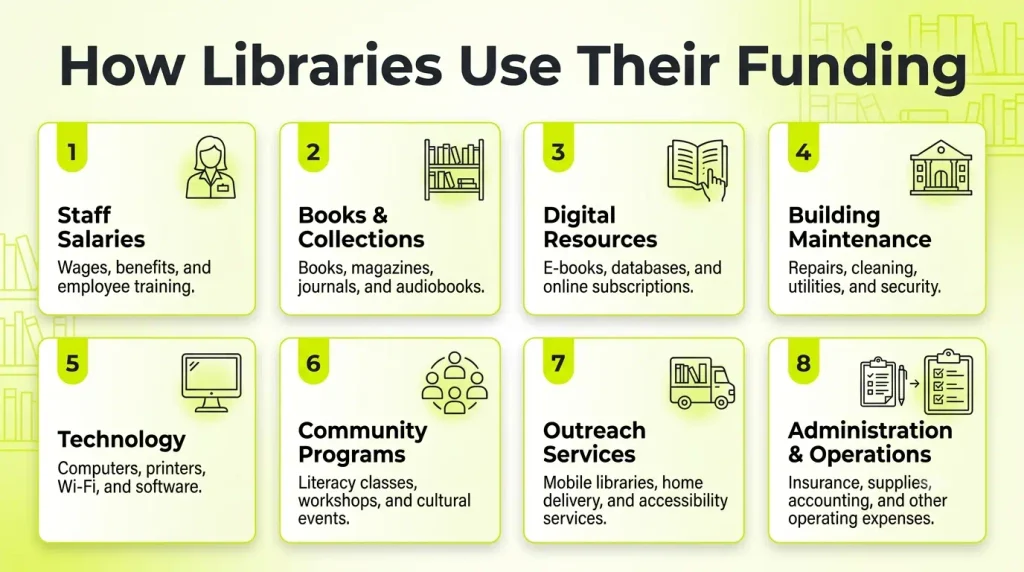
Libraries allocate funding across essential services, staff, collections, technology, facilities, community programs, and administrative needs to maintain accessible and useful resources.
- Staff Salaries: Funding covers salaries, benefits, training, and professional development for librarians, assistants, technicians, and administrative employees.
- Books & Collections: Libraries purchase books, newspapers, magazines, journals, audiobooks, and other materials based on community requirements.
- Digital Resources: Money supports e-books, databases, online subscriptions, digital archives, software, and electronic learning resources for users.
- Building Maintenance: Libraries spend on repairs, cleaning, utilities, security, accessibility improvements, furniture, and general facility maintenance.
- Technology: Funding purchases computers, printers, servers, Wi-Fi equipment, software, cybersecurity systems, and other essential technology infrastructure.
- Community Programs: Libraries finance literacy classes, workshops, children’s activities, cultural events, lectures, and educational community programs.
- Outreach Services: Funds support mobile libraries, home delivery, community partnerships, accessibility services, and programs reaching underserved populations.
- Administration & Operations: Libraries cover insurance, accounting, supplies, marketing, transportation, legal services, and other necessary operational expenses.
How You Can Support Your Local Library
Supporting your local library helps maintain books, digital resources, educational programs, community services, and welcoming spaces while strengthening access to information for everyone.
- Become a Member: Get a library membership and use its services regularly to demonstrate community demand and encourage continued funding.
- Donate Books: Give new or gently used books that match the library’s collection needs and stated donation guidelines.
- Make Donations: Contribute financially to library programs, technology, collections, accessibility improvements, or specific community initiatives when possible.
- Attend Events: Participate in workshops, reading programs, lectures, exhibitions, and community activities organised by your local library.
- Volunteer: Offer your time for shelving, events, literacy programs, community activities, or other approved library volunteer opportunities.
- Support Fundraisers: Purchase books during sales, attend fundraising events, or contribute to campaigns organised by library support groups.
- Spread Awareness: Encourage friends, family, schools, and community organisations to use library services and support its ongoing programs.
Conclusion
Libraries use different funding sources to support their operations and provide services to their communities. Understanding how do libraries make money involves looking at government funding, grants, donations, memberships, fundraising, partnerships, and service-related income. Some libraries also earn money through book sales, facility rentals, cafés, events, and other activities.
However, libraries generally focus on providing public, educational, and informational services rather than generating profits. Their financial needs include employee salaries, building maintenance, books, digital resources, technology, utilities, and community programs. A combination of reliable funding and supplementary income helps libraries maintain services and continue meeting the changing needs of their users.
FAQs
How do Libraries Make Money?
Libraries receive funding through government support, grants, donations, memberships, fundraising, partnerships, and income from certain services or facilities.
Do Public Libraries Make a Profit?
Public libraries generally operate as nonprofit or public-service organisations. Their primary purpose is providing information, education, and community services rather than generating profits.
How do Libraries Get Government Funding?
Public libraries may receive funding from municipal, state, or national governments. The amount and funding structure depend on the country’s laws and local government arrangements.
Can Libraries Make Money from Books and eEvents?
Yes. Some libraries generate additional revenue through used-book sales, bookstores, special events, workshops, facility rentals, cafés, and other permitted activities.
Do Libraries Receive Donations?
Yes. Libraries can receive donations from individuals, foundations, businesses, community organisations, and other supporters. Donations may help fund books, technology, programs, building improvements, or specific projects.