
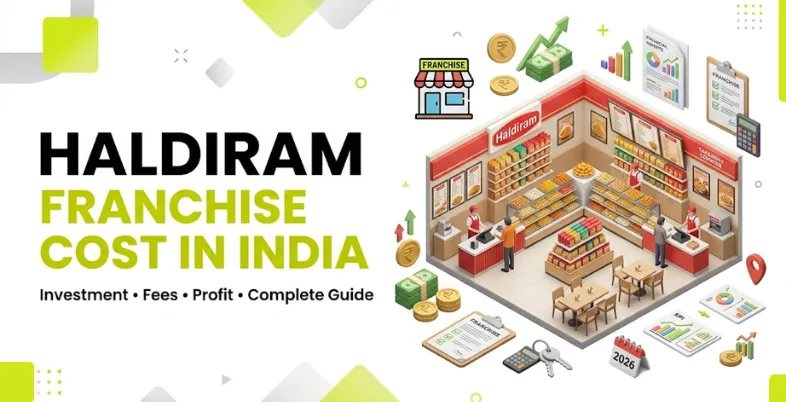
India’s food service industry continues to present attractive opportunities for entrepreneurs, driven by rising disposable incomes, rapid urbanization, and changing consumer dining habits. The Indian food service market is expected to increase at a compound annual growth rate (CAGR) of about 10–11% from its estimated $90 billion in 2026 to $144–152 billion by 2031. Concurrently, the market for packaged snacks is continuously growing due to rising demand for branded, handy food items in both metro and Tier-2 and Tier-3 areas. Due to these developments, investors looking for a company with demonstrated demand and operational assistance now favor well-established food franchises.
As a result, many aspiring entrepreneurs are researching the Haldiram franchise cost in India to understand the investment required, expected returns, and business potential. Investing in a recognized brand can reduce the challenges of building customer trust from scratch while providing access to established operating systems and supply chains. This guide covers the latest 2026 investment estimates, franchise models, profitability, eligibility criteria, application process, and other essential details to help you evaluate whether this opportunity aligns with your business goals.
What Is Haldiram’s? (Brand Overview)
Haldiram’s is one of India’s most recognized food and snack brands, with a legacy dating back to 1937, when Ganga Bishan Agarwal, popularly known as Haldiram Ji, started a small bhujia shop in Bikaner, Rajasthan. Over the decades, the brand has evolved from a regional sweets and namkeen business into a global food company known for its wide range of traditional Indian snacks, sweets, ready-to-eat meals, frozen foods, beverages, and restaurant offerings.
Today, Haldiram’s offers more than 400 products and has expanded its presence to over 80 countries, serving millions of customers through retail stores, restaurants, supermarkets, and online platforms. The company also commands an estimated 40% share of India’s organized snacks market, reflecting its strong brand recognition and customer loyalty. To support its large-scale operations, Haldiram operates major manufacturing facilities in Delhi, Nagpur, and Kolkata, ensuring consistent product quality and nationwide distribution.
In 2025, Haldiram received significant global investor confidence when Temasek, Singapore’s sovereign wealth fund, acquired an approximately 10% stake in the company for around $1 billion, valuing the business at nearly $10 billion. This milestone further strengthened Haldiram’s position as one of India’s leading food brands and highlighted its long-term growth potential.
For prospective franchise investors, Haldiram’s established reputation, diversified product portfolio, and decades of consumer trust provide a solid foundation for building a food business with the support of a well-known and respected brand.
Why Invest in a Haldiram Franchise?
Investing in a franchise is often less risky than starting an independent business, especially when the brand already has a strong market presence. Haldiram has spent decades building customer trust through its consistent product quality, diverse menu, and extensive retail and restaurant network. This established reputation helps franchise owners attract customers more quickly without spending heavily on brand awareness.
Another key advantage is the comprehensive support offered to franchise partners. From store planning and staff training to supply chain management and operational guidance, Haldiram provides a structured business model that helps maintain quality and consistency across outlets. This support can make day-to-day operations more efficient, particularly for first-time business owners.
The brand also offers multiple franchise formats, including kiosks, quick service restaurants (QSRs), and casual dining outlets. This allows entrepreneurs to choose a model that matches their investment capacity, target market, and business objectives. In addition, Haldiram’s wide product portfolio—including sweets, namkeen, meals, beverages, and packaged foods—creates multiple revenue opportunities throughout the year, with increased demand during festivals and special occasions.
For entrepreneurs researching the Haldiram franchise cost in India, these factors make the brand a strong option for building a business backed by an established name and proven operating system.
Haldiram Franchise Models Available
Haldiram offers multiple franchise formats to suit different investment budgets, business goals, and location types. Whether you’re looking to start with a compact outlet or establish a full-scale restaurant, the brand provides options designed for varying levels of capital and operational involvement. Before evaluating the Haldiram franchise cost in India, it’s important to understand the available franchise models and choose one that aligns with your investment capacity and target market.
Kiosk Model
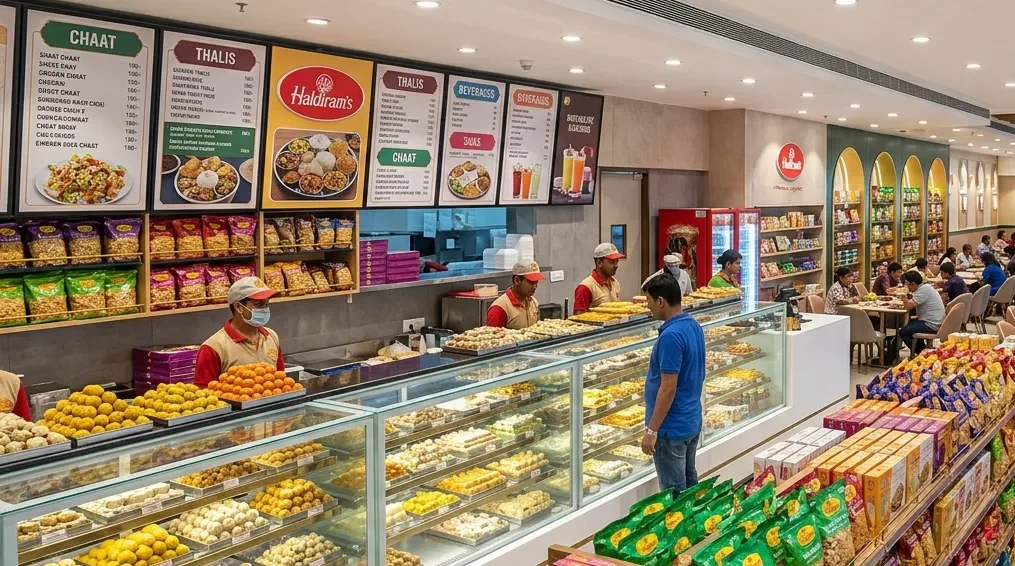
The kiosk model is the most affordable option and is ideal for first-time franchise investors. These outlets generally require 150–200 sq. ft. of space and are commonly located in shopping malls, railway stations, airports, metro stations, and other high-footfall areas. The estimated investment ranges from ₹30 lakh to ₹50 lakh, depending on the location and setup. Since kiosks focus on takeaway snacks, beverages, and quick purchases, they have lower operating costs and can typically achieve break-even within 12–18 months if situated in a prime location.
Quick Service Restaurant (QSR) Model
The QSR model is designed for customers seeking fast service and a focused menu of Haldiram’s popular products. These outlets usually require 1,000–2,000 sq. ft. of space and involve an estimated investment of ₹2 crore to ₹4 crore. QSRs perform well in malls, commercial complexes, business districts, and transit hubs where customer footfall is consistently high.
Casual Dining Restaurant Model
The casual dining model offers the complete Haldiram experience with an extensive menu that includes sweets, namkeen, North Indian meals, South Indian dishes, snacks, beverages, and desserts. These outlets typically require 4,000–5,000 sq. ft. of space and an estimated investment of ₹3 crore to ₹6 crore. Best suited for premium city locations, shopping malls, and highways, this model has the highest revenue potential but also requires greater operational management and capital investment.
Haldiram Franchise Cost Breakdown (Detailed Investment Table)
The Haldiram franchise cost in India varies depending on the franchise model, outlet size, city, and location. While kiosks require a relatively lower investment, QSR and casual dining restaurants involve significantly higher setup and operational costs. The table below provides estimated investment ranges based on industry sources.
| Expense Head | Kiosk Model | QSR Model | Casual Dining Model |
|---|---|---|---|
| Franchise Fee | ₹5–10 lakh | ₹20–40 lakh | ₹30–50 lakh |
| Interior Setup | ₹8–12 lakh | ₹40–80 lakh | ₹70 lakh–₹1.5 crore |
| Kitchen Equipment | ₹5–10 lakh | ₹30–60 lakh | ₹50 lakh–₹1 crore |
| Initial Inventory | ₹2–5 lakh | ₹10–20 lakh | ₹15–30 lakh |
| Working Capital | ₹5–8 lakh | ₹25–50 lakh | ₹40–80 lakh |
| Licenses & Legalities | ₹1–2 lakh | ₹2–5 lakh | ₹3–6 lakh |
| Marketing & Branding | ₹2–3 lakh | ₹5–10 lakh | ₹10–20 lakh |
| Estimated Total Investment | ₹30–50 lakh | ₹2–4 crore | ₹3–6 crore |
Space and Location Requirements
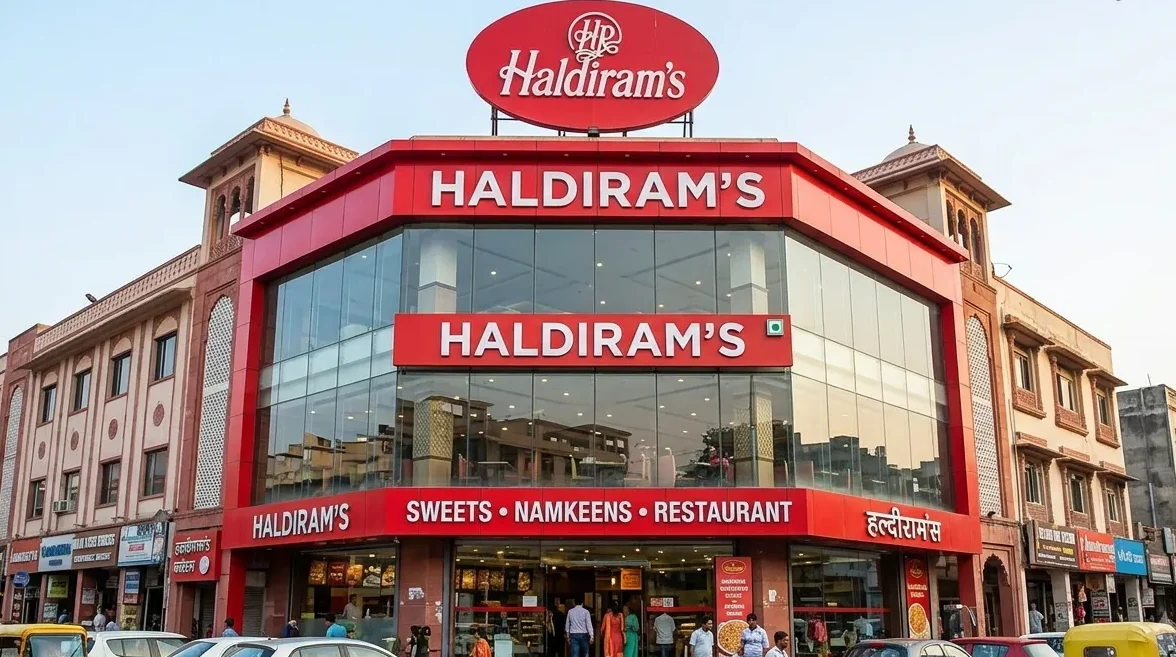
Selecting the right property is one of the most important factors for the success of a Haldiram outlet. While the Haldiram franchise cost in India depends on the franchise model, the location and available space also play a major role in the approval process and long-term profitability. Haldiram generally prefers outlets with high visibility, easy accessibility, and strong daily footfall to maximize customer reach.
The required space varies depending on the franchise format:
| Franchise Model | Space Requirement | Ideal Locations |
|---|---|---|
| Kiosk | 150–200 sq. ft. | Shopping malls, metro stations, airports, railway stations |
| Quick Service Restaurant (QSR) | 1,000–2,000 sq. ft. | Commercial complexes, malls, business districts, transit hubs |
| Casual Dining Restaurant | 4,000–5,000 sq. ft. | Premium city locations, highways, shopping malls, busy markets |
Haldiram typically prefers ground-floor properties with good frontage, clear visibility, and convenient customer access. Locations with consistent pedestrian and vehicle traffic, adequate parking, and strong surrounding commercial activity are generally more suitable for a franchise outlet.
In recent years, the brand has also expanded its presence in Tier-2 and Tier-3 cities, where growing consumer demand and comparatively lower real estate costs create attractive opportunities for franchise investors. Entrepreneurs who secure prime locations in these emerging markets may benefit from lower setup costs while establishing their business before competition increases.
Royalty Fees and Ongoing Costs
Understanding recurring expenses is just as important as knowing the Haldiram franchise cost in India. After opening the outlet, franchise owners must manage ongoing operational costs that directly impact profitability and return on investment.
Haldiram generally charges a royalty fee as a percentage of monthly sales, which typically ranges from 2.5% to 8%, depending on the franchise model, outlet size, and the terms of the franchise agreement. Since the company does not publicly disclose a fixed royalty structure, the exact percentage is finalized during the approval process.
Apart from royalty, franchise owners should budget for several monthly operating expenses. These include commercial rent, employee salaries, raw material purchases from approved Haldiram suppliers, packaging costs, electricity and water bills, equipment maintenance, and other day-to-day operational expenses. Proper financial planning for these recurring costs is essential to maintain healthy profit margins.
Estimated Monthly Operating Expenses for a QSR
| Expense | Estimated Monthly Cost |
|---|---|
| Commercial Rent | ₹1.5–4 lakh |
| Staff Salaries | ₹2–5 lakh |
| Raw Material & Inventory | ₹4–10 lakh |
| Utilities (Electricity & Water) | ₹50,000–₹1.5 lakh |
| Packaging & Consumables | ₹50,000–₹1 lakh |
| Maintenance & Miscellaneous | ₹50,000–₹1 lakh |
| Royalty Fee | 2.5%–8% of monthly sales |
These figures are indicative and can vary based on the outlet’s size, city, customer footfall, and overall sales volume. Understanding these ongoing costs helps investors estimate operating margins and evaluate the long-term financial viability of the franchise.
Haldiram Franchise Profit, Margin, and ROI
The earning potential of a Haldiram outlet depends on several factors, including the franchise model, location, customer footfall, operating efficiency, and overall business management. While actual profits vary from one outlet to another, industry estimates suggest that net profit margins typically range between 14% and 25% of gross sales. Kiosk outlets often achieve higher margins than larger restaurant formats because they have lower rental, staffing, and operational expenses.
Well-established Haldiram outlets in metro cities and high-footfall locations such as malls, airports, railway stations, and commercial hubs can generate monthly revenue ranging from ₹10 lakh to ₹50 lakh or more, depending on the outlet size and product mix. Sales generally increase during festive seasons like Diwali, Holi, Raksha Bandhan, and other celebrations, when demand for sweets, snacks, and gift packs rises significantly.
Estimated Monthly Income vs. Expenses (QSR Example)
| Particular | Estimated Amount |
|---|---|
| Monthly Revenue | ₹25 lakh |
| Raw Material & Inventory | ₹8 lakh |
| Staff Salaries | ₹3 lakh |
| Rent | ₹2 lakh |
| Utilities & Maintenance | ₹1 lakh |
| Royalty & Other Operating Costs | ₹2 lakh |
| Estimated Net Profit | ₹4–6 lakh |
For most QSR outlets, the investment can typically be recovered within 12–18 months, provided the outlet operates in a prime location with steady customer traffic. Larger casual dining restaurants generally require a longer recovery period of around 2–4 years due to their higher initial investment and operating costs.
Although the Haldiram franchise in India has a relatively high cost compared to some food franchises, the brand’s established customer base, diverse product range, and strong market presence offer the potential for sustainable long-term returns. Actual profitability will depend on factors such as location, operating costs, pricing strategy, and overall business performance.
Eligibility and Requirements to Apply
Before applying, it’s important to understand the basic eligibility criteria set by the company. While the exact requirements may vary depending on the franchise model and location, Haldiram generally evaluates applicants based on their financial capability, business potential, and the suitability of the proposed outlet location.
- Minimum Investment Capacity: Applicants should have sufficient funds to meet the estimated Haldiram franchise cost in India, which varies based on the chosen franchise model and location.
- No Prior Food Industry Experience Required: Previous experience in the food and beverage industry is not mandatory. Haldiram provides training and operational guidance to help franchise partners manage their outlets effectively.
- Business and Management Skills: While experience is not essential, applicants with good business acumen, leadership skills, and knowledge of the local market are generally preferred.
- Suitable Commercial Location: Having access to a prime commercial property with high customer footfall is a major advantage. Haldiram carefully evaluates the proposed location before approving a franchise.
- Financial Stability: The company prefers financially stable applicants who can comfortably manage both the initial investment and ongoing operational expenses.
- Commitment to Brand Standards: Franchise partners must be willing to follow Haldiram’s operating procedures, quality standards, hygiene protocols, and customer service guidelines to maintain consistency across all outlets.
- Successful Screening and Approval: Every application goes through a detailed evaluation process, including document verification, financial assessment, and location review, before the franchise is approved.
Documents Required for Haldiram Franchise
Applicants must submit the necessary documents during the franchise application and verification process. These documents help Haldiram assess the applicant’s identity, financial capability, and business readiness.
- Identity Proof: Aadhaar Card, PAN Card, Passport, or Voter ID for identity verification.
- Address Proof: Aadhaar Card, Passport, Driving License, Utility Bill, or any other valid address proof.
- Business Registration Documents: Company registration certificate, partnership deed, LLP registration, or proprietorship documents (if applicable).
- FSSAI License: A valid Food Safety and Standards Authority of India (FSSAI) license for operating a food business.
- GST Registration Certificate: GST registration is required to comply with tax regulations for commercial operations.
- Property Documents: Property ownership documents or a lease/rental agreement along with a No Objection Certificate (NOC) from the landlord, if the premises are rented.
- Financial Documents: Recent bank statements, income tax returns (if applicable), and other financial records to demonstrate the ability to meet the Haldiram franchise cost and manage business operations.
- Passport-Size Photographs: Recent passport-size photographs of the applicant and business partners (if applicable).
How to Apply for Haldiram Franchise Step by Step
Applying for a Haldiram franchise involves multiple stages, from selecting the right business model to setting up the outlet after approval. Following the correct process and preparing the required documents in advance can help make the application smoother.
Step 1 – Choose Your Franchise Model
Begin by selecting the franchise model that best suits your investment budget and business goals. Haldiram offers different formats, such as kiosks, quick service restaurants (QSRs), and casual dining outlets, each with its own space and investment requirements.
Step 2 – Select and Evaluate Your Location
Identify a commercial property that meets Haldiram’s location preferences. The company generally looks for ground-floor spaces with high visibility, easy accessibility, and strong customer footfall in areas such as malls, airports, railway stations, highways, or busy commercial markets.
Step 3 – Prepare All Required Documents
Gather all the necessary documents before submitting your application. These typically include identity proof, business registration documents, GST registration, FSSAI license, property documents, financial statements, and passport-size photographs.
Step 4 – Submit the Application Online
Visit the official Haldiram website or the franchise portal and complete the franchise inquiry or application form. Provide accurate personal, financial, and location details to help the company evaluate your application.
Step 5 – Wait for Haldiram’s Response and Initial Screening
After receiving your application, Haldiram reviews your financial profile, business background, and proposed outlet location. If your application meets the company’s initial requirements, you may be contacted for the next stage of the selection process.
Step 6 – Attend the Meeting with the Franchise Development Team
Shortlisted applicants are invited to discuss the franchise opportunity with Haldiram’s franchise development team. During this meeting, the company may explain investment requirements, operational guidelines, business expectations, and answer any questions related to the franchise.
Step 7 – Sign the Franchise Agreement
Once your application and location are approved, both parties finalize the terms and conditions of the partnership. Carefully review the franchise agreement, including investment details, royalty fees, operational responsibilities, and contract duration, before signing.
Step 8 – Complete Training and Set Up the Outlet
After signing the agreement, Haldiram provides training and guidance on store operations, food quality, customer service, and business management. The outlet is then prepared according to the brand’s standards, after which the company conducts final inspections before approving the official launch.
Suggested read:
- Tea Time Franchise Cost in India
- Burger King Franchise Cost in India
- Panda Express Franchise Cost
- Dutch Bros Franchise Cost
Licenses and Legal Registrations Required
Before launching a Haldiram outlet, franchise partners must obtain the necessary licenses and registrations to comply with Indian food safety and business regulations. The exact requirements may vary depending on the state and local municipal authority, but the following are commonly required.
- FSSAI License: Issued by the Food Safety and Standards Authority of India (FSSAI), this license is mandatory for all food businesses. It ensures that the outlet complies with food safety and hygiene standards.
- Shop and Establishment Act Registration: This registration is required to legally operate a commercial establishment. It regulates working hours, employee conditions, and other business-related compliance requirements under state laws.
- GST Registration: A Goods and Services Tax (GST) registration is necessary for collecting and remitting GST on taxable goods and services. It also enables the business to claim eligible input tax credits.
- Trade License: Issued by the local municipal authority, a trade license grants permission to conduct commercial activities within a specific jurisdiction and confirms compliance with local regulations.
- Haldiram Franchise Agreement: After your application is approved, you must sign the official franchise agreement with Haldiram. This legal document outlines the rights and responsibilities of both parties, including franchise terms, operational standards, royalty fees, branding guidelines, and other contractual obligations.
Haldiram Franchise vs Competitors: Is It Worth It?
If you’re planning to invest in a food franchise, it’s worth comparing Haldiram with other established brands before making a decision. While brands like Bikanervala, Bikano, and regional sweet shops have their own strengths, they differ in terms of investment, business model, and franchise support.
| Parameter | Haldiram | Bikanervala | Bikano | Local Sweet Shops |
|---|---|---|---|---|
| Brand Recognition | Excellent nationwide and global presence | Strong presence in North India | Well-known packaged snack brand | Limited to local markets |
| Estimated Investment | ₹30 lakh–₹6 crore | ₹1–5 crore* | Varies by opportunity* | Generally lower |
| Franchise Support | Training, supply chain, quality control, operations | Training and operational support | Limited public franchise information | Depends on individual business |
| Business Model | Kiosk, QSR, Casual Dining, Retail | Restaurant and Sweet Shop | Primarily packaged foods | Sweet shop or restaurant |
| Estimated ROI | Around 1–4 years | Around 2–4 years* | Varies | Depends on location and brand |
Haldiram stands out because it combines retail sales of packaged snacks and sweets with dine-in restaurant services, allowing franchise owners to generate revenue from multiple customer segments. In addition, the company’s 2025 investment from Temasek, which valued Haldiram at approximately $10 billion, reflects strong institutional confidence in the brand’s long-term growth. Combined with decades of consumer trust, an extensive product portfolio, and structured franchise support, Haldiram remains one of the strongest food franchise opportunities for entrepreneurs seeking a well-established and scalable business model.
Conclusion
Investing in a Haldiram franchise can be a rewarding opportunity for entrepreneurs looking to enter India’s growing food and beverage industry with an established brand. From affordable kiosk outlets to full-scale casual dining restaurants, Haldiram offers multiple franchise models that cater to different investment budgets and business goals. Combined with its strong brand recognition, diverse product portfolio, structured franchise support, and loyal customer base, the company provides a solid foundation for long-term business growth.
The Haldiram franchise cost in India varies depending on the chosen business model, location, and outlet size, so it’s important to evaluate your budget, financial capacity, and target market before applying. Conducting proper research and selecting a prime commercial location can significantly improve your chances of building a profitable franchise.
FAQs
1. How Much Does a Haldiram Franchise Cost in India?
The Haldiram franchise cost in India typically ranges from ₹30 lakh to ₹6 crore, depending on the franchise model, outlet size, location, and setup requirements. Actual costs may vary based on the final agreement with the company.
2. What Is the Minimum Investment for a Haldiram Kiosk?
A Haldiram kiosk generally requires an estimated investment of ₹30 lakh to ₹50 lakh. The final investment depends on factors such as location, interior setup, equipment, and other operational expenses.
3. What Is the Royalty Fee for a Haldiram Franchise?
Haldiram generally charges a royalty fee ranging from 2.5% to 8% of monthly sales, depending on the franchise model and the terms of the franchise agreement.
4. How Much Profit Can I Earn From a Haldiram Franchise Per Month?
Profit depends on the outlet’s location, sales volume, and operating costs. Industry estimates suggest that well-managed outlets can earn net profit margins of around 14% to 25%, while monthly profits vary based on the franchise format and revenue generated.
5. How Long Does It Take to Open a Haldiram Outlet After Signing the Agreement?
The complete setup process, including store construction, staff training, equipment installation, and final approvals, generally takes 3 to 6 months, although timelines may vary depending on the location and project requirements.
6. Is Prior Food Industry Experience Mandatory?
No. Prior experience in the food and beverage industry is not mandatory. Haldiram provides franchise partners with training and operational support to help them manage the business successfully.