

Opening a restaurant backed by a well-known brand can be an attractive opportunity for entrepreneurs seeking long-term growth in the fast-food industry. With its popular American Chinese cuisine, strong customer loyalty, and thousands of locations across the United States and international markets, Panda Express continues to be one of the most recognized names in the quick-service restaurant (QSR) sector. As interest in the brand grows, many aspiring business owners want to understand the Panda Express franchise cost, eligibility requirements, and whether the company offers traditional franchise opportunities.
Unlike many global restaurant chains, Panda Express primarily operates company-owned locations and follows a unique licensing model rather than a conventional franchise system. This often creates confusion for investors who are looking to open their own restaurant under the brand. Understanding how the licensing process works, the estimated investment required, ongoing fees, financial requirements, and potential returns is essential before making any business decision.
In this comprehensive 2026 guide, you’ll learn about Panda Express’s business model, licensing costs, financial expectations, revenue potential, application process, and the best franchise alternatives if you’re searching for similar investment opportunities.
What Is Panda Express?
Panda Express is one of the largest American Chinese fast-food restaurant chains in the world. Founded in 1983 by Andrew Cherng and Peggy Cherng, the brand is owned and operated by Panda Restaurant Group, a privately held company headquartered in Rosemead, California. The restaurant was created to bring American-style Chinese cuisine to a wider audience through quick-service dining, offering freshly prepared meals with consistent quality and convenience.
As of 2026, Panda Express operates more than 2,600 locations across the United States and several international markets. While most restaurants are company-owned, the brand also operates through a limited licensing model in select non-traditional venues such as airports, universities, military bases, hospitals, casinos, and entertainment centers.
The menu features popular dishes like The Original Orange Chicken®, Beijing Beef, Kung Pao Chicken, Honey Walnut Shrimp, and a variety of rice and noodle entrees. Its focus on bold flavors, fresh ingredients, and fast service has helped Panda Express become a leading brand in the quick-service restaurant (QSR) industry and a recognizable name among consumers seeking American Chinese cuisine.
Is Panda Express Actually a Franchise?
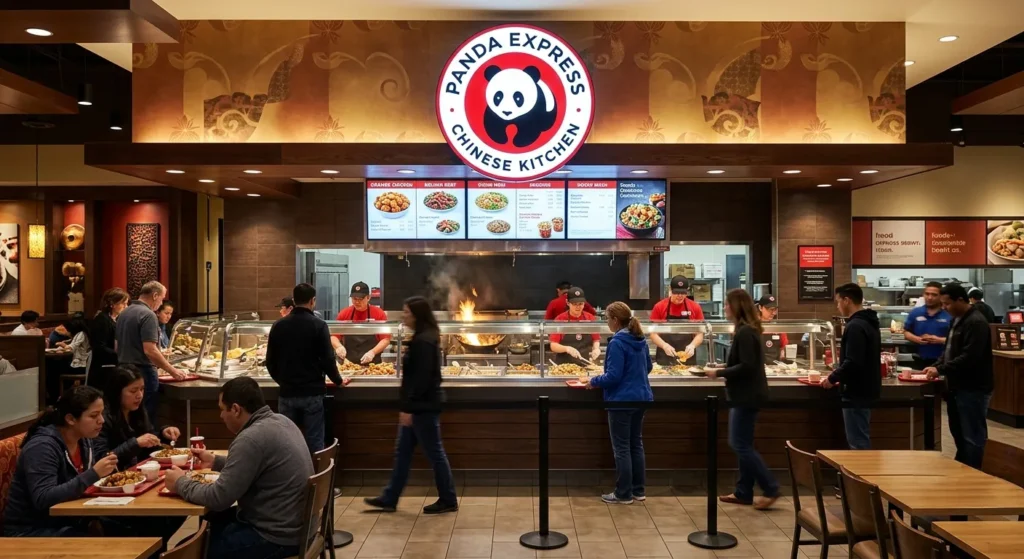
The short answer is no. Although many people search for a Panda Express franchise, the company does not offer a traditional franchise program to the general public. Instead, Panda Express primarily operates as a corporate-owned restaurant chain, with more than 93% of its locations owned and managed by Panda Restaurant Group. This business model allows the company to maintain consistent food quality, customer service, and operational standards across its restaurants.
Unlike brands such as Subway or Burger King, where individual entrepreneurs can purchase franchise rights and independently operate a restaurant, Panda Express has chosen to retain direct control over the vast majority of its locations. As a result, most investors cannot simply apply to open a Panda Express restaurant in a shopping center or standalone location.
In limited cases, Panda Express expands through licensing agreements rather than traditional franchising. These opportunities are typically available only for operators managing high-traffic, non-traditional venues such as airports, universities, military bases, hospitals, casinos, and sports arenas. The licensing model enables Panda Express to grow in specialized locations while maintaining strict operational oversight.
Understanding the difference between a franchise and a licensing agreement is essential before considering this business opportunity. The next section explains how these two models work and who is actually eligible to open a Panda Express location.
Franchise vs. Licensing Model: What Is the Difference?
Although the terms franchise and licensing are often used interchangeably, they represent two different business models.
In a traditional franchise, an individual entrepreneur purchases the right to operate a restaurant under an established brand. The franchisee pays an initial franchise fee, ongoing royalties, and marketing fees while following the company’s operating standards. Popular brands like Subway, McDonald’s, and Burger King use this model, allowing qualified individuals to own and manage their own locations.
A licensing agreement, on the other hand, is typically designed for organizations that already operate a suitable venue. Instead of selling franchise rights to individual investors, the brand authorizes an institutional operator—such as an airport concessionaire, university dining services provider, hospital, military base, casino, or sports stadium operator—to offer its products within that existing location. The brand maintains greater control over operations, branding, and quality standards than in a traditional franchise system.
Panda Express follows the licensing model rather than a public franchise program. This means an individual entrepreneur cannot simply apply to open a standalone Panda Express restaurant in the same way they could with many other quick-service restaurant brands. Unless you already manage or control an eligible non-traditional venue, opening a Panda Express location is generally not an option through a standard franchise application process.
Who Can Open a Panda Express Location?
Panda Express does not accept applications from individual entrepreneurs looking to open a traditional standalone restaurant. Instead, licensing opportunities are generally available only to institutional foodservice operators that already manage or control high-traffic, non-traditional venues. These organizations must have the necessary foodservice infrastructure, operational experience, and the ability to meet Panda Express’s brand standards.
Eligible operators typically include those that own, lease, or manage locations where there is a consistent flow of customers and an established dining environment.
Common venue types include:
- Airports and airport terminals
- University and college campuses
- Military bases
- Hospitals and healthcare facilities
- Casinos and gaming resorts
- Sports stadiums and entertainment arenas
- Travel plazas and transportation hubs
- Corporate campuses and large office complexes
Because Panda Express follows a licensing model, simply having the required investment is not enough. Applicants must also control a qualifying venue and demonstrate the operational capability to manage a foodservice business that meets the company’s quality and service expectations.
Panda Express Franchise Cost Breakdown 2026
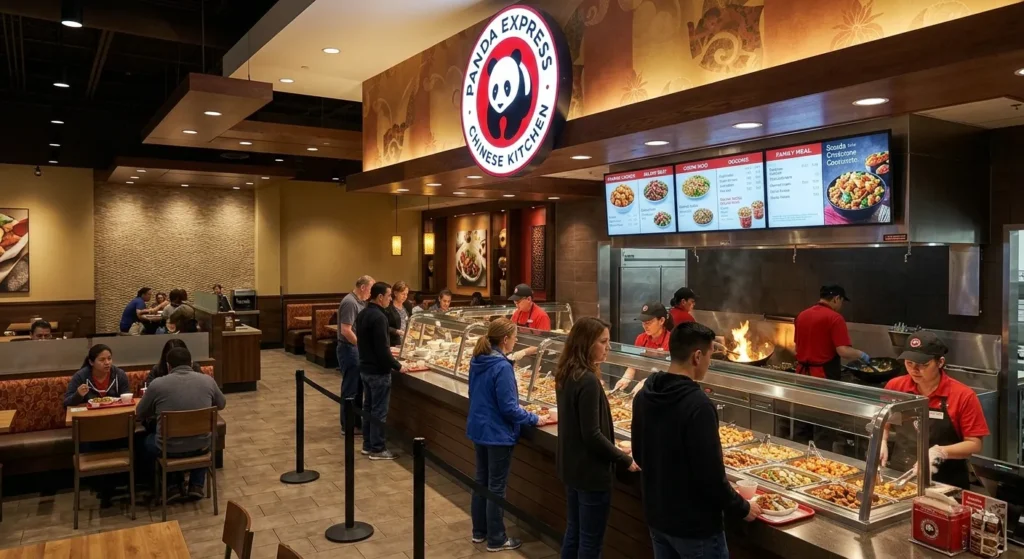
Although Panda Express primarily operates through a licensing model rather than traditional franchising, understanding the estimated investment is important for eligible operators. Based on recent Franchise Disclosure Document (FDD) information, the total investment can range from $426,700 to $2,404,000 under newer estimates, while older FDDs list a broader range of $514,500 to $3,275,500. The variation depends on factors such as the location type, restaurant size, construction requirements, local labor costs, and whether the site already has foodservice infrastructure.
The initial licensing/franchise fee is approximately $25,000, which provides access to the Panda Express brand, operating systems, training, and approved supply chain. Build-out and construction costs vary significantly, with airport kiosks and other non-traditional venues often requiring lower investment than standalone restaurants because much of the infrastructure is already available.
Equipment expenses include commercial woks, steam tables, refrigeration units, POS systems, and kitchen appliances. Initial inventory covers food ingredients, packaging materials, and cleaning supplies required for the opening weeks. Working capital is intended to support payroll, utilities, rent, and other operating expenses during the first 90 days until the business reaches stable cash flow. In addition, operators generally pay an 8% royalty fee on gross sales and contribute 2% of gross sales toward national advertising and brand marketing initiatives.
Total Investment Range Summary Table
| Cost Item | Low Estimate | High Estimate |
|---|---|---|
| Initial Licensing / Franchise Fee | $25,000 | $25,000 |
| Build-Out & Construction | Varies | Varies |
| Equipment & Fixtures | Varies | Varies |
| Initial Inventory | Varies | Varies |
| Working Capital (First 90 Days) | Varies | Varies |
| Total Estimated Investment (Newer FDD) | $426,700 | $2,404,000 |
| Total Estimated Investment (Older FDD) | $514,500 | $3,275,500 |
| Ongoing Royalty Fee | 8% of Gross Sales | 8% of Gross Sales |
| Advertising Fee | 2% of Gross Sales | 2% of Gross Sales |
Panda Express Financial Requirements for Applicants
Panda Express looks for financially qualified operators that can support the investment required to open and manage a licensed location. While the company does not publicly confirm the same financial requirements in every Franchise Disclosure Document (FDD) or licensing document, many industry sources cite the following benchmarks:
- Minimum Net Worth: $1,000,000
- Minimum Liquid Capital: $500,000
These financial thresholds help ensure that applicants have the resources to cover upfront costs, manage day-to-day operations, and maintain the business during the initial months before it reaches stable profitability. Since Panda Express locations are typically established in high-traffic venues such as airports, universities, hospitals, and casinos, operators may also need to meet additional infrastructure and operational requirements.
Because financial qualifications and licensing criteria may vary depending on the location and business opportunity, prospective applicants should verify the latest requirements directly with Panda Restaurant Group before making any investment decisions or submitting a licensing inquiry.
How Much Does a Panda Express Location Make Per Year? (Revenue and Profit)
The earning potential of a Panda Express location depends largely on its venue, customer traffic, operating costs, and overall efficiency. According to available Franchise Disclosure Document (FDD) data and industry reports, the average annual unit volume (AUV) for Panda Express locations is estimated to range between $1.18 million and $1.41 million.
While revenue can be substantial, profitability is influenced by several ongoing expenses. Typical operating costs include:
| Expense Category | Estimated Range |
|---|---|
| Annual Unit Volume (AUV) | $1.18M–$1.41M |
| Food Costs | 25%–35% of gross revenue |
| Labor Costs | 20%–30% of gross revenue |
| Royalty + Advertising Fees | Approximately 10% of gross sales |
| Estimated Net Profit Margin | 12%–20% |
After accounting for royalties, labor, food costs, rent, utilities, and other overhead expenses, many well-managed locations are estimated to achieve net profit margins of 12% to 20%. Depending on the investment amount, operating performance, and customer traffic, many locations may reach break-even within approximately 3 to 5 years, although results vary by market and venue.
Panda Express Payback Period and ROI Estimate
Based on available FDD information and industry estimates, the investment payback period for lower-volume locations is often estimated at 12 to 14 years, while high-traffic venues such as airports, major universities, and transportation hubs may recover the initial investment more quickly due to stronger customer volumes. Prospective operators should remember that actual returns depend on factors such as location, operating costs, lease terms, and sales performance.
Some third-party franchise research sources have reported low SBA loan default rates for Panda Express operators, suggesting relatively stable business performance among qualifying locations. However, these figures are not published by Panda Restaurant Group and should be treated as independent industry data rather than an official company performance guarantee.
How to Apply for a Panda Express Licensing Agreement (Step-by-Step)
If you manage a qualifying non-traditional venue and meet the company’s financial and operational requirements, you can begin the licensing process by following these steps:
Step 1: Check Your Eligibility
Before applying, confirm that you own or operate a qualifying non-traditional venue, such as an airport, university, hospital, military base, casino, or sports stadium. You should also have the financial resources and operational experience required to manage a foodservice business.
Step 2: Visit the Official Licensing Page
Go to the official Panda Express Licensing Opportunities page on the Panda Restaurant Group website to review the latest licensing requirements and application process.
Step 3: Submit Your Inquiry
Complete the online inquiry form by providing your business information, operational experience, financial qualifications, and details about your proposed location.
Step 4: Initial Application Review
The Panda Restaurant Group development team reviews your application to determine whether your venue and business profile meet the company’s licensing criteria.
Step 5: Attend a Discovery Call
If your application moves forward, you’ll be invited to a discovery call or interview to discuss your experience, business goals, and the proposed location in greater detail.
Step 6: Review the Licensing Documents
Qualified applicants receive the relevant licensing documents, including the Franchise Disclosure Document (FDD), to review the investment requirements, fees, and agreement terms.
Step 7: Complete Due Diligence
Panda Express conducts financial verification, background checks, and operational assessments to ensure the applicant can successfully operate a licensed location.
Step 8: Site Evaluation and Approval
The company evaluates your venue based on customer traffic, layout, infrastructure, and its ability to meet Panda Express brand standards before granting final approval.
Step 9: Sign the Licensing Agreement and Complete Training
After approval, both parties sign the licensing agreement. You and your management team then complete the required training program before preparing the location for its grand opening.
Panda Express Franchise Alternatives in 2026
If you’re interested in opening a restaurant but discover that Panda Express does not offer traditional franchising, several established brands provide franchise opportunities with varying investment levels. The table below compares some of the best alternatives.
| Brand | Franchise Available | Estimated Investment* | Best For |
|---|---|---|---|
| Teriyaki Madness | Yes | $405,000–$1.2 million | Entrepreneurs seeking an Asian fast-casual franchise with a lower investment |
| Pei Wei Asian Kitchen | Yes | $600,000–$1.5 million | Investors looking for a growing Asian-inspired restaurant brand |
| QDOBA Mexican Eats | Yes | $647,000–$2.1 million | Operators who want a well-known fast-casual franchise with established support |
| Benihana | Yes | $2.3 million–$6.5 million+ | Experienced investors interested in a full-service dining concept |
*Estimated investment ranges may vary based on location, restaurant format, and the latest Franchise Disclosure Document (FDD).
Pros and Cons of a Panda Express Licensing Opportunity
Before pursuing a Panda Express licensing opportunity, it’s important to weigh both the advantages and the limitations. While the brand offers strong recognition and operational support, its licensing model is designed for a limited group of qualified operators.
| Pros | Cons |
|---|---|
| Established Brand Reputation: Panda Express has more than 40 years of brand equity and a loyal customer base. Its strong market presence can help attract customers from day one and reduce the effort required to build brand awareness. | Not Available to Individual Investors: Unlike many restaurant franchises, Panda Express does not offer traditional franchise opportunities to the general public. Most entrepreneurs cannot simply apply to open a standalone restaurant. |
| High-Traffic Locations: Licensed restaurants are typically located in airports, universities, hospitals, casinos, and other busy venues. These captive-audience locations can generate consistent foot traffic and lower customer acquisition costs. | High Financial Requirements: Eligible operators are generally expected to have significant net worth, liquid capital, and foodservice experience. This makes the opportunity inaccessible for many first-time business owners. |
| Strong Corporate Support: Panda Restaurant Group provides training, operational guidance, supply chain access, and established business systems. This support helps maintain consistent food quality and operational standards across licensed locations. | Limited Licensing Opportunities: Since the majority of Panda Express restaurants are company-owned, licensing opportunities are relatively rare and typically limited to qualified operators managing non-traditional venues. |
Explore more franchise options:
Final Verdict: Is a Panda Express Licensing Deal Worth It in 2026?
Understanding the Panda Express franchise cost is only one part of evaluating this business opportunity. While the estimated investment ranges from $426,700 to more than $2.4 million, the company primarily operates through a licensing model rather than a traditional franchise system. Eligible operators benefit from one of the most recognized American Chinese restaurant brands, established operating systems, supply chain support, and strong brand recognition. High-performing locations can generate annual sales exceeding $1 million, although actual revenue and profitability depend on customer traffic, operating efficiency, and local market conditions.
This opportunity is best suited for institutional foodservice operators that already control high-traffic venues such as airports, universities, hospitals, military bases, casinos, or sports arenas. Organizations with strong financial resources, foodservice experience, and the ability to meet Panda Restaurant Group’s operating standards are the most likely to qualify for a licensing agreement.
However, it is not the right choice for individual entrepreneurs looking to open their first restaurant, as Panda Express does not offer a traditional franchise program. If your goal is to own a restaurant franchise with a standard franchise application process, alternatives like Teriyaki Madness, Pei Wei Asian Kitchen, and QDOBA Mexican Eats may be better options.
Before making any investment decision, contact Panda Restaurant Group directly to verify the latest licensing requirements, investment details, and available opportunities.
FAQs
Is Panda Express A Franchise Or Corporate-Owned?
Panda Express is primarily a corporate-owned restaurant chain. The company owns and operates the majority of its locations and offers only limited licensing opportunities in select non-traditional venues such as airports, universities, hospitals, and military bases.
How Much Does It Cost To Open A Panda Express Location?
Based on available Franchise Disclosure Document (FDD) information, the total estimated investment ranges from $426,700 to $2,404,000 under newer estimates, while older FDDs list a range of $514,500 to $3,275,500. Actual costs vary depending on the location, restaurant format, and build-out requirements.
Can Anyone Apply For A Panda Express License?
No. Panda Express does not offer licensing opportunities to the general public. Applicants are typically qualified institutional foodservice operators that already manage high-traffic venues such as airports, universities, hospitals, casinos, or sports stadiums.
What Is The Royalty Fee For Panda Express?
Panda Express generally charges an 8% royalty fee based on gross sales. Licensed operators may also be required to contribute an additional 2% of gross sales toward national advertising and marketing.
How Much Does A Panda Express Location Make Per Year?
According to available industry data and FDD information, the average annual unit volume (AUV) is estimated to range between $1.18 million and $1.41 million, although actual revenue depends on the location, customer traffic, and operating performance.
What Are The Best Alternatives To A Panda Express Franchise?
If you’re looking for a traditional franchise opportunity, some of the best alternatives include Teriyaki Madness, Pei Wei Asian Kitchen, QDOBA Mexican Eats, and Benihana. These brands offer franchise programs with different investment requirements and business models.
How Do I Contact Panda Express About Licensing?
To learn about current licensing opportunities, visit the official Panda Express Licensing page on pandaexpress.com. You can review the eligibility requirements and submit an inquiry through the company’s official contact form.